


Bistro Furniture: Chairs, Tables and Bar Stools for a Classic Bistro
10:43 | Mon | 02 November 2026
Bistro Furniture: Chairs, Tables and Bar Stools for a Classic Bistro
Updated November 2026 · By the BESeating team — manufacturing commercial seating since 1993
Quick answer: Good bistro furniture combines light, sturdy wood chairs such as bentwood or cane-back designs, small round or square tables of 24–30 in (61–76 cm), slim pedestal bases, a wall banquette and a few bar stools at the counter. The goal is a warm, slightly tight, European feel that still lets servers move quickly.
A bistro lives on atmosphere: close tables, warm wood, the clink of glasses and a menu that turns quickly from coffee to dinner. The right bistro furniture creates that mood while standing up to all-day service. Here is how to choose chairs, tables, bases and bar seating for a classic bistro or brasserie.

Classic bentwood fanback chair: View the CAFFE bentwood restaurant chair
Key takeaways
- Bentwood and cane-back wood chairs define the classic bistro look and are light enough to move all day.
- Small tables of 24–30 in (61–76 cm) on single pedestal bases maximize seats and legroom.
- A wall banquette with loose chairs opposite is the most space-efficient bistro layout.
- Choose finishes, stains and upholstery that can be matched later as you add seats or a sidewalk area.
1) What makes furniture look like a bistro?
The classic bistro look comes from Paris cafés of the late 1800s and early 1900s. Key elements include steam-bent wood chairs, woven cane seats or backs, small marble-look or wood tables on cast metal pedestal bases, mirrors and banquettes along the walls, and a zinc or wood bar. Modern bistros keep those cues but often lighten them with natural oak, soft upholstery and simpler bases.
- Shapes: curved backs, round tables, slender legs.
- Materials: beech and oak, cane, metal bases in black, brass or gold tones.
- Colors: warm wood stains, deep greens, oxblood reds and cream.
2) Which chairs are best for a bistro?
The chair sets the tone more than any other piece. Bentwood chairs are the iconic choice: light, comfortable and recognizable from across the street. Cane-back chairs add texture and a more relaxed, airy look. Wood chairs with a small upholstered seat pad give extra comfort for longer dinners.
Best for
- Bentwood chairs: traditional bistros, brasseries, cafés open from breakfast to dinner.
- Cane-back chairs: modern bistros, wine bars, brunch spots.
- Upholstered-seat wood chairs: bistros with longer dinner service.
Strengths
- Light weight makes it easy to rearrange tables for groups.
- Slim profiles allow more chairs per table without crowding.
Watch for
- Very delicate frames that are not built for commercial use.
- Cane seats in areas with lots of spills; consider upholstered seats there.
Browse our wood restaurant chairs, all manufactured in Europe from carefully selected beech and oak, and read why bentwood and round back chairs remain bistro favorites.

Wood chair with woven cane: View the cane restaurant chair
3) What table sizes work in a bistro?
Bistros are known for small tables placed close together. That density is part of the charm, but tables still need room for plates, glasses and a bread basket.
| Use | Typical top size | Seats |
|---|---|---|
| Coffee and pastries | 24 in (61 cm) round | 2 |
| Bistro lunch and dinner | 27–30 in (69–76 cm) square or round | 2 |
| Small group | 30 x 48 in (76 x 122 cm) or two squares joined | 4 |
| Larger party | Three squares joined or 36 x 72 in (91 x 183 cm) | 6 |
Square two-tops along a banquette can be pushed together for groups. Browse our restaurant tables, and see our small restaurant seating ideas for ways to balance table shapes in a compact room.
4) Which table bases suit bistro tables?
A single pedestal base is the classic bistro choice. It looks elegant, gives guests more legroom than four legs, and makes it easy to squeeze an extra chair in. Cast iron bases in black or with decorative feet suit traditional rooms, while gold or brass-tone bases bring a modern brasserie look.
- 22 in (56 cm) bases suit 24–30 in tops.
- Flat bases or adjustable glides help on uneven floors and sidewalks.
- Heavier bases resist tipping when guests lean on small tops.
Explore our restaurant table bases for pedestal, cross and decorative styles.

Gold conical table base: View the gold conical table base
5) Should a bistro have banquettes?
Yes, in most cases. A banquette along a wall with loose chairs opposite is the signature bistro layout and one of the most space-efficient arrangements in hospitality. It seats more guests than chairs alone, keeps the room flexible and gives guests a comfortable, upholstered seat. Choose a seat height around 18 in (46 cm) so it matches standard chairs, and pick upholstery that can take constant sliding. See our restaurant booths and banquettes for options.
6) What bar stools fit a bistro bar?
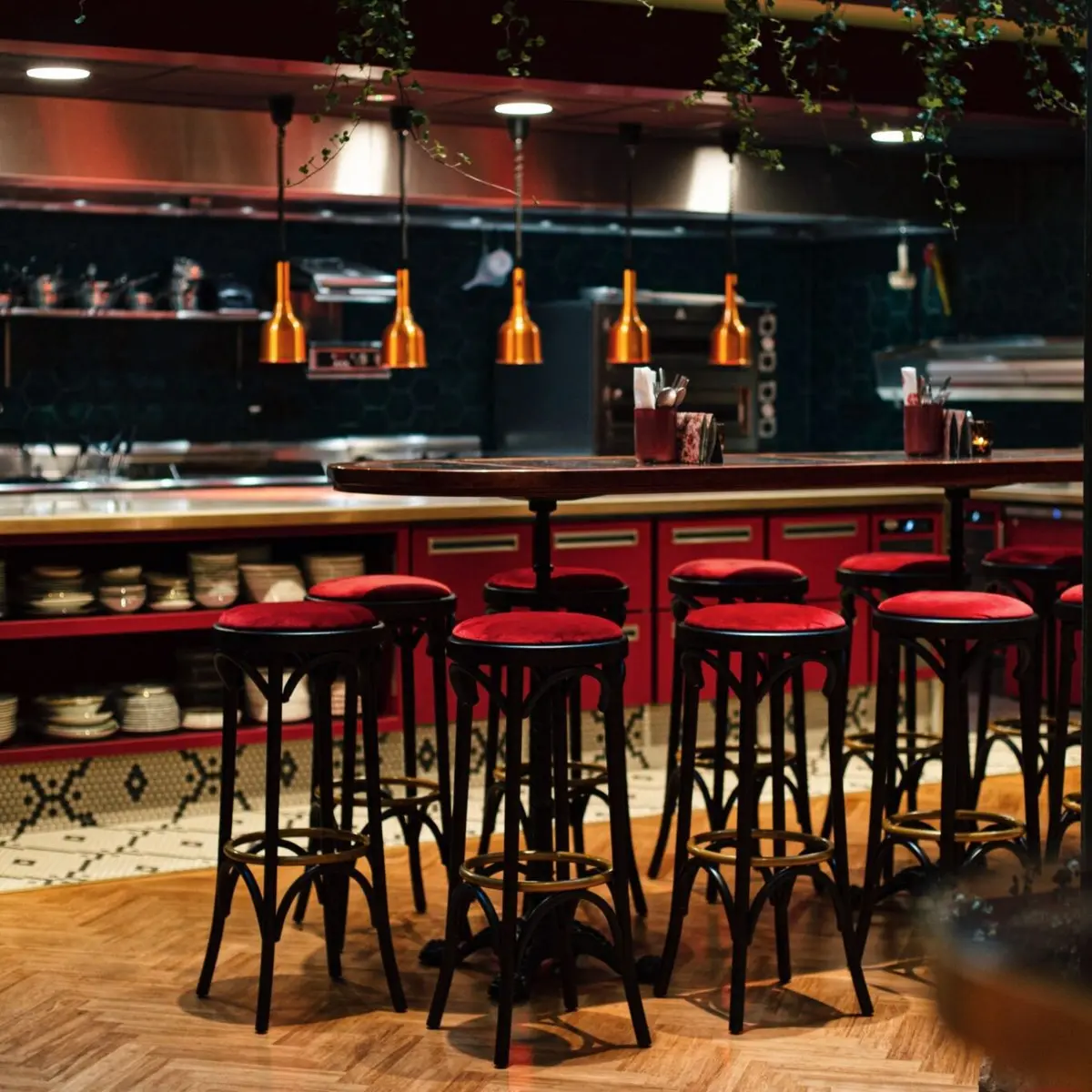
Many bistros have a small bar or counter for coffee, wine and solo diners. Bar stools should echo the dining chairs, for example a bentwood or wood-frame stool with the same stain. Counter-height stools of about 24–26 in (61–66 cm) suit counters around 36 in (91 cm), while bar-height stools of about 29–31 in (74–79 cm) suit 42 in (107 cm) bars.
| Stool feature | Why it matters in a bistro |
|---|---|
| Low back | Comfort for longer stays without blocking sight lines |
| Footrest | Comfort and less wear on the frame |
| Matching stain | Ties the bar visually to the dining room |
| Upholstered seat | Comfort for solo diners who stay for a full meal |
Browse our restaurant bar stools to match your dining chairs.

Bar stool for counters and bars: View the Ellen bar stool
7) How should a bistro be laid out?
Bistros feel lively because tables are close, but service still needs clear paths. Plan a main service aisle from the kitchen to the front of the room, keep banquette tables in a straight line along the wall, and place loose two-tops in the center so they can be combined. A typical minimum is about 18 in (46 cm) between the backs of chairs at neighboring tables, with wider main aisles. If you want a second opinion, ask the BESeating team for a layout review.
Watch for
- Chairs that are too wide for small tables.
- Bases that collide with chair legs when tables are joined.
- Bar stools placed too close together; allow roughly 24–26 in (61–66 cm) per stool.
8) Can bistro furniture go outside?
Sidewalk seating is part of bistro culture. Indoor wood chairs are not designed for rain and sun, so use outdoor-rated furniture on the terrace, such as aluminum chairs with synthetic seats and outdoor table bases. Choose colors and shapes that echo the indoor room so the terrace looks like part of the same restaurant. See our outdoor patio furniture for weather-ready options.

Outdoor stackable aluminum chair: View the outdoor stackable aluminum chair
9) Which finishes and colors suit a bistro?
Warm walnut and medium oak stains are timeless; black stained beech gives a sharper Parisian look; natural oak feels fresh and modern. Pair wood with deep green, burgundy or cognac upholstery, and repeat the metal finish of the bases in lighting and bar details. We offer custom stain matching, and you can browse our wood stains to compare options.
10) How do you keep bistro furniture looking good?
Bistro chairs are moved constantly, so durability matters. Look for solid hardwood frames with strong joints, felt or nylon glides to protect floors, and finishes that resist cleaning chemicals. Every BESeating chair, table and bar stool goes through our quality testing process, and most chairs arrive fully assembled. Clean wood with a damp cloth and mild detergent, tighten any loose glides, and check pedestal bases for level every few months.
11) What else do bistro owners ask about?
Wine-focused bistros often add a few high tables near the bar; our wine bar furniture guide covers that setup. If you are opening several locations, choose running chair models and fabrics so you can reorder identical furniture later. And always order a sample chair to test comfort, finish and weight before committing to the full room.
Final recommendation
Build your bistro around light, sturdy wood chairs, ideally bentwood or cane-back designs, paired with small 24–30 in tables on single pedestal bases and a wall banquette. Add matching bar stools at the counter and outdoor-rated chairs on the terrace. Keep finishes warm and consistent, and choose commercial-grade construction so the room still looks right after years of busy service.
Next step: request a sample through our restaurant furniture samples program, browse our wood chairs, or contact BESeating to plan your bistro furniture package.
FAQ: Bistro furniture
What is the difference between bistro and café furniture?
The two overlap a lot. Café furniture focuses on quick visits, so tables are often smaller and chairs lighter. Bistro furniture supports full meals, so it usually includes slightly larger tables, banquettes, more comfortable chairs and a bar. Both commonly use bentwood or cane-back chairs and pedestal tables.
What size is a typical bistro table?
A typical bistro table is 24 to 30 in (61 to 76 cm) across, round or square, and seats two guests. A 24 in top suits coffee and pastries, while 27 to 30 in works better for lunch and dinner with full plates. Joined squares or a 30 x 48 in top seat four.
Are bentwood chairs strong enough for restaurants?
Yes. Commercial bentwood chairs are made from solid hardwood, usually beech, that is steamed and bent into shape, then joined and reinforced for daily use. They have been used in European restaurants for more than a century. Choose models built for contract use with reinforced joints and protective glides.
Can I use indoor bistro chairs on a patio?
It is not recommended. Indoor wood chairs and upholstered seats are not designed for rain, sun and temperature swings, and they can crack, fade or loosen at the joints. Use outdoor-rated chairs, such as aluminum with synthetic seats, and outdoor table bases on terraces and sidewalks.
How many bistro chairs fit in a small dining room?
It depends on table size, aisles and banquettes, but bistro layouts are dense. With 24 to 30 in two-tops, a wall banquette and about 18 in between chair backs, many small bistros fit noticeably more seats than a standard layout. Always confirm local code and accessibility requirements for aisles and exits.



Be Seating 2010 - 2026 All rights reserved ©
Request a quote
CloseName
Phone
Company name
Industry type
Country
Notes
Please enter the result below
I agree with....
Wrong verification code.
All fields are mandatory
Thank you for your message! We will come back to you shortly.