


Commercial Outdoor Restaurant Furniture: The Complete Patio Buyer’s Guide
11:19 | Wed | 07 October 2026
Commercial Outdoor Restaurant Furniture: The Complete Patio Buyer’s Guide
Updated October 2026 · By the BESeating team — manufacturing commercial seating since 1993
Quick answer: The best commercial outdoor restaurant furniture uses aluminum, synthetic teak or commercial resin, because these materials resist rust, rot and UV fading. Choose stackable chairs for easy storage, outdoor-rated table tops, and heavier or wider table bases to resist wind. Avoid indoor wood and untreated steel outside.
A patio can add a significant number of seats every warm month, and in many climates outdoor dining now runs most of the year. But sun, rain, wind and temperature swings destroy residential patio furniture quickly. This guide explains how to choose commercial outdoor restaurant furniture that survives daily service, looks good season after season and stores easily.
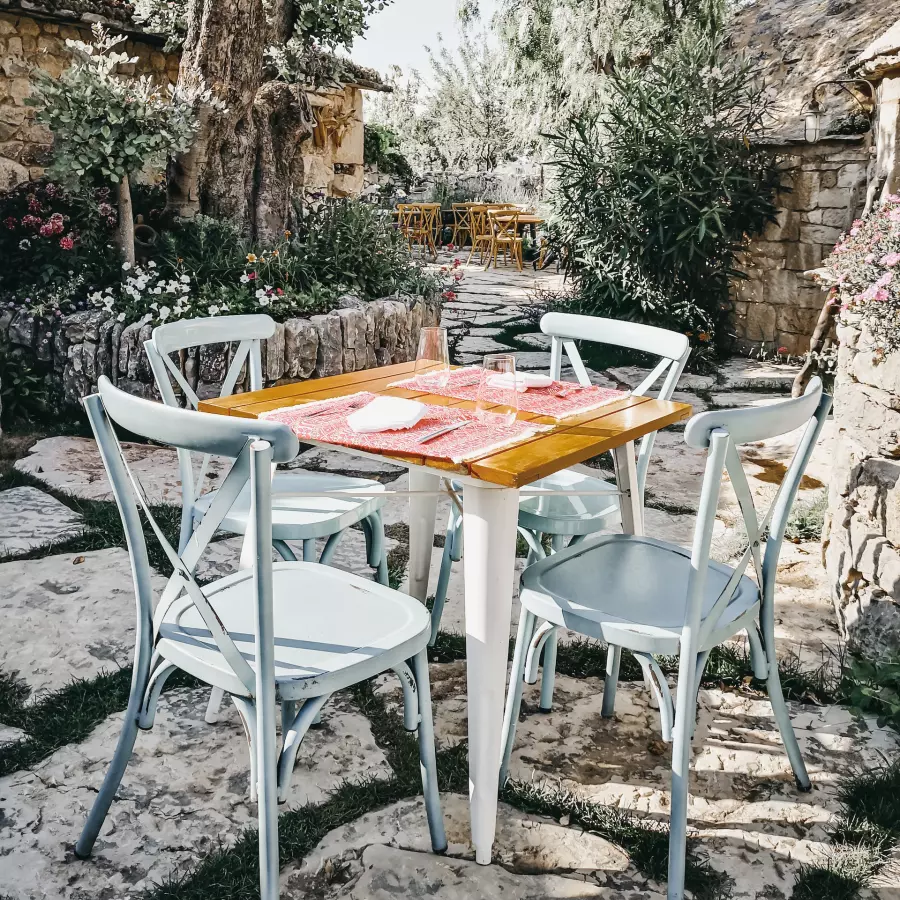
Outdoor collection: View outdoor patio furniture
Key takeaways
- Aluminum, synthetic teak and resin are the most durable outdoor materials.
- Stackable chairs save labor at closing and space over winter.
- Outdoor table bases need heavier feet or wider spreads for wind.
- Plan clear service paths and consistent table sizes on the patio.
1) What materials last longest outdoors?
| Material | Strengths | Watch for |
|---|---|---|
| Aluminum | Light, rust-resistant, easy to stack and move | Very light chairs can move in strong wind |
| Synthetic teak | Wood look without oiling, splitting or graying | Check slat fixing quality |
| Commercial resin / polypropylene | Low maintenance, wipe-clean, UV-stabilized options | Choose UV-stabilized grades only |
| Powder-coated steel | Heavy and stable | Needs an outdoor-rated coating to resist rust |
| Natural wood | Warm, traditional look | Needs regular oiling; avoid indoor-grade wood |
2) Which outdoor chairs work best for restaurants?
Aluminum chairs
- Best for: busy patios, rooftops, cafés
- Strengths: rust-resistant, light for staff to carry, usually stackable
- Watch for: choose models with sturdy welds and protective feet

Popular outdoor model: View the outdoor stackable aluminum chair
Aluminum with synthetic teak
Synthetic teak slats on an aluminum frame give the warmth of wood with outdoor durability. Our outdoor stackable aluminum chair uses exactly this combination.
Bistro and woven styles
Bistro-style chairs with woven seats create a classic European terrace look. Choose outdoor-rated weaves that resist UV and moisture.
3) Why do stackable outdoor chairs matter?
Many restaurants bring patio furniture inside at night, before storms or for winter. Stackable chairs turn that job from an hour into minutes and take a fraction of the storage space. If your patio is used for events, stacking also makes resetting the space fast. See our guide to stackable restaurant chairs for more.
4) Which outdoor tables and tops should you choose?
Choose tops rated for outdoor use that will not warp, crack or fade in the sun and rain. Lighter colors stay cooler in direct sun. If you use umbrellas, check that tops can take an umbrella hole and that bases can hold the umbrella pole.
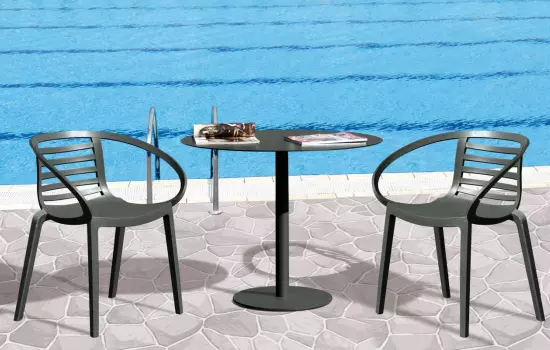
Outdoor tables: View outdoor tables
5) How do you stop outdoor tables tipping in the wind?
- Use heavier outdoor bases or wider spreads than you would indoors.
- Choose bases with levelers for uneven paving.
- Close umbrellas in strong wind; an open umbrella acts like a sail.
- Consider fixing bases on rooftops and exposed terraces.
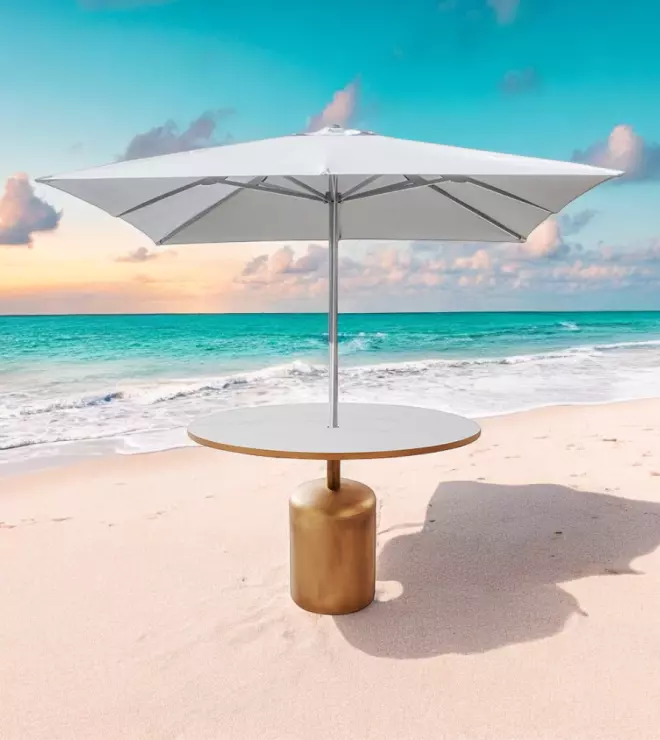
Wind-ready bases: View outdoor table bases
6) Do you need outdoor bar stools?
Patio bars, window counters and rooftop rails need stools rated for outdoor use. Use the same height rules as indoors: about 24–26 in (61–66 cm) seats for counters and 28–30 in (71–76 cm) for bar height. Browse outdoor bar stools.
7) How should you lay out a restaurant patio?
- Keep a clear main path from the door for servers carrying trays.
- Mix two-tops and four-tops so tables can be joined for groups.
- Leave space around heaters and umbrellas.
- Keep accessible routes and some tables reachable without steps.
- Check local rules for sidewalk and patio seating before ordering.
8) How do you care for outdoor furniture?
- Wipe down daily with mild soap and water; avoid harsh solvents.
- Rinse salt, sand and pollen off regularly, especially near the coast.
- Check feet and glides so frames do not sit in standing water.
- Store cushions indoors overnight and stack chairs in a dry area for winter.
9) How do you match the patio to the dining room?
Guests should feel the patio belongs to the same restaurant. Repeat a color, a wood tone or a chair silhouette from inside. Synthetic teak can echo indoor wood chairs; aluminum frames can echo metal bar stools inside.
10) How much space does a restaurant patio table need?
Outdoors, guests and staff need a little more room than inside, because paving is uneven and heaters, umbrellas and planters take space. As a starting point, allow about 18–24 in (46–61 cm) between chair backs and keep a main aisle wide enough for two people to pass with trays. A 24 in (61 cm) two-top with two chairs typically needs a footprint of about 5 × 5 ft (1.5 × 1.5 m) including chair push-back; a 30 in (76 cm) four-top about 6.5 × 6.5 ft (2 × 2 m).
11) How do shade and heaters affect furniture choice?
- Umbrellas: choose tops with umbrella holes and bases heavy enough to hold the pole, or use separate umbrella bases.
- Heaters: keep the manufacturer’s clearance around heaters and avoid placing resin furniture too close.
- Direct sun: lighter frames and tops stay cooler to the touch; dark metal can get hot.
12) How should you budget for patio furniture?
Compare cost per seat over several seasons, not the price of one chair. Cheap residential patio sets often fade, rust or crack within a season or two, so they end up costing more. Commercial-grade outdoor furniture costs more upfront but survives daily service, stacking and storage for years. If you are refreshing in stages, start with chairs — they take the most wear — and keep table bases and tops consistent so new and old pieces still match.
Final recommendation
Choose aluminum, synthetic teak or commercial resin; make chairs stackable; and size outdoor bases heavier than indoor ones. That combination survives the weather and keeps closing time short.
Next step: Explore our full outdoor patio furniture range, including outdoor chairs and outdoor tables, or request a quote.
FAQ: Commercial Outdoor Restaurant Furniture
What is the most durable material for outdoor restaurant chairs?
Aluminum is one of the most durable materials for outdoor restaurant chairs because it does not rust, is light enough to move and stack, and handles daily use. Synthetic teak slats add a wood look without maintenance.
Can indoor restaurant furniture be used outside?
No. Indoor wood and untreated steel can rot, warp or rust outdoors. Use furniture specifically rated for outdoor commercial use, with weather-resistant frames, finishes and table tops.
How do you keep patio tables from blowing over?
Use heavier outdoor bases or wider spreads, add levelers on uneven paving, close umbrellas in strong wind and consider fixing bases on rooftops or exposed terraces.
Should outdoor restaurant chairs be stackable?
Yes, in most cases. Stackable chairs make it fast to bring furniture inside at night or before storms, and they take far less space in winter storage.
How do you clean commercial patio furniture?
Wipe frames and seats daily with mild soap and water, rinse off salt and pollen regularly, avoid harsh solvents and store cushions indoors when the patio is closed.



Be Seating 2010 - 2026 All rights reserved ©
Request a quote
CloseName
Phone
Company name
Industry type
Country
Notes
Please enter the result below
I agree with....
Wrong verification code.
All fields are mandatory
Thank you for your message! We will come back to you shortly.