


Furnishing Multiple Restaurant Locations: A Seating Rollout Guide for Restaurant Groups
11:22 | Wed | 07 October 2026
Furnishing Multiple Restaurant Locations: A Seating Rollout Guide for Restaurant Groups
Updated October 2026 · By the BESeating team — manufacturing commercial seating since 1993
Quick answer: To keep multi-location restaurant furniture consistent, lock a written specification for every item, approve a master sample, control stain and upholstery references with your supplier, plan production capacity for the full rollout, and keep spare stock for replacements. Consistent seating protects your brand and makes reorders simple.
Guests expect the same experience at every location of a restaurant brand — the same comfort, the same look, the same quality. When seating differs from site to site, the brand feels diluted and reorders become a headache. This guide explains how restaurant groups and growing concepts plan multi-location restaurant furniture so the fifth location looks exactly like the first.

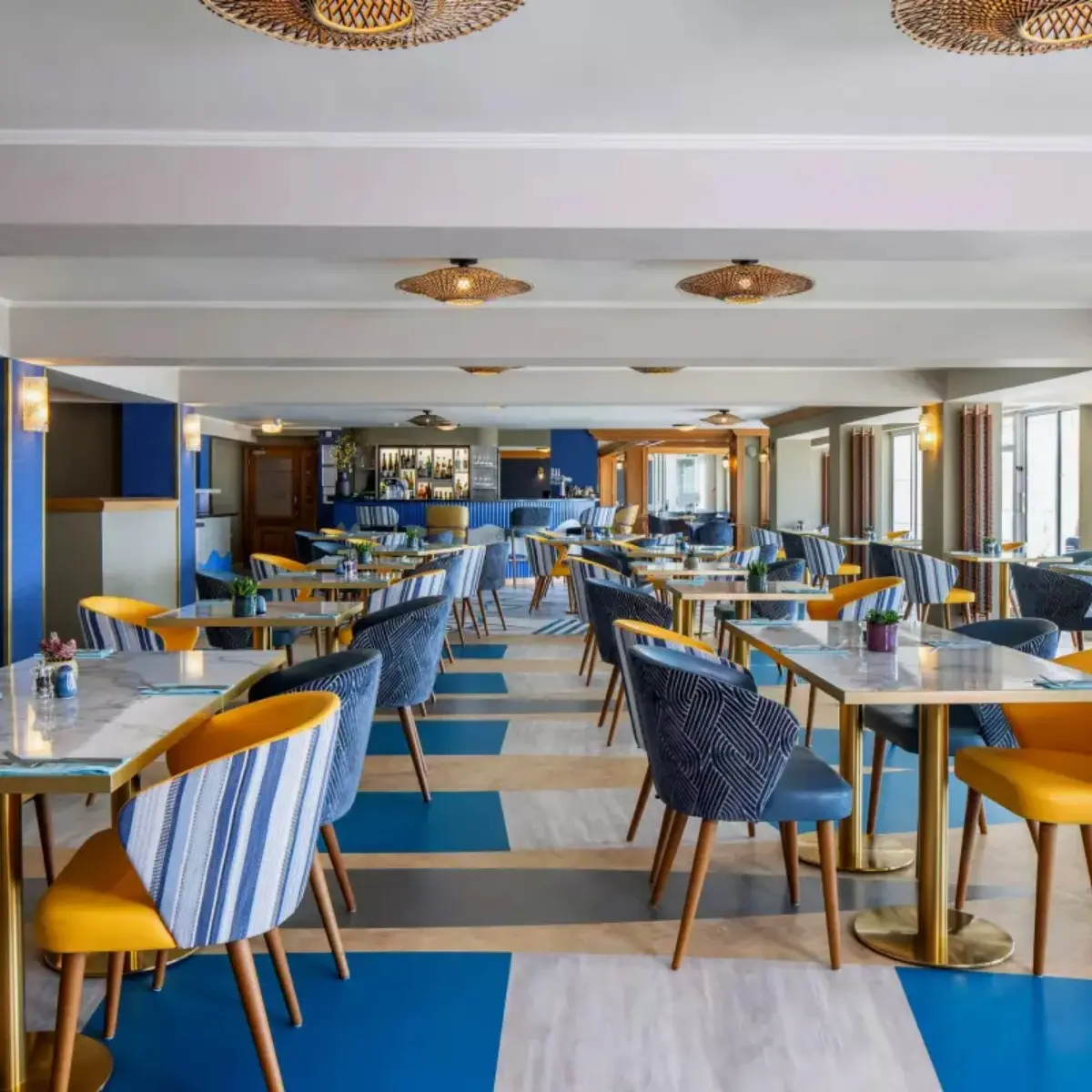
Seen in this installation: Pandora chairs restaurant installation
Key takeaways
- Write a seating specification and treat it as a brand standard.
- A master sample is your quality reference for every site.
- Stain and upholstery references must be kept on file by your supplier.
- Plan production and delivery around your opening calendar.
1) Why does furniture consistency matter for restaurant groups?
- Brand recognition: seating is one of the most visible parts of your interior.
- Guest expectations: regulars notice when chairs feel or look different.
- Operations: identical chairs and parts simplify maintenance and training.
- Purchasing: one specification means faster quotes and simpler reorders.
2) What should a seating specification include?
| Item | Details to record |
|---|---|
| Model | Exact product name and code for chairs, stools, booths, tables |
| Wood stain | Stain reference or custom match code |
| Upholstery | Collection, color and reference for seats, backs and booths |
| Frame finish | Metal or resin color and finish |
| Dimensions | Seat heights, table sizes, booth lengths |
| Hardware | Floor glide type for each floor surface |
| Quantities | Per location and per zone, plus spares |
3) Why is a master sample essential?
An approved master sample of each chair, stool and finish is the reference every future order is compared with. Keep one at your head office or flagship location, and share photos and references with each new site’s team. When deliveries arrive, compare them against the master.
4) How do you control stain and upholstery color?
Wood stain can vary between batches and timber, so work with a supplier that offers custom stain matching and keeps your formula on file. Beech takes stain very evenly, which helps consistency across large orders. For upholstery, record the exact collection and color reference and confirm availability before each rollout phase.

Stain references: View wood stain colors
5) How do you plan production for a rollout?
- Share your opening calendar with your supplier as early as possible.
- Confirm the supplier can scale production for several sites, not just one.
- Order by phase, with each phase timed well before its opening date.
- Agree how changes to the specification will be handled mid-rollout.
BESeating’s production is set up to support both independent restaurants and multi-location rollouts, with scalable capacity and consistent quality.
6) How should a restaurant group choose its chairs?
Pick models that suit every site, not just the flagship. Check that chairs work in smaller footprints, that bar stools fit common counter heights, and that the finish suits different lighting. Stackable models help sites that host events or share space.

Versatile model: View the Frank stackable armchair
7) How do you adapt one design to different floor plans?
Keep the furniture specification fixed and adapt the layout. A modular approach — standard two-tops and four-tops that combine, a fixed booth module, a standard bar stool — lets each site use the same pieces in a different arrangement. See our guide to restaurant layout plans.
8) How do you handle delivery and installation?
- Confirm delivery access, unloading and storage at each site.
- Most BESeating restaurant chairs arrive fully assembled, which speeds up setup.
- Check every delivery against the specification and master sample.
- Fit the correct floor glides for each site’s flooring.
9) Why keep spares and plan reorders?
Keep a small stock of spare chairs, seat pads and glides so a damaged piece can be replaced immediately with an exact match. Log every order with its specification so reorders for new or existing sites are quick and accurate.

Matching chairs and stools: See the Brazil and Pandora installation
10) How do you refresh older locations?
When flagship sites are refreshed, decide whether the new look becomes the standard for all locations. Chairs with removable seats can be re-covered to a new color without replacing frames, which makes brand refreshes far cheaper.
11) What should you look for in a rollout supplier?
- Commercial-grade, tested products — see our quality testing
- Custom stain matching and references kept on file
- Production capacity for several sites
- Samples available for approval
- Experience with hospitality projects — see our projects
12) How do you budget a multi-site seating rollout?
Budget per site using your standard specification, then add a contingency for layout differences and a spare-stock allowance of a few percent. Ordering by phase spreads cost over your opening calendar. Comparing cost per seat over the life of the furniture usually favors commercial-grade seating, which lasts longer and keeps every site looking consistent for years.
13) A simple rollout timeline
- Concept stage: choose models and finishes; order samples.
- Approval: test samples at the flagship, then sign off the specification and master samples.
- Planning: share the opening calendar and quantities per site with your supplier.
- Ordering by phase: place each site’s order well ahead of its fit-out date.
- Delivery: check every delivery against the specification and master sample.
- After opening: log the order, store spares and review wear after the first months.
Following the same steps for every site turns furniture from a recurring risk into a routine part of each opening.
Final recommendation
Treat seating as a brand standard: write the specification, approve a master sample, keep stain and fabric references with your supplier and plan production around your openings.
Next step: Talk to us about a rollout or browse our restaurant chairs.
FAQ: Multi-Location Restaurant Furniture
How do restaurant chains keep furniture consistent?
They use a written furniture specification, an approved master sample, stain and upholstery references kept on file by the supplier, and a single supplier or tightly controlled suppliers for each item.
What is a master sample?
A master sample is an approved example of a chair, stool or finish that every future order is compared with, so each location receives identical furniture.
Can wood stain be matched across multiple orders?
Yes, when the supplier offers custom stain matching and keeps the formula on file. Beech is especially good for consistent color because it stains evenly.
Should every location use exactly the same furniture?
The specification should be the same, but layouts can differ. Use the same chairs, stools, booths and tables, arranged to suit each site’s floor plan.
How many spare chairs should a restaurant group keep?
Keep a small stock of spare chairs, seat pads and glides so damaged pieces can be replaced immediately with an exact match. The right number depends on the number of seats and sites.



Be Seating 2010 - 2026 All rights reserved ©
Request a quote
CloseName
Phone
Company name
Industry type
Country
Notes
Please enter the result below
I agree with....
Wrong verification code.
All fields are mandatory
Thank you for your message! We will come back to you shortly.