


Restaurant Table Base Size Guide: How to Choose Bases That Never Wobble
11:18 | Wed | 07 October 2026
Restaurant Table Base Size Guide: How to Choose Bases That Never Wobble
Updated October 2026 · By the BESeating team — manufacturing commercial furniture since 1993
Quick answer: Choose restaurant table bases with a spread of at least two-thirds of the tabletop width — for example a 22 in (56 cm) base under a 30 in (76 cm) top. Use dining-height columns for 29–30 in (74–76 cm) tables, wider bases for bar height, and add levelers for uneven floors.
A wobbly table is one of the most common guest complaints — and one of the easiest to prevent. Most wobble comes from a base that is too small for its top, the wrong base type for the table shape, or a floor that is not level. This guide shows how to size restaurant table bases correctly for every common top.
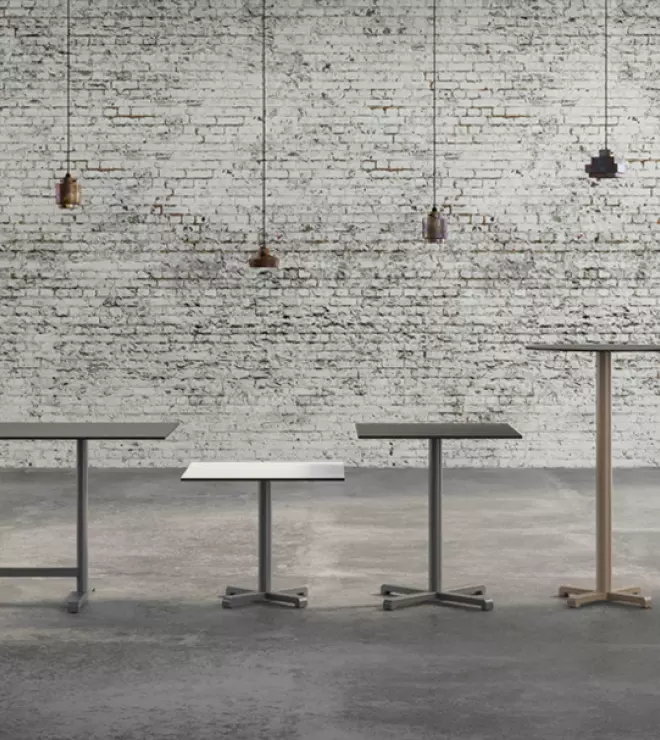
Explore the range: View restaurant table bases
Key takeaways
- Base spread should be at least two-thirds of the top’s width or diameter.
- Bar-height tables need wider, heavier bases than dining tables.
- Rectangular tops longer than about 48 in (122 cm) need two bases.
- Levelers or self-adjusting glides fix most floor-related wobble.
1) What size table base do I need?
Use this chart as a starting point. Larger or heavier tops, outdoor use and bar height all call for the larger option.
| Tabletop | Recommended base |
|---|---|
| 24 in (61 cm) round or square | 17–18 in (43–46 cm) spread |
| 30 in (76 cm) round or square | 22 in (56 cm) spread |
| 36 in (91 cm) round or square | 30 in (76 cm) spread or 4-prong base |
| 42 in (107 cm) round | 30–33 in (76–84 cm) 4-prong base |
| 24 × 30 in (61 × 76 cm) | 22 × 22 in (56 × 56 cm) base |
| 30 × 48 in (76 × 122 cm) | 22 × 30 in (56 × 76 cm) base or two bases |
| 30 × 60 in (76 × 152 cm) and longer | Two bases or an end-base pair |
The two-thirds rule keeps the top from tipping when a guest leans on the edge. Check the exact spread on each product page or ask our team to match bases to your tops.
2) Which column height do I need?
- Dining height: for a finished table of 29–30 in (74–76 cm).
- Counter height: for a finished table of about 36 in (91 cm).
- Bar height: for a finished table of about 42 in (107 cm).
Remember to subtract the tabletop thickness when you choose the column. At counter and bar height, step up to a wider spread — tall tables tip more easily.
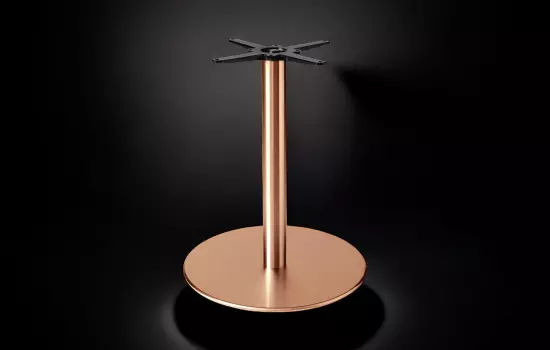
Workhorse choice: View standard table bases
3) Which base style should you choose?
Standard bases (cross or round foot)
- Best for: most dining rooms and cafés
- Strengths: proven stability, good value, easy to replace
- Watch for: cross bases need clear floor space for chair legs
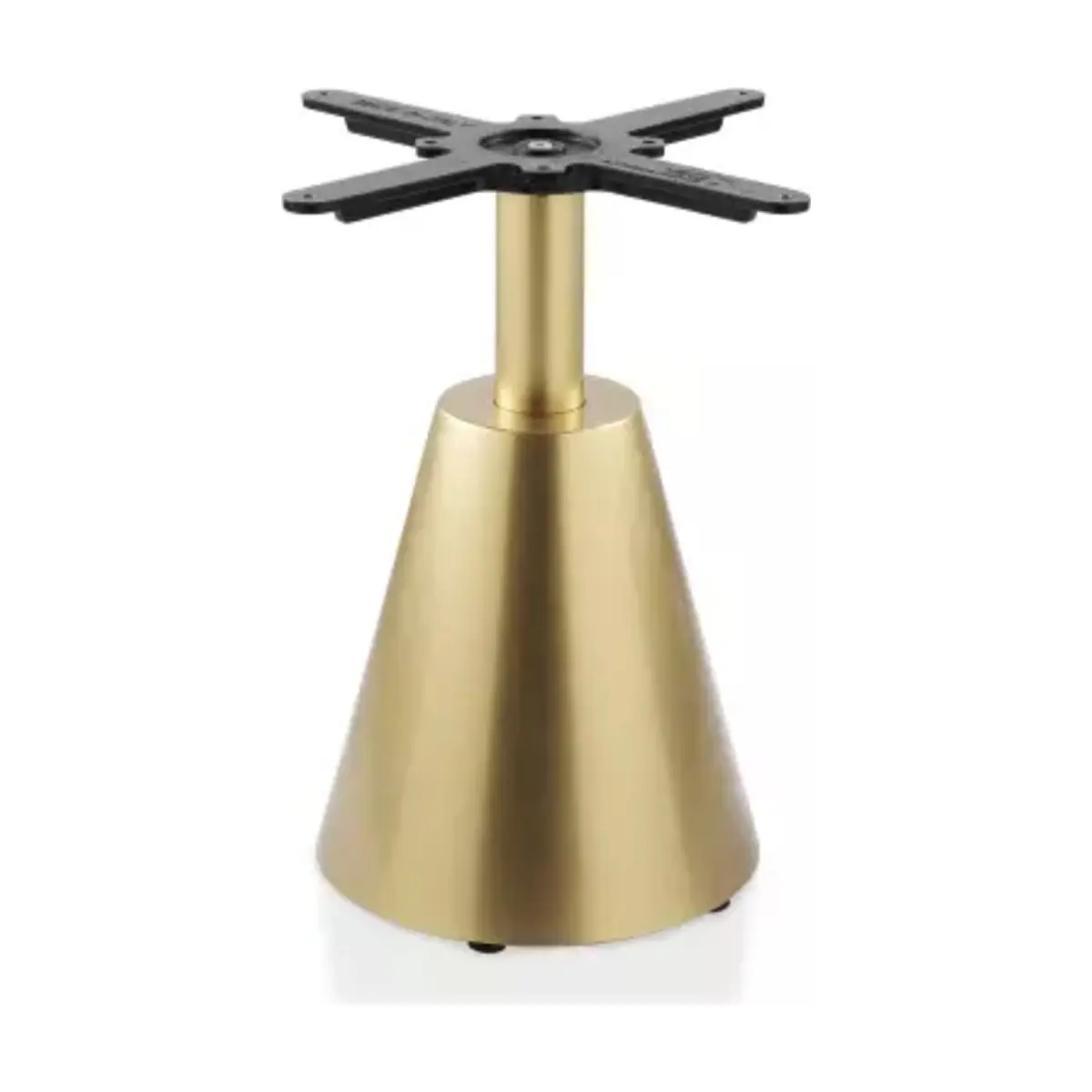
Contemporary and conical bases
- Best for: design-led restaurants, hotel lobbies, open dining rooms
- Strengths: make a design statement; a solid disc foot is easy to clean around
- Watch for: a heavy foot is needed to match the stability of a wide cross base

Contemporary option: View the Jar Plus gold conical base
Outdoor bases
- Best for: patios, terraces and rooftops
- Strengths: weather-resistant finishes and heavier feet for wind
- Watch for: umbrella holes and drainage on outdoor tops
4) How do you stop a restaurant table from wobbling?
- Size the base correctly using the chart above.
- Fit levelers or self-adjusting glides so each foot meets the floor.
- Tighten the column and top plate after installation and at regular intervals.
- Use two bases on long rectangular tops instead of one oversized base.
- Check the floor: tile joints and patio slabs often cause wobble that no base can fix alone.
5) How do table bases affect chairs and legroom?
A cross base with long feet can clash with chair legs on small two-tops. On 24 in (61 cm) tops, a compact round foot or a disc base gives guests more knee and foot room. On booths, choose a base that does not block guests sliding in — see our restaurant booths for layout ideas.
6) What makes a table base commercial grade?
- Cast iron or heavy steel foot, not lightweight hollow tubing
- Strong column-to-foot connection that stays tight
- Durable powder-coat or metal finish that resists mop water and chairs
- Leveling glides included or available
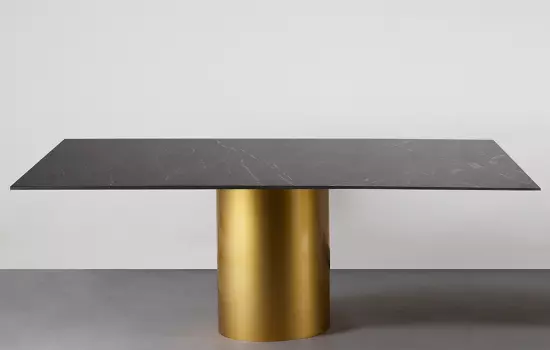
For larger tops: View large table bases
7) Which table base suits each type of restaurant?
| Venue | Typical tops | Recommended base |
|---|---|---|
| Café or coffee shop | 24 in (61 cm) round | Compact round or disc foot for legroom |
| Casual dining | 30 in (76 cm) square, 30 × 48 in rectangles | Standard cross or square base, two bases on long tops |
| Fine dining | 36–42 in (91–107 cm) round | 4-prong or heavy contemporary base |
| Bar or pub | 24–30 in (61–76 cm) high tops | Bar-height column with wide, heavy foot |
| Patio or terrace | 24–36 in (61–91 cm), outdoor-rated | Outdoor base with weather-resistant finish |
8) How do you combine tops for large groups?
Restaurants that regularly push tables together for groups should keep tops the same height and edge profile, and use bases that do not collide when tables meet. Square tops on square or cross bases line up neatly; round tops with large disc feet can stop tables touching. If flexibility matters, plan a few 30 × 30 in (76 × 76 cm) four-tops on standard bases that combine into a 30 × 60 in (76 × 152 cm) six-top.
9) How should you maintain table bases?
- Check and tighten column and top-plate bolts every few months.
- Replace worn leveling glides before they scratch floors.
- Wipe mop water off cast bases to protect the finish.
- On patios, rinse salt and dirt from outdoor bases regularly.
Final recommendation
Start with your tabletop sizes, apply the two-thirds rule, and step up a size for bar height or outdoor use. Pair bases with matching table tops, or choose complete tables already sized for you.
Next step: Browse restaurant table bases or send us your floor plan for a matched quote.
FAQ: Restaurant Table Bases
How big should a table base be for a 30-inch top?
A 30 in (76 cm) round or square tabletop needs a base with a spread of about 22 in (56 cm). That is roughly two-thirds of the top width, which keeps the table stable when guests lean on the edge.
What size base does a 36-inch round table need?
A 36 in (91 cm) round top needs a base with about a 30 in (76 cm) spread, or a 4-prong base. Heavier tops and bar-height tables should use the larger option.
Do long rectangular tables need two bases?
Yes. Rectangular tops longer than about 48 in (122 cm) are more stable on two bases or an end-base pair. One base under a long top lets the ends dip when guests lean on them.
Why does my restaurant table wobble?
Most wobble comes from an undersized base, a loose column or an uneven floor. Size the base to at least two-thirds of the top, tighten the hardware and add leveling glides.
Are bar-height table bases different?
Yes. Bar-height bases have taller columns for 42 in (107 cm) tables and need wider, heavier feet, because tall tables tip more easily than dining-height tables.



Be Seating 2010 - 2026 All rights reserved ©
Request a quote
CloseName
Phone
Company name
Industry type
Country
Notes
Please enter the result below
I agree with....
Wrong verification code.
All fields are mandatory
Thank you for your message! We will come back to you shortly.