


Restaurant Table Tops: How to Choose the Right Material, Size and Edge
11:19 | Wed | 07 October 2026
Restaurant Table Tops: How to Choose the Right Material, Size and Edge
Updated October 2026 · By the BESeating team — manufacturing commercial furniture since 1993
Quick answer: Choose restaurant table tops by traffic and style: solid wood with a commercial lacquer for upscale rooms, laminate for high traffic and tight budgets, and outdoor-rated tops for patios. Size two-tops at 24 × 30 in (61 × 76 cm) and four-tops at 30 × 30 in (76 × 76 cm) or 36 in (91 cm) round, allowing about 24 in (61 cm) of edge per guest.
Table tops take more punishment than any other surface in a restaurant: hot plates, sliding cutlery, spilled drinks, sanitizer and constant wiping, many times a day. The right top keeps looking good for years; the wrong one chips, stains or swells within months. This guide compares restaurant table tops by material, size, shape and edge, so you can specify tops that last.
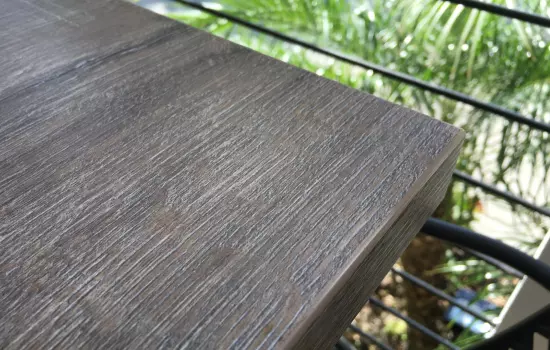
Explore the range: View restaurant table tops
Key takeaways
- Match the material to traffic: wood for warmth, laminate for toughness, outdoor-rated tops outside.
- Allow about 24 in (61 cm) of table edge per guest.
- Edge protection matters as much as the surface.
- Pair each top with a base sized to at least two-thirds of its width.
1) Which table top material is best for restaurants?
| Material | Best for | Strengths | Watch for |
|---|---|---|---|
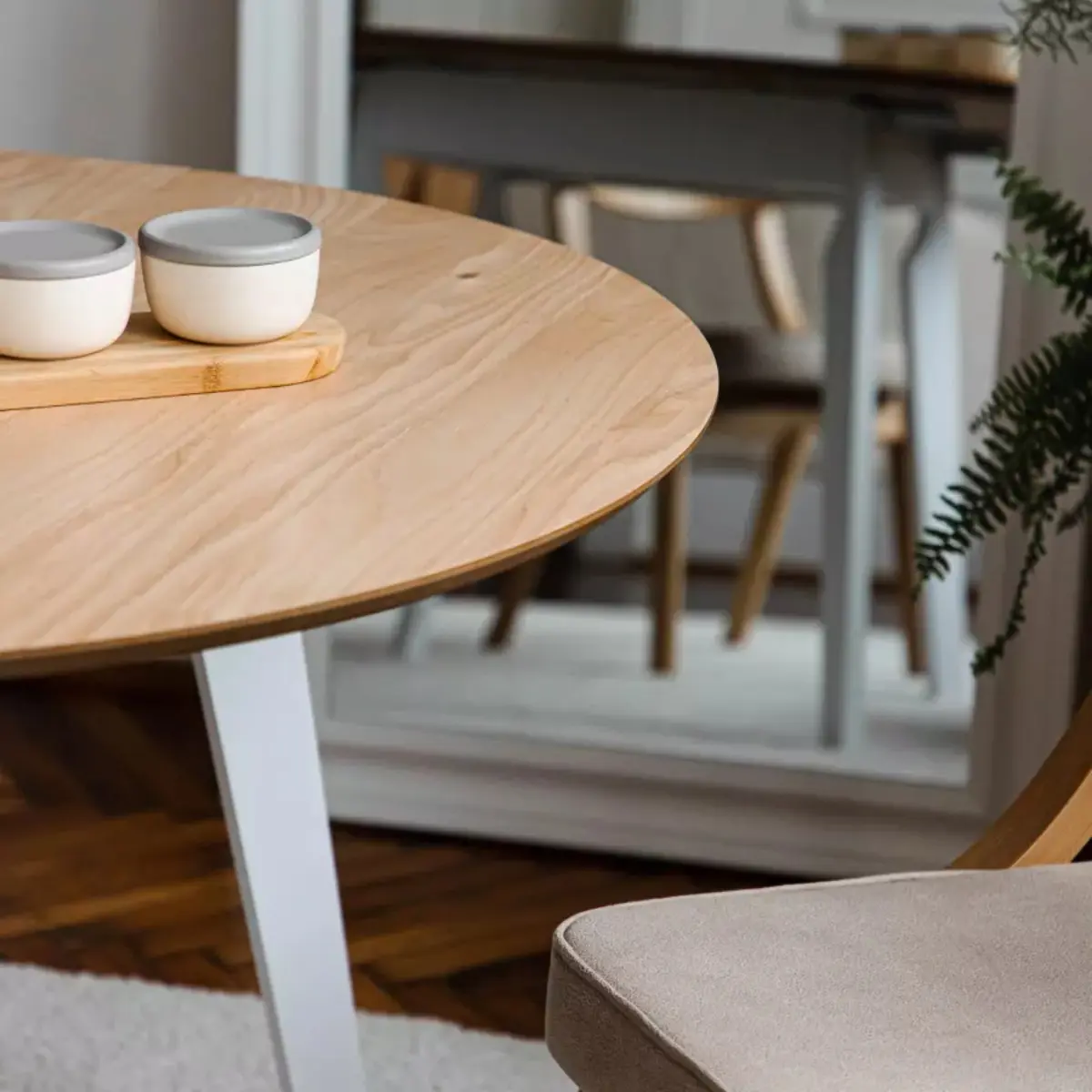
| Solid wood | Upscale dining, bistros, hotels | Warm, premium, can be refinished | Needs a commercial lacquer and coasters for hot items |
| Wood veneer | Mid-range dining | Real wood look at lower cost | Deep damage cannot be sanded out |
| Laminate | Fast casual, cafés, high traffic | Tough, stain resistant, many colors | Edges need protection from chipping |
| Stone-look and compact surfaces | Design-led restaurants, bars | Very hard-wearing, premium look | Heavier; needs a stronger base |
| Outdoor-rated tops | Patios, terraces, rooftops | Resist UV, water and temperature swings | Check umbrella hole options |
2) Solid wood table tops
- Best for: full-service restaurants, wine bars, hotel dining
- Strengths: natural grain, warm feel, can be sanded and refinished years later
- Watch for: unsealed or residential finishes that mark with heat and water
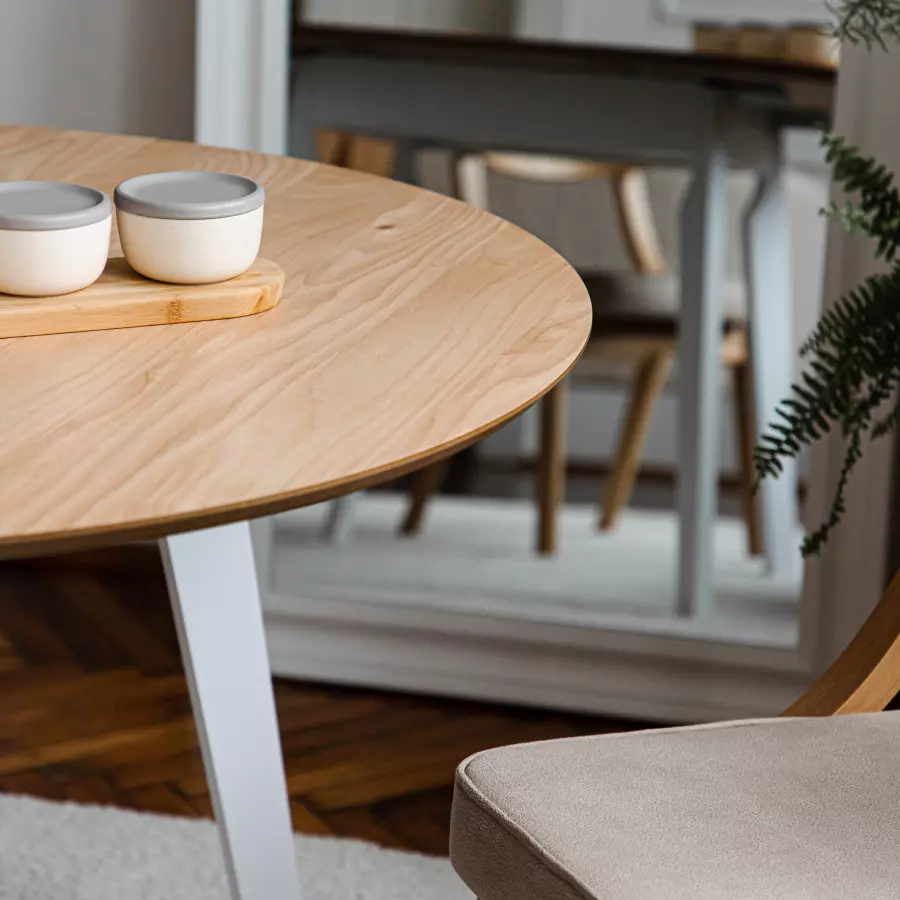
Wood tables: View restaurant tables
3) Laminate table tops
- Best for: fast casual, cafés, family restaurants, staff canteens
- Strengths: resist stains and scratches, easy to wipe, wide choice of colors and wood looks
- Watch for: unprotected edges, which chip when chairs or carts hit them
4) What size table tops do restaurants need?
| Table | Common size | Seats |
|---|---|---|
| Small two-top | 24 in (61 cm) round or 24 × 24 in (61 × 61 cm) | 2 (café) |
| Standard two-top | 24 × 30 in (61 × 76 cm) | 2 |
| Four-top | 30 × 30 in (76 × 76 cm) or 36 in (91 cm) round | 4 |
| Large four-top | 36 × 36 in (91 × 91 cm) or 42 in (107 cm) round | 4 (fine dining) |
| Six-top | 30 × 60 in (76 × 152 cm) or 48 in (122 cm) round | 6 |
The rule of thumb is about 24 in (61 cm) of table edge per guest. Fine dining often allows more for larger plates and wine glasses.
5) Round or square table tops?
- Square and rectangular tops push together easily for groups and line up neatly along walls and booths.
- Round tops feel more social, are easier to move around in tight spaces and seat an extra guest at a squeeze.
- Mix both: squares along walls, rounds in the center for visual rhythm.
6) Which edge profile should you choose?
The edge takes the most knocks from chairs, carts and trays. Rounded or eased edges resist chipping and feel better on guests’ forearms; protected edges on laminate tops prevent the surface layer peeling. Sharp square edges look crisp but show damage sooner in busy rooms.
7) What thickness should a restaurant table top be?
Commercial table tops are typically thicker than residential ones so they stay flat and stable under daily use. Thicker tops feel more solid but are heavier, which affects the base you need and how easy tables are to move. When you compare quotes, check thickness alongside material.
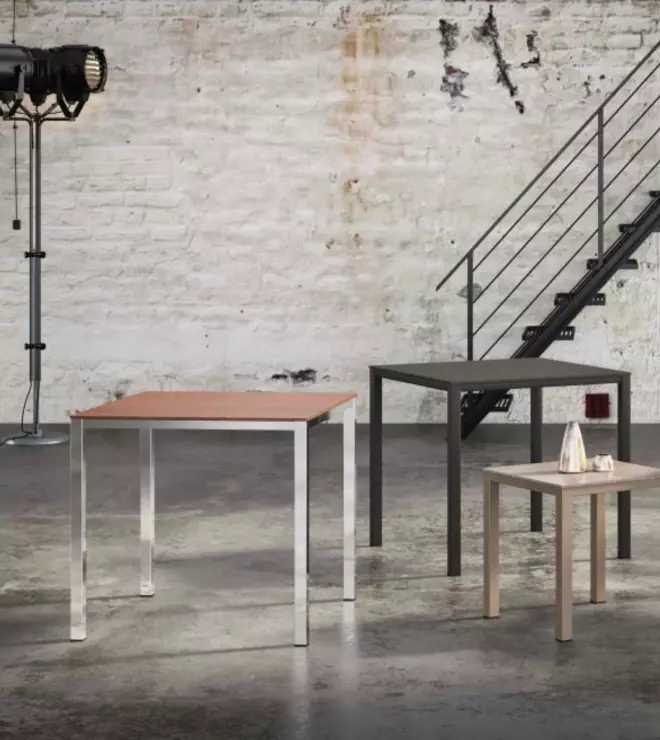
Ready-matched option: View complete tables
8) How do you match table tops to bases?
Choose a base with a spread of at least two-thirds of the top’s width — for example a 22 in (56 cm) base under a 30 in (76 cm) top. Long rectangles over about 48 in (122 cm) need two bases. Heavier stone-look tops need heavier bases. Browse our restaurant table bases, or choose complete tables already matched for you.
9) Which table tops work outdoors?
Only tops rated for outdoor use. They resist UV fading, rain and temperature swings without warping. Lighter colors stay cooler in direct sun. See our outdoor tables.
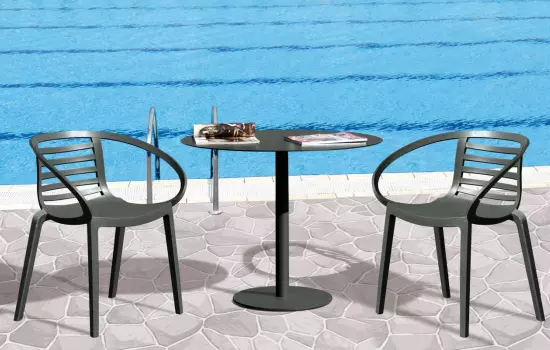
Outdoor tables: View outdoor tables
10) How do you care for restaurant table tops?
- Wipe with a damp cloth and mild detergent after each service.
- Use sanitizers approved for the surface; avoid abrasive pads on wood and laminate.
- Use trivets under very hot dishes on wood tops.
- Check edges and fixings regularly and tighten tops to their bases.
11) Which table tops suit each type of venue?
- Fine dining: larger solid wood or stone-look tops, often dressed with linen; edges eased for comfort.
- Casual dining: wood veneer or wood-look laminate in standard 30 × 30 in (76 × 76 cm) and 30 × 48 in (76 × 122 cm) sizes that combine for groups.
- Cafés: compact 24 in (61 cm) rounds that fit more covers and move easily.
- Bars: hard-wearing laminate or compact surfaces at bar height that shrug off spilled drinks.
- Hotels: one consistent top across breakfast room, restaurant and lounge for a unified look.
Keeping the same top material and edge across your whole venue makes reordering simple and keeps tables interchangeable when you rearrange.
Final recommendation
Choose wood where atmosphere matters most, laminate where traffic is heaviest, and outdoor-rated tops outside. Size tops at about 24 in (61 cm) per guest, protect the edges and match every top with a correctly sized base.
Next step: Shop table tops or restaurant tables, or request a quote for your layout.
FAQ: Restaurant Table Tops
What is the most durable restaurant table top?
Laminate and compact or stone-look surfaces are among the most durable restaurant table tops for high traffic. Solid wood with a commercial lacquer is also very durable and can be refinished, which extends its life.
What size table top seats four people?
A 30 × 30 in (76 × 76 cm) square or a 36 in (91 cm) round table top comfortably seats four guests in most restaurants. Fine dining often uses 36 in square or 42 in round for more space.
How much table space does each diner need?
Allow about 24 in (61 cm) of table edge per guest. That gives room for a plate, glassware and cutlery without guests bumping elbows.
Are round or square tables better for restaurants?
Square tables push together easily for groups and fit neatly along walls, while round tables feel more social and move easily in tight spaces. Many restaurants use both.
Can I use indoor table tops outside?
No. Indoor tops can warp, crack or fade outside. Use table tops rated for outdoor use that resist UV, rain and temperature changes.



Be Seating 2010 - 2026 All rights reserved ©
Request a quote
CloseName
Phone
Company name
Industry type
Country
Notes
Please enter the result below
I agree with....
Wrong verification code.
All fields are mandatory
Thank you for your message! We will come back to you shortly.