


Bar Stools With Backs vs Backless: Which Is Right for Your Bar?
10:40 | Wed | 28 October 2026
Bar Stools With Backs vs Backless: Which Is Right for Your Bar?
Updated October 2026 · By the BESeating team — manufacturing commercial seating since 1993
Quick answer
When comparing bar stools with backs vs backless, choose stools with backs where guests stay longer than about 45 minutes, such as full-service bars and restaurant counters. Choose backless stools for quick visits, tight spaces, coffee bars and counters where clean sightlines and easy movement matter more than lounging comfort.
The choice between bar stools with backs vs backless models affects comfort, how many seats fit along a counter and how the whole bar looks from the door. Both styles have a place in commercial venues. This comparison explains where each one works best, with spacing figures and practical checks before you order.

Bar stool Ellen: View the Ellen bar stool
Key takeaways
- Stools with backs keep guests comfortable for longer stays and suit full-service bars and dining counters.
- Backless stools take less space, tuck under counters and work well for quick visits and tight rooms.
- Allow about 24–26 in (61–66 cm) per stool with a back and 22–24 in (56–61 cm) per backless stool.
- Mixing both styles works when heights, finishes and upholstery are coordinated.
1) What is the main difference between stools with backs and backless stools?
The difference is support. A stool with a back gives guests something to lean against, so they relax and stay. A backless stool supports the seat only, so guests sit more upright and move on more easily. That single difference ripples through comfort, spacing, cleaning, cost of ownership and the look of the room.
| Factor | Bar stools with backs | Backless bar stools |
|---|---|---|
| Comfort for long stays | High | Moderate |
| Stools per counter length | Fewer | More |
| Tuck under counter | Usually not fully | Yes, at most heights |
| Sightlines across the room | Partially blocked | Open |
| Ease of getting on and off | Good with footrest | Very easy, from any side |
| Typical venues | Full-service bars, restaurant counters, hotel bars | Coffee bars, fast-casual counters, taprooms, window bars |
2) Which style is more comfortable for long visits?
Stools with backs win for anything longer than a quick drink. A low back of around 8–12 in (20–30 cm) above the seat supports the lower spine, while a full back that reaches mid-shoulder feels close to a dining chair. Guests who are eating a full meal at the bar, watching a game or meeting friends will notice the difference after the first half hour.
Backless stools can still be comfortable if the seat is well shaped and padded and the footrest is at the right height. They are ideal where visits are short by design, such as espresso bars, grab-and-go counters and busy happy-hour rails.
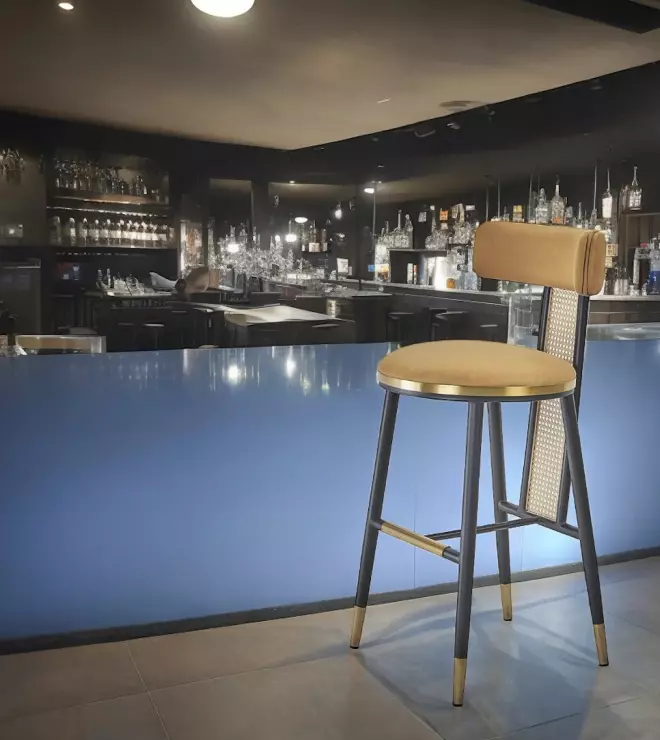
Metal bar stools: View metal bar stools
3) Which style saves more space along a counter?
Backless stools fit more seats into the same counter length because there is no back frame to collide with the next guest. They also slide fully under many counters when not in use, which keeps walkways clear during cleaning and slow periods.
| Stool type | Space per stool (center to center) | Seats on a 12 ft (3.66 m) counter |
|---|---|---|
| Backless, no swivel | 22–24 in (56–61 cm) | 6–7 |
| With low back | 24–26 in (61–66 cm) | 5–6 |
| With full back or arms | 26–30 in (66–76 cm) | 5 |
| Swivel with back | 26–30 in (66–76 cm) | 5 |
Leave at least 36 in (91 cm) behind occupied stools for guests to pass, and more where servers carry trays. Our restaurant seating layout guide explains aisle widths in more detail.
4) Which works better at a bar counter vs a high-top table?
At a bar counter, the bartender is the focus and guests face one direction. Backs help here because guests lean back between drinks and conversations. At a high-top table, guests face each other and move in and out more often; backless stools or stools with low backs make that easier and keep the table group compact.
Height must match the surface in either case. Counter-height stools have seats of about 24–26 in (61–66 cm) for 36 in (91 cm) counters, and bar-height stools about 29–31 in (74–79 cm) for 42 in (107 cm) bars. For more on heights, our bar and pub furniture guide covers stools, high tops and booths together.
5) Which is easier to clean and maintain?
Backless stools have fewer surfaces and joints, so they are quicker to wipe down and simpler to inspect. Staff can flip them onto the counter at closing to mop the floor. Stools with backs take a little longer to clean, and the joint between back and seat is a stress point to check in regular maintenance.
Watch for
- Upholstered backs near the bar rail collect spills; choose a commercial vinyl that wipes clean.
- Footrests take the most wear; metal footrails or protected wood rails last longer.
- Floor glides wear quickly on tile and concrete; replace them before they damage the floor.
A step-by-step routine is in our guide on how to clean restaurant chairs, which applies to stools as well.
6) Should you choose swivel or fixed stools?
Swivel stools let guests turn toward friends or the screen without dragging the stool, which reduces floor scratches. They suit sports bars and long counters. Fixed stools have fewer moving parts and stay neatly aligned, which suits restaurant counters and cafés. If you choose swivel stools with backs, allow the wider spacing shown above so backs do not collide.
7) How do stool backs affect the look and sightlines of the room?
A row of backed stools reads as furniture: it adds pattern, color and warmth to the bar. A row of backless stools reads as clean and minimal and lets the bar front, lighting and back bar take center stage. In open-plan rooms, backless stools keep views across the room and toward windows clear, which can make a small venue feel larger.
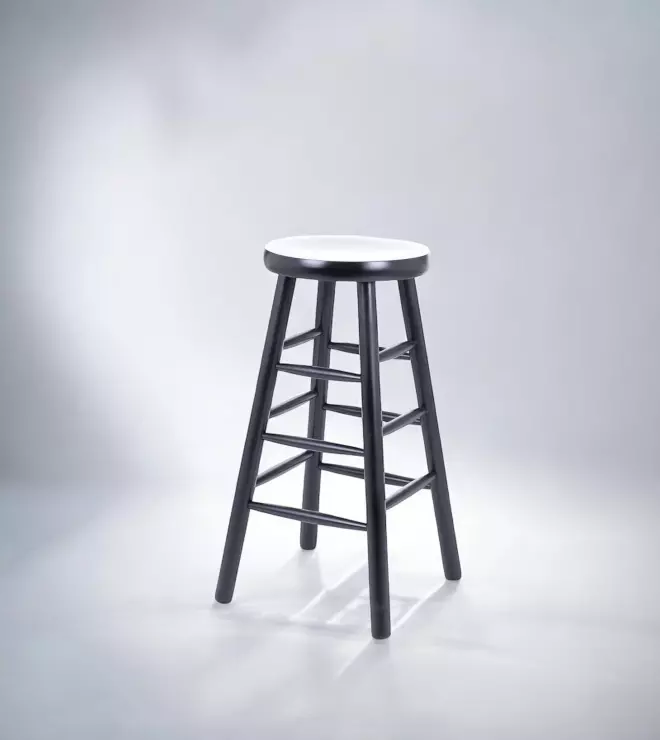
Backless bar stools: View all bar stools
8) Which venues suit each style?
| Venue | Recommended style | Why |
|---|---|---|
| Full-service restaurant bar | With backs | Guests dine at the bar for an hour or more |
| Hotel lobby bar | With backs, often upholstered | Comfort and a residential feel |
| Sports bar | Swivel with backs | Long stays and turning toward screens |
| Coffee bar or espresso counter | Backless | Short visits and fast turnover |
| Taproom or brewery | Backless or low back | Busy rails, easy cleaning, standing guests nearby |
| Window counter | Backless | Narrow space and clear views |
9) Upholstered seat or hard seat?
Both styles are available with wood, metal or upholstered seats. Upholstered seats add comfort for long stays and absorb some noise. Wood seats bring warmth and are durable in high-traffic bars. Metal seats suit industrial interiors and outdoor bars. Whatever you choose, ask for samples of the finish and upholstery colours so they match the rest of your seating.
Strengths
- Upholstered: comfort, softer look, color accents.
- Wood: warm, repairable, works in most concepts. See wood bar stools.
- Metal: slim profile, strong, easy to wipe.
10) Can you mix stools with backs and backless stools?
Yes, and many successful venues do. A common approach is stools with backs at the main bar and backless stools at high-top tables or the window counter. Keep seat height, frame finish and upholstery consistent so the mix looks intentional. Matching wood stains across chairs and stools is one of the simplest ways to tie the room together.

Installation with Brazil bar stools: View the Brazil installation
Final recommendation
Choose bar stools with backs where guests eat, linger or watch events, and where comfort drives repeat visits. Choose backless stools where space is tight, visits are short and a clean, open look matters. If your venue has both situations, use both styles with matching heights and finishes.
Next step: browse our bar stools, compare metal bar stools, request samples or contact us with your counter length for a seating proposal.
FAQ: Bar stools with backs vs backless
Are bar stools with backs better for restaurants?
For restaurant bars where guests eat full meals, stools with backs are usually the better choice because they support guests for an hour or more. In fast-casual restaurants or at small counters used for quick visits, backless stools can be more practical because they save space and are easier to clean.
Do backless bar stools save space?
Yes. Backless stools can be spaced about 22–24 in (56–61 cm) apart and often tuck fully under the counter, while stools with backs usually need 24–30 in (61–76 cm). On a 12 ft (3.66 m) counter, that often means one or two more seats with backless stools.
How much space should be between bar stools?
Measure from the center of one stool to the center of the next. Allow about 22–24 in (56–61 cm) for backless stools, 24–26 in (61–66 cm) for stools with low backs and 26–30 in (66–76 cm) for swivel stools or stools with arms. Leave at least 36 in (91 cm) behind them for walking.
Are backless stools uncomfortable?
Not for short visits. A well-shaped seat, light padding and a footrest at the right height make backless stools comfortable for 30–45 minutes. For longer stays, most guests prefer some back support, even a low back. Testing a sample stool at your actual counter height is the best way to decide.
What height bar stool do I need?
Leave about 10–12 in (25–30 cm) between the seat and the underside of the counter. For a 36 in (91 cm) counter, choose a counter-height stool with a 24–26 in (61–66 cm) seat. For a 42 in (107 cm) bar, choose a bar-height stool with a 29–31 in (74–79 cm) seat.



Be Seating 2010 - 2026 All rights reserved ©
Request a quote
CloseName
Phone
Company name
Industry type
Country
Notes
Please enter the result below
I agree with....
Wrong verification code.
All fields are mandatory
Thank you for your message! We will come back to you shortly.