


Beech vs Oak Restaurant Chairs: Which Wood Is Better for Commercial Use?
11:19 | Wed | 07 October 2026
Beech vs Oak Restaurant Chairs: Which Wood Is Better for Commercial Use?
Updated October 2026 · By the BESeating team — making solid wood restaurant chairs in Europe since 1993
Quick answer: Both beech and oak make excellent commercial restaurant chairs. Choose beech for an even surface that takes any stain precisely, for bentwood designs and for classic café styles. Choose oak when you want a visible, open grain and a natural, premium look. Durability depends more on construction and finish than on which of the two you pick.
When restaurant owners ask which wood is best for chairs, the answer almost always comes down to two European hardwoods: beech and oak. Both are dense, strong and proven in commercial seating — all BESeating wood chairs are manufactured in Europe from carefully selected beech and oak. But they look and behave differently. This guide compares beech vs oak restaurant chairs on everything that affects your decision.

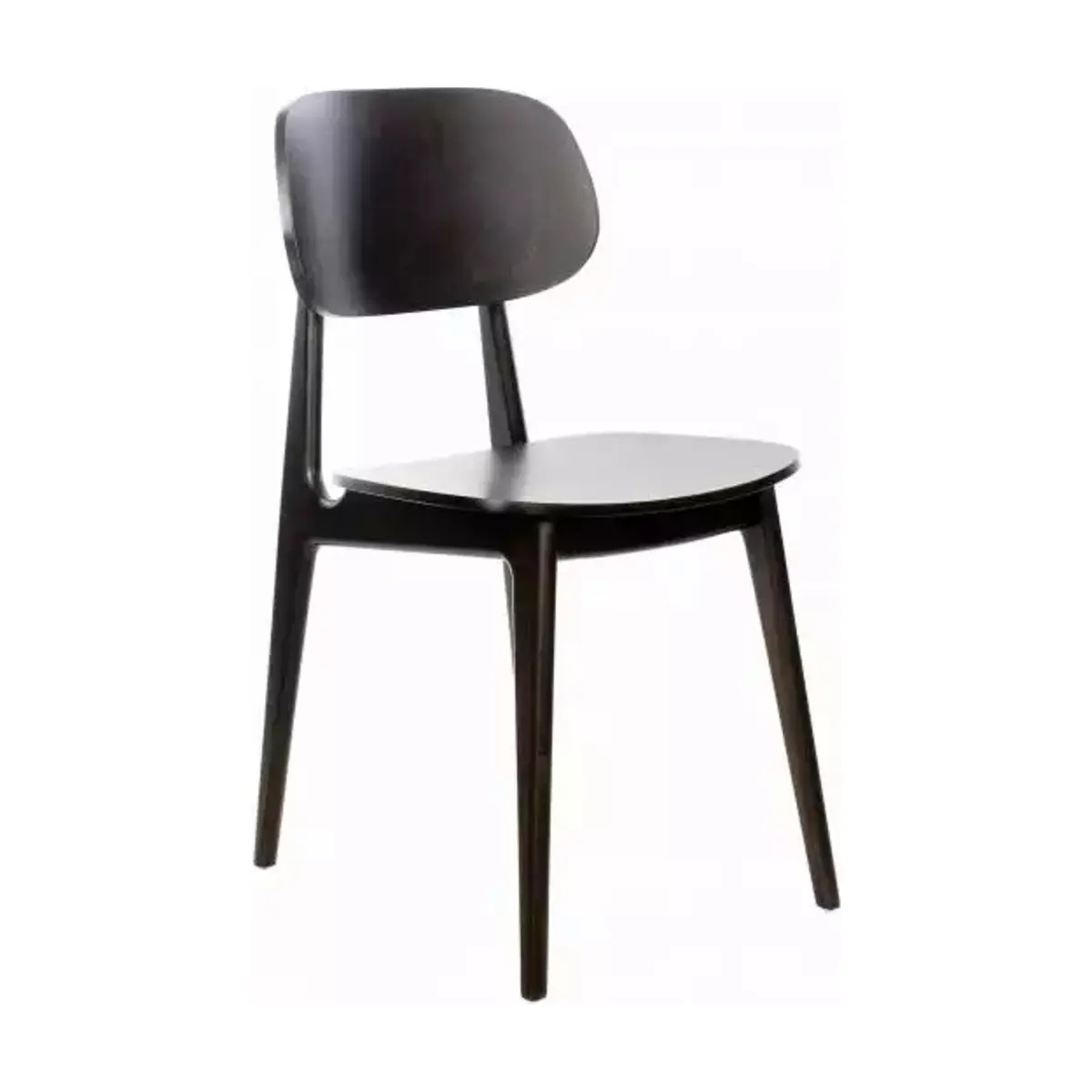
Solid wood seating: View the Bernie solid wood chair
Key takeaways
- Beech has a fine, even grain and takes stain very evenly — ideal for color matching.
- Oak has a strong, open grain that stays visible under stain.
- Beech steam-bends well, which is why it dominates bentwood chairs.
- Construction, joinery and finish matter more for durability than the species.
1) Beech vs oak at a glance
| Factor | Beech | Oak |
|---|---|---|
| Grain | Fine, tight, uniform | Open, pronounced, visible |
| Color (natural) | Pale cream to light pink-brown | Light golden to mid brown |
| Staining | Very even; matches almost any color | Grain shows through; best in natural to mid tones |
| Steam bending | Excellent (bentwood) | Possible but less common |
| Hardness and strength | Hard, dense, strong | Hard, dense, strong |
| Look | Clean, classic, versatile | Natural, premium, characterful |
| Typical styles | Café, bistro, mid-century, painted or dark stains | Scandinavian, rustic, upscale natural |
2) Why is beech so popular for restaurant chairs?
Beech is the workhorse of European chair making. It is hard and strong, holds screws and joints well, and has a fine, even grain with few visual irregularities. That makes it perfect when you want a precise color — natural, walnut, black or a custom match to your floor.
- Best for: cafés, bistros, family restaurants, hotel dining
- Strengths: even staining, steam-bends beautifully, consistent across large orders
- Watch for: beech needs a good commercial lacquer to resist moisture

Classic bentwood beech: View the Bistro bentwood chair
3) Why choose oak for restaurant chairs?
Oak’s open grain gives every chair visible character. It reads as natural, honest and premium, and it ages gracefully. Oak works especially well in light, natural or oiled-look finishes where the grain is part of the design.
- Best for: upscale casual, Scandinavian and rustic interiors, boutique hotels
- Strengths: distinctive grain, premium perception, natural warmth
- Watch for: very dark or opaque stains hide the grain you paid for
4) Which wood is stronger?
Both are dense hardwoods well suited to commercial chairs, and in practice both are strong enough for daily restaurant use. What decides how long a chair lasts is construction: reinforced joints, corner blocks, stretchers and a commercial finish. A well-built beech chair will outlast a poorly built oak chair, and vice versa. Every BESeating chair goes through a quality testing process before it ships.
5) Which wood stains better?
Beech. Its even grain absorbs stain uniformly, so dark colors look rich and consistent and custom colors match closely from batch to batch. Oak takes stain well too, but the open grain absorbs more pigment, so the grain pattern becomes darker and more prominent. If you need chairs to match an existing floor, bar or wall panel exactly, beech is usually the safer choice.

Stain options: View wood stain colors
6) What about bentwood chairs?
Bentwood chairs are made by steaming solid wood until it is flexible and bending it around a mold. Beech bends exceptionally well, which is why classic café chairs are almost always beech. Read more in our guide to wood restaurant chairs.
7) Is oak more expensive than beech?
Oak chairs are often priced higher than comparable beech chairs because oak timber generally costs more and its grain is valued as a premium feature. Beech offers excellent value for large orders and multi-location rollouts where consistency matters. Ask for both options in a quote if you are undecided.
8) Which wood suits your restaurant concept?
- Classic café or bistro: beech, natural or dark stain, bentwood shapes
- Modern casual dining: beech in black, walnut or custom color
- Scandinavian or natural concept: oak in natural or light finish
- Upscale steakhouse or wine bar: oak or dark-stained beech with upholstered seats
- Hotel restaurant: either, matched to the hotel’s millwork

Modern wood design: View the Brazil restaurant chair
9) How do you care for beech and oak chairs?
- Wipe with a damp cloth and mild detergent; dry immediately.
- Avoid soaking wood or using bleach and harsh solvents.
- Check joints and tighten hardware every few months.
- Lift chairs instead of dragging them, and replace floor glides as they wear.
10) Can I see beech and oak samples?
Yes. Wood color looks different under your lighting and next to your floor. We send samples of our chairs and wood finishes so you can compare in your own space. Request a sample.
11) How does the finish protect beech and oak?
In a restaurant, the finish is the first line of defense. A commercial lacquer seals the wood against water, wine, grease and sanitizers and resists heat and abrasion far better than oils or residential varnishes. Ask how many coats are applied and whether the finish is designed for commercial cleaning. Matte and satin finishes hide fine scratches better than high gloss, and darker stains hide scuffs on chair legs where mops and shoes hit them. If a chair is damaged after years of service, solid beech and oak can be sanded and refinished — a big advantage over veneered or plastic chairs.
12) Can beech and oak chairs be mixed in one room?
Yes, if you plan it. Use one species for chairs and the other for tables or bar fronts, or keep the same stain color across both so they read as one family. Avoid mixing natural beech and natural oak chairs side by side — the difference in grain looks accidental rather than designed.
Final recommendation
Pick beech when color precision, bentwood styling or value across a large order matter most. Pick oak when you want the wood grain itself to define the look. Either way, insist on reinforced joints and a commercial finish.
Next step: Browse our wood restaurant chairs, read wood vs metal restaurant chairs, or request a quote.
FAQ: Beech vs Oak Restaurant Chairs
Is beech or oak better for restaurant chairs?
Both are excellent hardwoods for restaurant chairs. Beech is better for even staining, color matching and bentwood designs; oak is better when you want a visible natural grain and a premium look. Construction quality matters more than the species.
Is beech wood strong enough for commercial chairs?
Yes. Beech is a dense, hard European hardwood that holds joints and screws well. It has been used for commercial café and restaurant chairs for generations, especially bentwood designs.
Why are bentwood chairs made from beech?
Beech becomes very flexible when steamed and keeps its new shape after drying, without cracking. That makes it ideal for the curved frames of bentwood café chairs.
Does oak take dark stain well?
Oak takes stain, but its open grain absorbs more pigment, so the grain becomes darker and more visible. For very even dark colors, beech usually gives a more uniform result.
Are BESeating wood chairs made from beech or oak?
All BESeating wood chairs are manufactured in Europe from carefully selected beech and oak, chosen for durability in commercial use.



Be Seating 2010 - 2026 All rights reserved ©
Request a quote
CloseName
Phone
Company name
Industry type
Country
Notes
Please enter the result below
I agree with....
Wrong verification code.
All fields are mandatory
Thank you for your message! We will come back to you shortly.