


Commercial Restaurant Chair Specifications: The Complete Buyer’s Checklist
11:16 | Wed | 07 October 2026
Commercial Restaurant Chair Specifications: The Complete Buyer’s Checklist
Updated October 2026 · By the BESeating team — manufacturing commercial seating since 1993
Quick answer: The best commercial restaurant chairs have a solid hardwood (beech or oak) or heavy-duty metal frame, reinforced joints, a seat height of 17–19 in (43–48 cm) for standard 29–30 in (74–76 cm) tables, commercial-grade vinyl or fabric, a sanitizer-resistant finish, and proof of testing. Always approve a sample before ordering.
A restaurant chair is sat on, slid back, tipped onto tables at closing and wiped with sanitizer dozens of times a day. Chairs built for homes rarely survive that for long. This checklist covers every specification that decides how long commercial restaurant chairs last — so you can compare quotes on what matters, not just on price and photos.

Seen in this installation: Modern Restaurant Interior with Bernie Chairs
Key takeaways
- The frame and joints decide the life of the chair; upholstery can be replaced.
- Match seat height to table height and leave 10–12 in (25–30 cm) of leg room.
- Choose the seat type by service model: hard seats for turnover, upholstery for long meals.
- Ask for testing details and a physical sample before you sign off.
1) What frame material should commercial restaurant chairs have?
Commercial restaurant chairs should have a solid hardwood frame, such as beech or oak, or a heavy-duty metal frame. Softwoods, particleboard and thin tubing loosen and crack under daily restaurant use.
Solid hardwood (beech and oak)
- Best for: full-service dining, cafés, bistros, hotel restaurants
- Strengths: warm look, holds joints well, can be sanded and refinished
- Watch for: unnamed “hardwood” and veneered softwood frames
All BESeating wood chairs are manufactured in Europe from carefully selected beech and oak.

Solid wood option: View the Bernie solid wood restaurant chair
Metal and mixed frames
- Best for: fast casual, bars, high-volume and modern concepts
- Strengths: slim profile, impact resistant, many models stack
- Watch for: thin tubing, weak welds and finishes that chip
Mixed designs — a metal base with a wood or upholstered shell — combine metal strength with a warmer look. Our guide to wood vs metal restaurant chairs compares both in detail.
2) How should a commercial chair be joined?
Most chair failures start at the joints. A commercial chair should use mortise-and-tenon or dowel joints reinforced with glue and screws, plus corner blocks under the seat and, ideally, stretchers between the legs.
- Corner blocks spread load and stop legs racking sideways when guests lean back.
- Stretchers add stiffness, especially for tall or slim chairs.
- Glue-only joints and exposed staples are signs of residential furniture.
3) Which seat type is right for your restaurant?
Choose the seat by how long guests stay. Hard seats suit fast turnover; upholstered seats suit meals of an hour or more.
| Seat type | Best for | Trade-off |
|---|---|---|
| Solid wood seat | Cafés, fast casual, high turnover | Less cushioning for long meals |
| Upholstered seat | Casual dining, family restaurants | Needs regular cleaning |
| Upholstered seat and back | Full-service dining, hotels | Higher cost per chair |
| Fully upholstered chair | Fine dining, lounges, private dining | Highest cost, best comfort |
| Cane back | Bistros, brasseries, design-led cafés | Ask whether the panel is replaceable |

Upholstered seat option: View the Bernie PS upholstered chair
4) What dimensions do restaurant chairs need?
For standard dining tables 29–30 in (74–76 cm) high, choose a seat height of 17–19 in (43–48 cm). That leaves 10–12 in (25–30 cm) between the seat and the underside of the table.
| Measurement | Typical range |
|---|---|
| Seat height | 17–19 in (43–48 cm) |
| Seat depth | 16–18 in (41–46 cm) |
| Side chair width | 17–19 in (43–48 cm) |
| Armchair width | 21–24 in (53–61 cm) |
| Leg room under table | 10–12 in (25–30 cm) |
Check armchair arm height against the table apron. If the arms cannot slide under, each chair takes more floor space. For counters and bars, use stools instead — see our restaurant bar stools.
5) How much space does each chair take?
Plan about 18–24 in (46–61 cm) between the back of a seated guest’s chair and the next chair or wall, and keep main service aisles wide enough for staff with trays and guests using mobility aids. Armless chairs fit more covers than armchairs. Our articles on chair and table spacing and restaurant layout plans cover this step by step.
6) Which finish and upholstery survive daily cleaning?
Choose a commercial lacquer on wood and powder coating or brushed aluminum on metal. For seats, use upholstery rated for commercial use.
- Commercial vinyl: wipes clean, handles sanitizers, ideal for busy rooms and booths.
- Commercial fabric: warmer and softer; add a stain-resistant treatment.
- Darker, matte finishes hide scuffs better than high gloss.
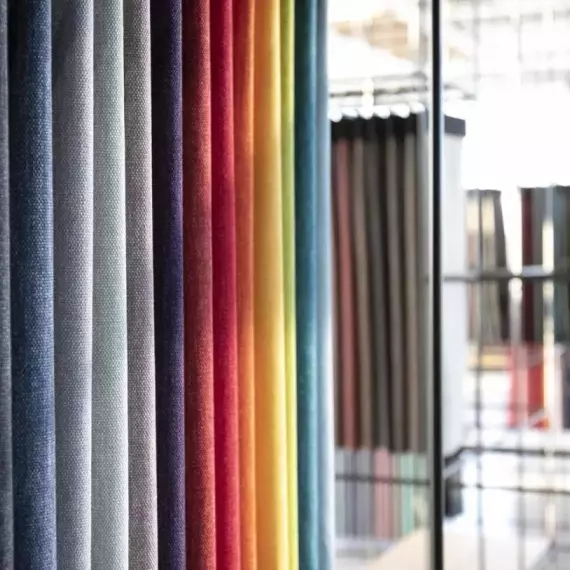
Upholstery and finishes: Browse vinyls, fabrics and wood stains
7) How do you know a chair is truly commercial grade?
Ask the supplier how the chair is tested before it ships, which wood species is used, and what the warranty covers. Every BESeating chair, table, booth and bar stool goes through a quality testing process. Read our history to see how our production has focused on hospitality seating since 1993.
8) Can commercial restaurant chairs be customized?
Yes. Standard commercial models can usually be ordered in a different wood stain, upholstery or frame finish. BESeating offers custom stain matching and a wide range of commercial vinyls and fabrics, so chairs, stools and booths can share one look across your venue.
9) Why order a sample first?
A sample shows comfort after an hour, the real stain color under your lighting and the build quality in your hands. We offer samples of all our products plus fabric and vinyl swatches. Request a sample and test it in your busiest section for a few days.

Popular modern model: View the Brazil restaurant chair
Final recommendation
Buy the frame first, then the look. A solid beech or oak frame or a heavy-duty metal frame, reinforced joints, the right seat height and a commercial finish will outlast cheaper chairs many times over. Many operators combine wood chairs in the dining room with metal chairs in high-abuse zones.
Next step: Browse our restaurant chairs or request a quote for your project.
FAQ: Commercial Restaurant Chairs
What makes a restaurant chair commercial grade?
A commercial-grade restaurant chair has a solid hardwood or heavy-duty metal frame, reinforced joints with corner blocks, a finish that resists sanitizers, commercial-rated upholstery and documented testing. Residential chairs usually lack reinforced joints and use softer materials.
What is the standard seat height for restaurant chairs?
The standard seat height for restaurant chairs is 17–19 in (43–48 cm), designed for dining tables 29–30 in (74–76 cm) high. This leaves 10–12 in (25–30 cm) of leg room between the seat and the table.
How long do commercial restaurant chairs last?
Well-built commercial chairs with hardwood or heavy-duty metal frames typically last many years in daily service. Upholstery and floor glides wear first, so choose chairs with replaceable seat pads and replace glides as they wear.
Are wood or metal restaurant chairs better?
Neither is better everywhere. Wood chairs feel warmer and can be refinished; metal chairs are slimmer, impact resistant and often stack. Many restaurants use wood in the main dining room and metal at the bar or in high-turnover sections.
Do BESeating restaurant chairs arrive assembled?
Yes. Most BESeating restaurant chairs arrive fully assembled and ready for immediate use, which keeps setup fast before an opening or refit.




Be Seating 2010 - 2026 All rights reserved ©
Request a quote
CloseName
Phone
Company name
Industry type
Country
Notes
Please enter the result below
I agree with....
Wrong verification code.
All fields are mandatory
Thank you for your message! We will come back to you shortly.