


Fast-Casual and Quick-Service Restaurant Seating: Durable, Easy-Clean and Space-Efficient
11:24 | Wed | 07 October 2026
Fast-Casual and Quick-Service Restaurant Seating: Durable, Easy-Clean and Space-Efficient
Updated October 2026 · By the BESeating team — manufacturing commercial seating since 1993
Quick answer: The best fast casual restaurant seating uses tough metal, mixed or solid hardwood frames; hard or wipe-clean vinyl seats; armless chairs that fit more covers; and counter or bar seating along windows and walls. Add a few booths for families and repeat one brand color across chairs, stools and booths.
In fast-casual and quick-service restaurants, tables may turn every 20–30 minutes, and seating is cleaned dozens of times a day. Chairs must be tough, quick to wipe, easy to move and compact enough to maximize covers — while still expressing your brand. This guide explains how to choose fast casual restaurant seating that keeps service moving.

Seen in this installation: Brazil chairs and bar stools installation
Key takeaways
- Durability and fast cleaning come first.
- Armless chairs and two-tops maximize covers.
- Counter and window seating serves solo guests efficiently.
- One repeated brand color makes simple seating feel designed.
1) What does fast-casual seating need to do?
| Requirement | What to choose |
|---|---|
| Rapid turnover | Comfortable but not lounge-soft seats |
| Constant cleaning | Hard seats or commercial vinyl; smooth frames |
| Heavy use | Metal, mixed or solid hardwood frames with reinforced joints |
| Maximum covers | Armless chairs, two-tops that join, counter seating |
| Brand impact | Consistent color and finish across seating |
2) Which chairs work best in fast casual?
Metal chairs
- Best for: high-volume, modern and industrial concepts
- Strengths: impact resistant, slim, often stackable, quick to wipe
- Watch for: thin tubing and chipping finishes

Metal with wood seat: View the BF-004 chair
Solid wood and mixed chairs
- Best for: bakery cafés, healthy-food concepts, warmer brands
- Strengths: warm look, durable solid beech or oak frames
- Watch for: choose a commercial lacquer that handles frequent cleaning
Compare both in wood vs metal restaurant chairs.
3) Hard seats or upholstered seats?
Hard seats — wood, metal or polypropylene — wipe clean in seconds and suit short visits. If you want more comfort, choose commercial vinyl seat pads, which still clean quickly. Avoid light fabrics in fast-casual dining rooms.
4) How do you maximize seating capacity?
- Use armless chairs — narrower than armchairs, so more fit per row.
- Use two-tops that can be joined for groups instead of many four-tops.
- Add counter or window seating for solo guests.
- Run booths along walls where they add seats without chair push-back.
- Keep main paths clear for queues, trays and accessibility.
Our restaurant layout plans and spacing tips give measurements.
5) Why add counter and bar seating?
Counter seating along windows or walls serves solo diners and couples using very little floor space. Use counter stools with 24–26 in (61–66 cm) seats for 34–36 in (86–91 cm) counters, or bar stools with 28–30 in (71–76 cm) seats for 40–42 in (102–107 cm) ledges. Backless stools tuck away and keep turnover high.
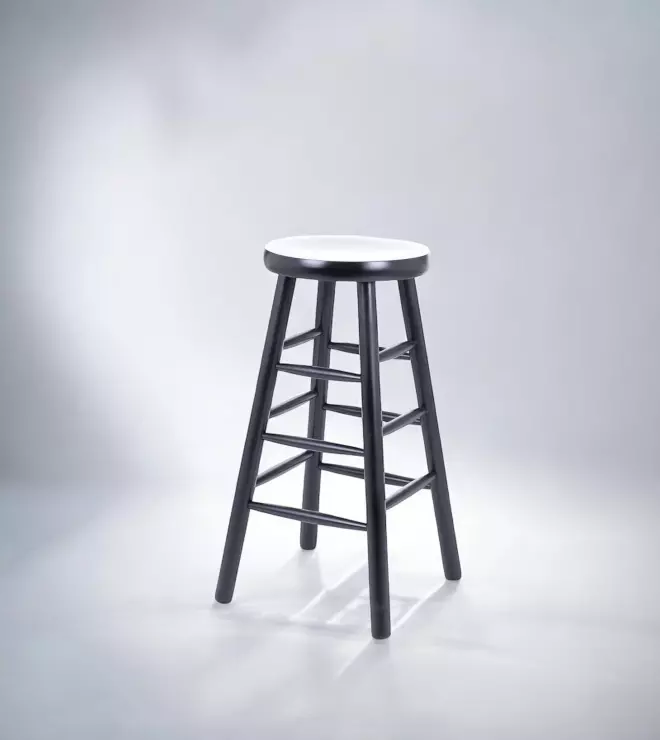
Counter seating: View bar and counter stools
6) Do fast-casual restaurants need booths?
A few booths help families and groups and make the room feel more comfortable, but too many slow turnover. Most fast-casual layouts use mainly chairs and counter seating with booths along one wall. See restaurant booths.
7) How do you express your brand through seating?
Pick one bold color or finish and repeat it: chair frames, stool seats and booth vinyl. Keep the rest neutral. This makes even simple, durable seating feel designed and photographs well for social media.

Mixed-material design: View the wood and metal frame chair
8) How do you speed up cleaning?
- Choose smooth frames with few crevices.
- Use wipe-clean seats and tops.
- Choose stackable or light chairs so floors can be cleaned quickly.
- Fit glides suited to your floor to make moving chairs easy.
9) How durable should fast-casual chairs be?
Very. Chairs are moved and wiped constantly, so choose commercial-grade frames with reinforced joints, commercial finishes and testing — every BESeating chair goes through our quality testing process.
10) What about outdoor seating?
Many fast-casual sites add sidewalk or patio seating. Use outdoor-rated, stackable chairs such as aluminum with synthetic teak, and outdoor tables on heavy bases. See our outdoor furniture.
11) How do you plan seating for multiple locations?
Fast-casual brands often grow quickly. Choose models that work in different floor plans, record every specification and keep master samples so every new site matches. Our production supports multi-location rollouts with consistent quality.
12) How comfortable should fast-casual seating be?
Comfortable enough for a 20–40 minute meal, not a three-hour dinner. A supportive back, a contoured seat and a seat height of 17–19 in (43–48 cm) for 29–30 in (74–76 cm) tables are enough for most guests. Slightly firmer seats and upright backs gently encourage turnover without feeling unwelcoming. If you also serve dinner or longer stays in part of the room, use vinyl seat pads or a few booths in that zone.
13) How should you budget fast-casual seating?
Fast-casual chairs work harder than chairs in most full-service restaurants, so cheap seating is a false economy. A chair that loosens or chips within a year must be replaced, and broken chairs on the floor hurt guest perception. Compare cost per seat over several years, including cleaning time: a smooth, wipe-clean chair saves staff time on every table turn. Spend most on the pieces that take the most abuse — chairs and counter stools — and keep tables and bases standard so they are easy to replace or add to.
14) Which seating zones work in a fast-casual restaurant?
- Grab-and-go zone: a counter ledge with backless stools near the pickup point.
- Main dining: armless chairs at two-tops and four-tops.
- Family zone: a few booths or larger tables away from the queue.
- Window bar: stools facing the street for solo diners.
Final recommendation
Prioritize tough frames and wipe-clean seats, use armless chairs and counter seating to maximize covers, add a few booths for families and repeat one brand color throughout.
Next step: Browse metal chairs, wood chairs and bar stools, or request a quote.
FAQ: Fast Casual Restaurant Seating
What chairs are best for fast casual restaurants?
Durable metal, mixed or solid hardwood chairs with hard or wipe-clean vinyl seats are best for fast casual. Armless models fit more covers and are easier to clean around.
Should fast casual restaurants use upholstered chairs?
Hard seats work well for short visits. If you want more comfort, choose commercial vinyl seat pads that wipe clean quickly, and avoid light fabrics.
How do you maximize seating in a quick-service restaurant?
Use armless chairs, two-tops that can be joined, counter and window seating for solo guests, and booths along walls, while keeping paths clear for queues and accessibility.
Do fast casual restaurants need booths?
A few booths help families and groups, but too many slow turnover. Most layouts use mainly chairs and counter seating with booths along one wall.
What height stools are best for counter seating?
Use stools with 24–26 in (61–66 cm) seats for 34–36 in (86–91 cm) counters, and 28–30 in (71–76 cm) seats for 40–42 in (102–107 cm) bar-height ledges.



Be Seating 2010 - 2026 All rights reserved ©
Request a quote
CloseName
Phone
Company name
Industry type
Country
Notes
Please enter the result below
I agree with....
Wrong verification code.
All fields are mandatory
Thank you for your message! We will come back to you shortly.