


Restaurant Armchairs vs Side Chairs: Which Should You Choose?
09:01 | Fri | 30 October 2026
Restaurant Armchairs vs Side Chairs: Which Should You Choose?
Updated October 2026 · By the BESeating team — manufacturing commercial seating since 1993
Quick answer: In the restaurant armchairs vs side chairs decision, side chairs win on space, flexibility and seat count, while armchairs win on comfort and perceived value for longer meals. Most busy restaurants use side chairs as the default and add armchairs at banquette ends, private rooms or premium tables, after checking that arms clear the table apron.
The restaurant armchairs vs side chairs question looks simple, but it affects seat count, aisle space, table selection and how long guests want to stay. This guide compares both styles, explains the measurements that matter and shows when mixing them gives you the best of each.

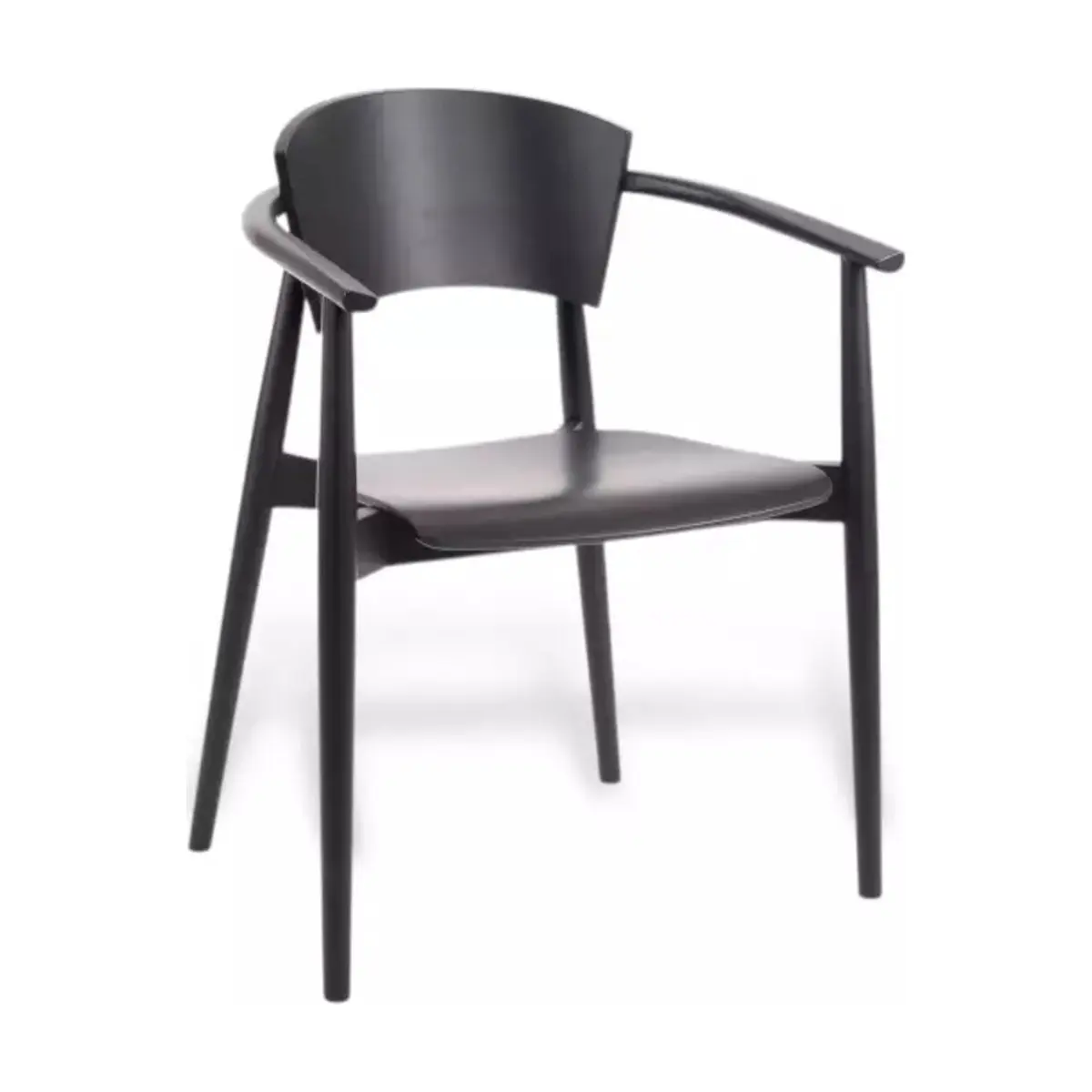
Frank wood armchair: View the Frank armchair
Key takeaways
- Side chairs take less floor space and slide closer together, so they usually give you more seats per room.
- Armchairs add comfort and a premium feel, which suits fine dining, hotels and long meals.
- Arms must clear the table apron — check the arm height against the space under your table top before ordering.
- Mixing both styles in one family keeps the room consistent while matching seating to each zone.
1) What is the difference between a restaurant armchair and a side chair?
A side chair is an armless dining chair: a seat, a back and legs. An armchair adds armrests on both sides, either as an extension of the back frame or as separate arms joined to the seat. In commercial collections, many models come in both versions, so you can keep one design language throughout the room.
Side chairs are the workhorse of most dining rooms. Armchairs are used where comfort and presence matter more than maximum capacity.
2) Which takes up more space?
Armchairs are typically 2–4 in (5–10 cm) wider than the matching side chair, and their arms prevent guests from sliding chairs close together. Typical widths:
| Measurement | Side chair | Armchair |
|---|---|---|
| --- | --- | --- |
| Overall width | 17–20 in (43–51 cm) | 21–25 in (53–64 cm) |
| Table edge per seat | about 22–24 in (56–61 cm) | about 26–30 in (66–76 cm) |
| Fits a 30 in (76 cm) square table | 2–4 seats | 2 seats comfortably |
| Easy to add an extra seat | Yes | Rarely |
On a 60-seat floor, switching every side chair to an armchair can cost several seats once table spacing is adjusted. Use our restaurant seating layout guide to check clearances before deciding.
3) Which is more comfortable?
Armchairs give guests somewhere to rest their elbows and make it easier to stand up, which is why they suit long dinners, older guests and hotel dining. Side chairs feel lighter and less formal, which suits cafés and quick meals. A well-shaped side chair with a contoured back or an upholstered seat can be very comfortable, so do not assume arms are the only route to comfort.

Bernie solid wood side chair: View the Bernie chair
4) Will armchairs fit under my tables?
This is the most common ordering mistake. If the arm height is higher than the clearance under the table apron or top, the chair cannot slide in, it sits away from the table and blocks the aisle. Check these numbers:
- Table height: standard dining height is 29–30 in (74–76 cm).
- Clearance under the top: measure from the floor to the underside of the top or apron.
- Arm height: typically 25–27 in (64–69 cm) from the floor on dining armchairs.
Aim for at least 1 in (2.5 cm) between arm and apron. Pedestal tables with separate table bases usually have no apron, which makes armchairs much easier to fit.
5) Armchairs: strengths and watch-fors
Best for
- Fine dining, steakhouses and hotel restaurants
- Ends of banquettes and head positions at large tables
- Lounges, bars with low tables and private dining rooms
Strengths
- More comfort for long meals
- Higher perceived value and a more formal look
- Easier for guests to sit down and stand up
Watch for
- Fewer seats per room
- Arms may bump table aprons
- Usually a higher price per seat than the matching side chair

Pandora fully upholstered chairs: View the installation
6) Side chairs: strengths and watch-fors
Best for
- Cafés, bistros, fast casual and family restaurants
- Tight floor plans and two-tops along walls
- Rooms that are rearranged for groups or events
Strengths
- Maximum seat count and flexible table combinations
- Lighter to move and easier for staff to reset
- Many models stack, which helps cleaning and storage
Watch for
- Less elbow support during long meals
- Can feel casual in premium settings unless upholstered

CAFFE bentwood side chair: View the CAFFE chair
7) How do costs compare?
Within the same model family, armchairs generally cost more than side chairs because they use more material and more joinery. The bigger cost difference, though, is revenue: if armchairs reduce your seat count, the lost covers over a few years can outweigh any savings elsewhere. Compare price per seat together with how many seats the plan holds.
8) Can you mix armchairs and side chairs in one restaurant?
Yes, and many good rooms do. Common approaches:
- Side chairs at two-tops and four-tops, armchairs at the heads of large tables.
- Side chairs along banquettes, armchairs only at the open ends.
- Armchairs in a private dining room, side chairs in the main room.
Choose models from the same family, with the same wood stain and upholstery, so the room reads as one design. BESeating wood chairs are made in Europe from carefully selected beech and oak, and custom stain matching keeps mixed orders consistent.
9) Which works better with wood or metal frames?
Both styles are available in wood and metal. Wood armchairs feel warm and traditional, while metal side chairs suit industrial and modern interiors. Compare wood chairs and metal chairs and order samples of both to see them at your tables.
10) What should you check before ordering?
- Table height, apron clearance and top size for every table type
- Seat count required by your business plan
- Stacking needs for cleaning and events
- Upholstery choice: vinyl for heavy-use rooms, fabric for quieter, premium spaces
- Samples of the chair and swatches, tested at your actual tables
Final recommendation
For most restaurants, the right answer to restaurant armchairs vs side chairs is side chairs as the default and armchairs where comfort earns its space: fine dining tables, banquette ends, private rooms and hotel restaurants. Measure apron clearance before you order, keep both styles in one family, and let your seat count guide the mix.
Next step: browse restaurant chairs, compare upholstered vs wood seat chairs, and request samples to test arm clearance at your tables.
FAQ: Restaurant armchairs vs side chairs
Are armchairs better than side chairs for restaurants?
Not automatically. Armchairs are more comfortable and look more premium, which suits long meals and formal dining. Side chairs take less space, increase seat count and are easier to move. Most restaurants use side chairs as the main seat and add armchairs only where comfort and presence justify the extra width.
How much wider is a restaurant armchair?
A dining armchair is usually 2–4 in (5–10 cm) wider than its matching side chair, with typical widths of 21–25 in (53–64 cm). Plan about 26–30 in (66–76 cm) of table edge per armchair, compared with roughly 22–24 in (56–61 cm) for armless side chairs.
What arm height fits under a standard table?
Dining armchairs typically have arms 25–27 in (64–69 cm) from the floor. With a standard 29–30 in (74–76 cm) table, they usually fit if there is no deep apron. Measure the clearance under your table top and leave at least 1 in (2.5 cm) above the arms.
Can I use armchairs with booths?
Yes. Armchairs work well on the open side of a booth table or at the end of a banquette, where they balance the fixed seating. Check that the aisle behind the chair stays at least 36 in (91 cm) wide so service and guest movement are not blocked.
Do armchairs stack?
Some do, but armchairs generally stack lower than side chairs because the arms take more room. If you need to clear floors daily or host events, choose stackable side chairs for the main floor and keep armchairs for fixed premium zones such as private dining rooms.



Be Seating 2010 - 2026 All rights reserved ©
Request a quote
CloseName
Phone
Company name
Industry type
Country
Notes
Please enter the result below
I agree with....
Wrong verification code.
All fields are mandatory
Thank you for your message! We will come back to you shortly.