


Upholstered vs Wood Seat Restaurant Chairs: Which Should You Choose?
11:03 | Tue | 27 October 2026
Upholstered vs Wood Seat Restaurant Chairs: Which Should You Choose?
Updated October 2026 · By the BESeating team — manufacturing commercial seating since 1993
Quick answer: In the upholstered vs wood seat restaurant chairs decision, choose a wood seat for fast turnover, heavy spills and the lowest upkeep, and an upholstered seat for longer meals, more comfort and a softer look. Many restaurants use the same wood frame with both versions, so the style stays consistent across the room.
Most restaurant chair models come in two versions: a solid wood seat and an upholstered (padded) seat. Choosing between upholstered vs wood seat restaurant chairs affects comfort, cleaning routines, noise and long-term cost. This comparison helps you pick the right option for your concept.

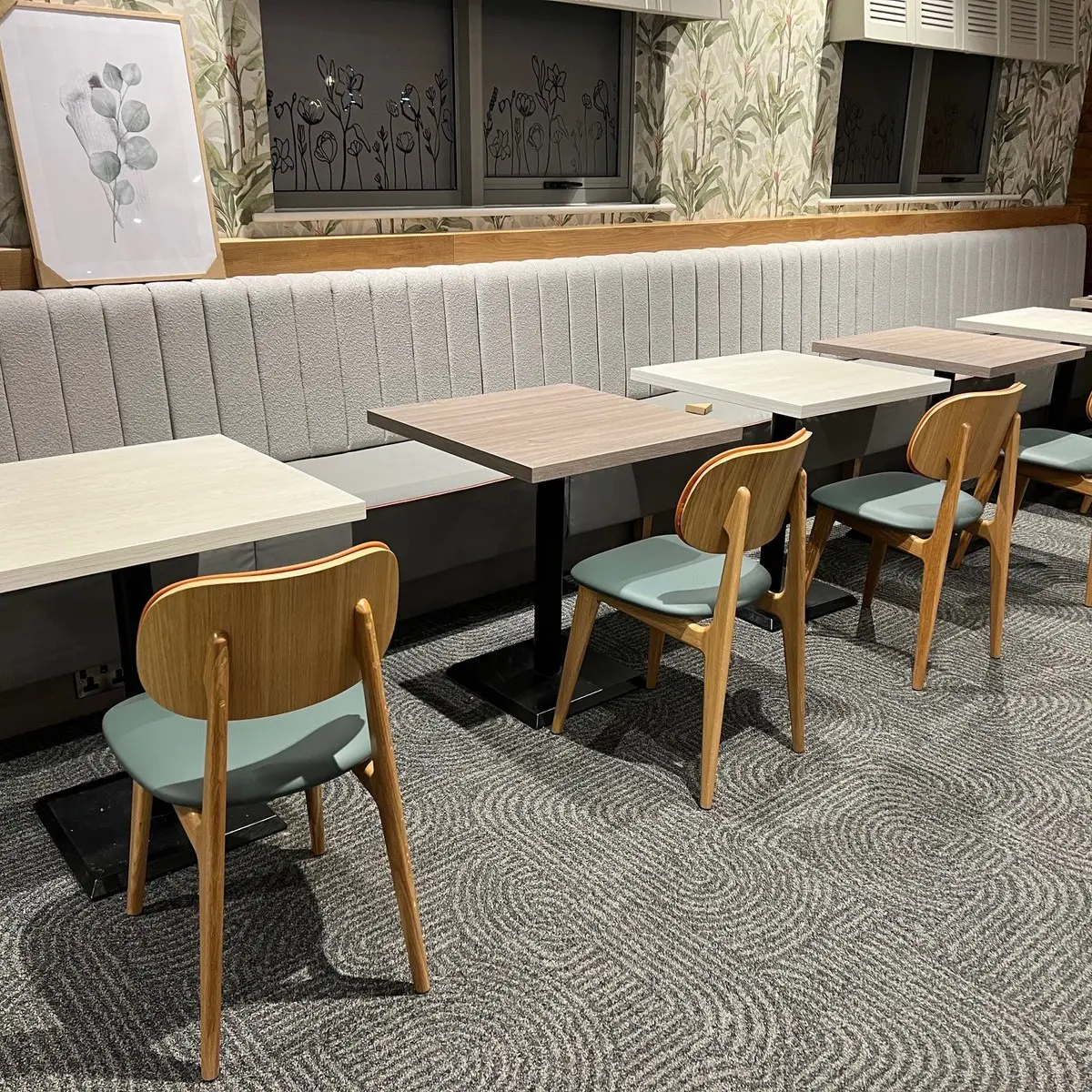
Upholstered seat example: View the Bernie P chair
Key takeaways
- Wood seats are the easiest to clean and the most robust under heavy turnover.
- Upholstered seats add comfort for meals longer than about an hour.
- Commercial vinyl makes padded seats almost as easy to wipe as wood.
- You can mix both versions of the same model across zones of one room.
1) What is the difference between a wood seat and an upholstered seat?
A wood seat is a solid or veneered panel, usually shaped for comfort and finished with the same stain and lacquer as the frame. An upholstered seat adds foam and a cover of vinyl or fabric, either as a pad fixed onto a wood base or as a drop-in seat that can be removed. The frame, joints and back are often identical, so the main differences are comfort, maintenance and look.

Wood seat example: View the Bernie solid wood chair
2) Which is more comfortable?
Upholstered seats win for comfort, especially for meals that last more than an hour. Foam spreads pressure and feels warmer. A well-shaped wood seat is still comfortable for 30–60 minutes, which suits cafés, breakfast service and quick casual dining.
| Meal length | Recommended seat | Why |
|---|---|---|
| Under 45 minutes | Wood seat | Comfort is enough; fastest cleanup |
| 45–90 minutes | Either; upholstered preferred | Padding helps on longer stays |
| Over 90 minutes | Upholstered seat (or seat and back) | Comfort drives the guest experience |
3) Which is easier to clean?
Wood seats are the simplest: wipe with a damp cloth and mild cleaner, dry, and they are ready. Upholstered seats depend on the cover. Commercial vinyl wipes clean almost as easily as wood, while fabric needs prompt spot cleaning and regular deeper cleaning. Seams and piping can collect crumbs, so check them during daily cleaning. Our restaurant chair cleaning checklist gives daily, weekly and yearly routines.
4) Which lasts longer in commercial use?
A solid wood seat has few wear points: the main risk is scratches to the finish, which can be refinished. An upholstered seat has a cover that will eventually wear, especially at the front edge where guests slide in and out. The good news is that a pad or drop-in seat can be reupholstered while the frame keeps working. In practice, both can deliver many years of service if the frame is commercial grade.
Wood seat — strengths
- Very durable, no cover to tear
- Can be sanded and refinished
- Lower initial cost on most models
Upholstered seat — strengths
- More comfort and a softer, upscale look
- Covers can be changed when you refresh the interior
- Absorbs some sound in busy rooms

Upholstered seat example: View the Bernie PS chair
5) How do the two compare side by side?
| Factor | Wood seat | Upholstered seat |
|---|---|---|
| Comfort | Good for short stays | Better for long stays |
| Cleaning | Wipe and dry | Easy with vinyl; more care with fabric |
| Durability | Highest; refinishable | Cover wears; can be reupholstered |
| Spills | No absorption | Vinyl resists; fabric needs treatment |
| Noise | Harder, more echo | Slightly softer acoustics |
| Look | Natural, casual, Scandinavian | Warmer, more upscale |
| Upfront cost | Usually lower | Usually higher |
6) Which seat is best for each type of venue?
- Cafés and bakeries: wood seats for fast turnover and crumbs.
- Casual and family restaurants: wood or vinyl-upholstered seats; vinyl handles kids and spills.
- Fine dining: upholstered seats, often with upholstered backs too; see our fine dining chair guide.
- Hotel restaurants and breakfast rooms: upholstered seats for all-day use and comfort.
- Bars and pubs: wood seats on stools for beer spills, or vinyl for comfort.
- Patios: outdoor-rated materials only; standard upholstery does not belong outdoors.
7) Vinyl or fabric for an upholstered seat?
For most restaurants, commercial vinyl is the practical choice: it resists spills and wipes clean in seconds. Fabric looks warmer and suits quieter, more upscale rooms, but it needs stain treatment and more care. Compare them in our vinyl vs fabric upholstery guide and browse the colors and upholstery range.

Vinyl collection: View the Arizona vinyls
8) Can you mix both seat types in one restaurant?
Yes, and many restaurants do. Use the same chair model with a wood seat in a quick-service front area or terrace-facing zone and an upholstered seat in the main dining room. The shared frame keeps the design consistent. A matching stain across both versions is important; BESeating offers custom stain matching so the frames match each other and your interior. See custom restaurant chairs for how stains and upholstery are specified.
9) What about the backrest?
The same question applies to the back. A wood back is durable and easy to clean, while an upholstered back adds comfort and a more formal look. A common middle ground is an upholstered seat with a wood back: comfort where it matters most, with less maintenance than a fully upholstered chair.

Mixed example: View the curved back wood chair
10) How do you decide for your restaurant?
Ask four questions: How long do guests stay? How messy is the menu? How much cleaning time does the team have? What look are you aiming for? Short stays, messy menus and limited cleaning time point to wood seats. Longer meals and a more upscale look point to upholstered seats. Use our restaurant chair buying checklist to cover the rest of the specification.
11) Why order samples of both versions?
Comfort is personal and finishes look different in real light. Ordering a wood seat and an upholstered seat sample of the same model, with vinyl or fabric swatches, lets your team sit on both and test cleaning before you commit. Samples are available for all BESeating products, including fabric and vinyl swatches, and every chair goes through a quality testing process.
Final recommendation
Choose wood seats for fast-turnover, spill-heavy concepts where cleaning speed and durability come first. Choose upholstered seats, ideally in commercial vinyl, where guests stay longer and comfort shapes the experience. If your room has both kinds of use, pick one model and order it in both versions with a matched stain.
Next step: Browse wood restaurant chairs, request samples and swatches, or contact BESeating to discuss seat options for your project.
FAQ: Upholstered vs wood seat restaurant chairs
Are wood seat restaurant chairs comfortable?
A well-shaped wood seat is comfortable for 30–60 minutes, which covers most café, breakfast and casual meals. Comfort depends on seat shape, height and depth, not only padding. For dinners that regularly run longer than an hour, an upholstered seat is usually the better choice for guests.
Do upholstered restaurant chairs get dirty quickly?
Not if you choose the right cover. Commercial vinyl resists spills and wipes clean, so it stays tidy with daily cleaning. Fabric shows stains faster and needs prompt spot cleaning and periodic deep cleaning. Dark or patterned fabrics hide marks better than light, plain ones.
Can an upholstered seat be replaced later?
In most commercial chairs, yes. Upholstered pads and drop-in seats can be reupholstered or replaced when the cover wears or when you refresh your interior. The wood frame keeps working, which makes upholstered seats a reasonable long-term choice even in busy restaurants.
Which is cheaper over time?
Wood seats usually cost less up front and need almost no upkeep beyond cleaning and occasional refinishing. Upholstered seats cost more initially and may need reupholstering after years of use. The difference is often small compared with the value of better comfort in longer-stay restaurants.
Can I use the same chair model with both seats?
Yes. Many models are offered with either a wood seat or an upholstered seat on the same frame. Mixing them lets you put durable wood seats in fast areas and padded seats in the main dining room while keeping one consistent design and a matched stain.



Be Seating 2010 - 2026 All rights reserved ©
Request a quote
CloseName
Phone
Company name
Industry type
Country
Notes
Please enter the result below
I agree with....
Wrong verification code.
All fields are mandatory
Thank you for your message! We will come back to you shortly.