


Stained vs Painted Restaurant Chairs: Which Finish Is Better?
09:17 | Thu | 05 November 2026
Stained vs Painted Restaurant Chairs: Which Finish Is Better?
Updated November 2026 · By the BESeating team — manufacturing commercial seating since 1993
Quick answer: In the stained vs painted restaurant chairs decision, stain is usually the better choice for busy dining rooms: it shows the wood grain, hides small scratches and is easier to touch up. Paint gives bold, uniform color and suits design-led concepts, but chips and scuffs show more clearly and need more careful repair.
Choosing between stained vs painted restaurant chairs affects how your room looks on opening day and how it looks after two years of daily service. Both finishes sit on the same wood frame, so the decision is about appearance, wear and maintenance. This comparison explains how each finish behaves in commercial use and where each one makes sense.

Wood stains: View BESeating wood stain options
Key takeaways
- Stain colors the wood and lets the grain show; paint covers the wood with an opaque color.
- Stained chairs hide everyday scratches better because the color goes into the wood.
- Painted chairs give bold or matte solid colors but chips show the lighter wood underneath.
- Both rely on a durable commercial topcoat; that layer does most of the protecting.
1) What is the difference between stained and painted chairs?
A stain is a translucent color that soaks into the wood surface. The grain, knots and natural variation remain visible. A painted finish is an opaque color layer that hides the grain and gives a uniform surface. In commercial furniture, both are normally sealed with a clear protective topcoat that resists liquids and wear.
| Feature | Stained finish | Painted finish |
|---|---|---|
| --- | --- | --- |
| Appearance | Wood grain visible, natural variation | Solid, uniform color, grain hidden |
| Color range | Natural, honey, walnut, espresso, black and custom stains | Almost any color, including black, white and brights |
| Scratch visibility | Low to moderate | Moderate to high on dark or bright colors |
| Touch-ups | Easier with stain markers or touch-up kits | Harder to blend; chips may need sanding and repainting |
| Typical style | Classic, bistro, mid-century, rustic | Modern, Scandinavian, playful, design-led |
2) Which finish is more durable?
Durability depends mostly on the quality of the topcoat and the preparation, not on whether the color layer is stain or paint. That said, the way damage looks is different. When a stained chair gets a light scratch, the wood underneath is still colored, so the mark is subtle. When a painted chair is chipped, the lighter raw wood shows through, which draws the eye.
Stained: strengths
- Small dents and scratches blend into the grain
- Ages gracefully, often looking better with gentle wear
- Easy to match across chairs, bar stools and table tops
Painted: strengths
- Strong color statement and a clean, modern look
- Uniform appearance across mixed wood species
- Works well with colored upholstery and brand palettes
Watch for
- Painted chairs in very high-traffic areas, where chips are inevitable
- Very dark stains, which can show dust and light scratches on flat surfaces

Bernie solid wood chair: View the Bernie restaurant chair
3) Which finish looks better in a restaurant?
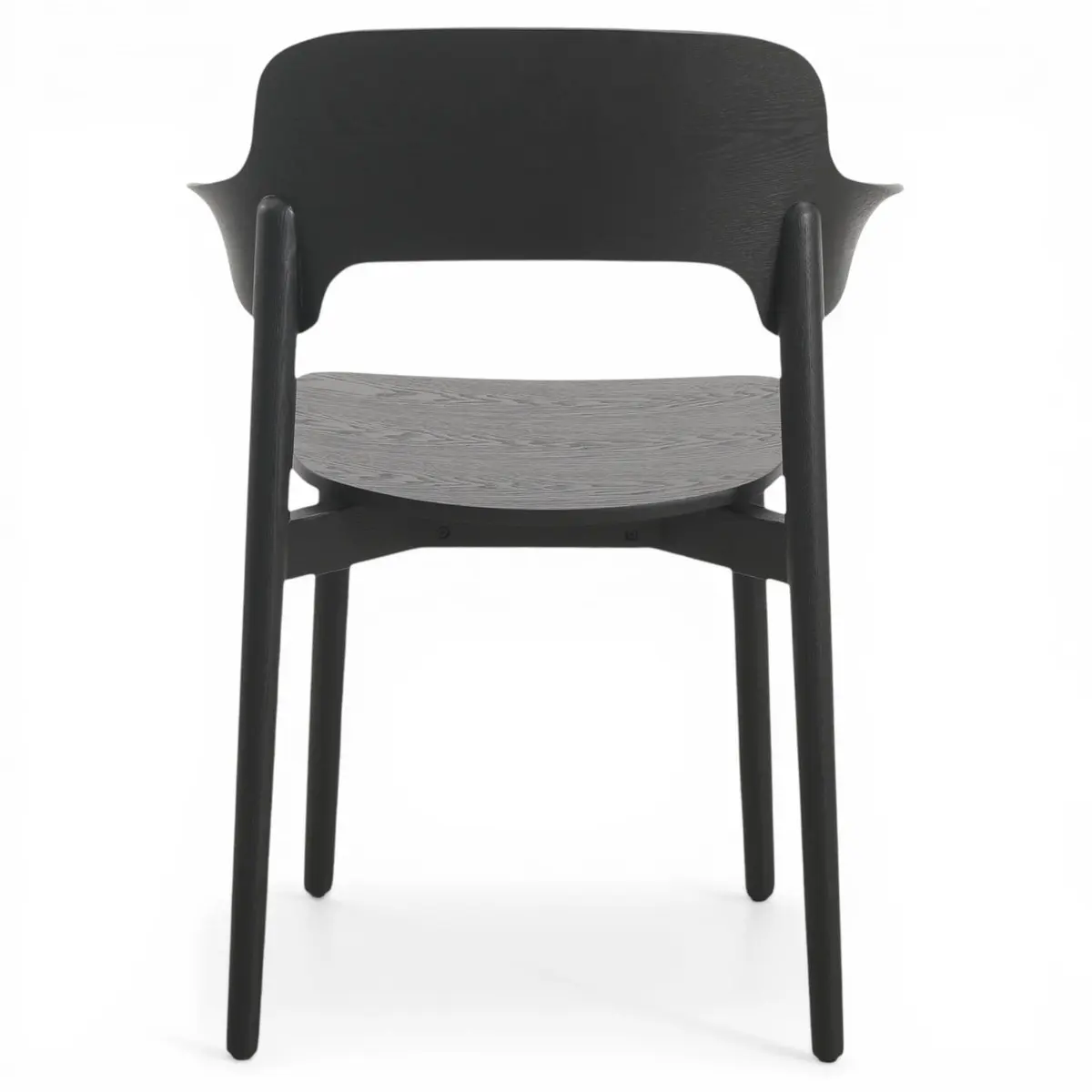
It depends on the concept. Stained beech and oak are the default for classic bistros, Italian restaurants, steakhouses and hotel dining rooms because the grain feels warm and authentic. Painted or solid-color finishes suit modern cafés, fast casual concepts and brand-led interiors where a specific color matters more than visible wood.
If your concept is traditional, see our guides to bistro furniture and Italian restaurant furniture. For mid-century or Scandinavian looks, solid matte colors and darker stains both work well.
4) Which is easier to repair and touch up?
Stained chairs are easier to touch up. A matching stain marker or a small touch-up kit can hide most scratches in minutes, and deeper damage can often be sanded lightly and re-stained. Painted chairs are harder: a chip needs filling, sanding, primer and paint, and matching sheen is tricky. For restaurants without a maintenance team, stain is the lower-effort option.
| Repair task | Stained chair | Painted chair |
|---|---|---|
| --- | --- | --- |
| Light surface scratch | Stain marker, blends well | Touch-up paint, may show |
| Chip on a leg or edge | Fill and stain | Fill, sand, prime, repaint |
| Full refinish | Sand and re-stain or change color | Strip or sand, then repaint |
5) How does the wood species affect the finish?
Beech has a fine, even grain that takes stain evenly and is also a good base for paint. Oak has a more open, pronounced grain that looks rich under stain; under paint, the grain texture can still show through slightly, which some designers like. BESeating wood chairs are manufactured in Europe from carefully selected beech and oak. Our article on solid wood vs plywood chairs explains why the frame material matters as much as the finish.

CAFFE bentwood chair: View the CAFFE bentwood chair
6) Can you match a stain or paint color to your interior?
Yes. Custom stain matching lets you match chairs to existing floors, millwork, bar tops or a designer's sample. BESeating offers custom stain matching and a range of standard wood stains. Always approve a physical finish sample under your actual lighting, because stain color changes with wood species and light temperature.
For painted looks, specify a color reference and sheen level, and ask for a sample on the same wood species as the chairs.
7) Which finish works best with upholstery?
Both. Stained frames pair naturally with leather-look vinyls in brown, black, oxblood and green. Painted frames are a good partner for bolder fabrics or tone-on-tone looks, such as a black frame with black vinyl or a soft gray frame with a textured fabric. Choose upholstery and frame finish together using swatches from the upholstery and colour range.

Billy chair: View the Billy chair
8) Which finish hides wear best in high-traffic areas?
Mid-tone stains such as walnut or medium oak hide wear best. They mask small scratches and do not show dust or fingerprints as easily as black or white. Very light natural finishes can show dirt on legs and stretchers, and very dark or black finishes show light scratches. If you prefer paint, mid-tone and slightly textured or matte colors are more forgiving than glossy brights.
9) Can you mix stained and painted chairs in one room?
Yes, and it can look intentional. A common approach is stained wood chairs in the main dining room and painted chairs in a café or bar zone, or stained frames with painted accent chairs at a communal table. Keep a clear rule, such as one stain plus one paint color, so the room feels designed rather than mismatched.
10) Does the finish affect cleaning?
Cleaning is the same for both as long as the topcoat is intact: wipe with a damp cloth and mild soap, then dry. Avoid harsh solvents, abrasive pads and soaking legs with water. Damaged topcoat is what lets moisture into the wood, so repair chips and deep scratches promptly on both stained and painted chairs.
11) How do you decide for your restaurant?
Ask three questions. Is visible wood part of your concept? How busy are your aisles, and how careful are staff when moving chairs? Who will do touch-ups? If visible wood matters and traffic is heavy, choose stain. If a precise color matters and you can keep up with small repairs, paint is a good option.
Final recommendation
For most restaurants, stained wood chairs are the safer long-term choice: they hide everyday wear, are easier to touch up and match easily with tables and bar stools. Choose painted chairs when a specific color is central to your design and you have a plan for maintenance. Whatever you choose, approve a physical sample first.
Next step: compare frames in the wood chairs collection, request finish samples, and see how stains look in real rooms in our installations gallery. Questions? Reach us through the contact page.
FAQ: Stained vs painted restaurant chairs
Are painted restaurant chairs less durable than stained ones?
Not necessarily. Durability depends on the topcoat and preparation. The difference is in appearance after damage: a scratch on a stained chair blends in, while a chip on a painted chair exposes lighter wood. In very busy restaurants, that makes painted chairs look worn sooner unless they are touched up regularly.
Can stained chairs be painted later?
Yes. A stained chair can be sanded, primed and painted during a remodel. Going the other way, from paint back to stain, is harder because paint must be fully removed from the grain. If you are unsure, starting with stain keeps more options open for future refreshes.
What is the most practical stain color for a restaurant?
Mid-tone stains such as walnut or medium oak are the most forgiving. They hide scratches, dust and fingerprints and pair with many upholstery colors. Very light natural tones show dirt, and very dark or black finishes can show light scratches and dust on flat surfaces.
Is black a stain or a paint on wood chairs?
It can be either. A black stain lets some grain texture show through, especially on oak. An opaque black paint hides the grain completely and gives a uniform surface. Ask for samples of both on the actual wood species, because the difference is clear in person.
Can you match chair stain to my existing tables and floors?
Yes. Custom stain matching is available for BESeating wood chairs. Send a physical sample, such as an offcut or a table top sample, and approve the matched finish before production. Check the result under your restaurant lighting, since color looks different under warm and cool light.



Be Seating 2010 - 2026 All rights reserved ©
Request a quote
CloseName
Phone
Company name
Industry type
Country
Notes
Please enter the result below
I agree with....
Wrong verification code.
All fields are mandatory
Thank you for your message! We will come back to you shortly.