


Brewery and Taproom Furniture: Seating That Handles Busy Nights
10:40 | Wed | 28 October 2026
Brewery and Taproom Furniture: Seating That Handles Busy Nights
Updated October 2026 · By the BESeating team — manufacturing commercial seating since 1993
Quick answer
The best brewery taproom furniture combines long communal tables, backless or low-back bar stools along the bar and rail, and sturdy stackable chairs in wood, metal or both. Choose commercial-grade frames, sealed table tops that resist beer spills, heavy table bases and outdoor-rated seating for the beer garden.
Choosing brewery taproom furniture is different from furnishing a quiet dining room. Taprooms fill up fast, guests move between the bar, the tables and the patio, and spills are part of every shift. This guide explains which chairs, stools, tables and patio pieces hold up in breweries and beer halls, and how to plan seating for busy nights.

Restaurant project Monique: View the project
Key takeaways
- Mix communal tables, bar-rail stools and smaller tables so groups of every size find a seat.
- Choose commercial-grade frames with strong joints; taproom chairs are dragged, tipped back and stacked daily.
- Seal every table top against beer, water and cleaning chemicals, and choose heavy bases for long tables.
- Plan outdoor-rated furniture for the beer garden instead of moving indoor pieces outside.
1) What furniture does a brewery taproom need?
Most taprooms need four seating zones: the bar itself, drink rails or window counters, the main floor with tables, and an outdoor area. Each zone serves a different type of visit, from a quick tasting flight to a three-hour birthday group. Planning furniture by zone helps you balance capacity with comfort.
| Zone | Typical furniture | Main requirement |
|---|---|---|
| Bar | Bar-height stools | Durable, easy to clean, right height |
| Drink rails and window counters | Backless stools | Compact, tuck under the rail |
| Main floor | Communal tables, 2- and 4-tops, chairs | Flexible groupings, sturdy frames |
| Lounge corner | Booths or upholstered chairs | Comfort for longer stays |
| Beer garden or patio | Outdoor chairs, tables and stools | Weather and UV resistance |
2) Should you choose communal tables or small tables?
Communal tables define the taproom experience. They encourage conversation, seat large groups without reshuffling furniture and fit many guests into a long room. A 30–36 in (76–91 cm) wide table that runs 8–12 ft (2.4–3.7 m) seats eight to twelve people on chairs or benches.
Small tables still matter. Couples and groups of three often prefer their own space, and 2-tops can be pushed together for bigger parties. A common balance is about half the floor seating at communal tables and half at movable 2- and 4-tops.
Best for
- Communal tables: high-volume weekends, events, trivia nights, family groups.
- 2- and 4-tops: dates, small groups, guests who want a quieter spot.
- High-top tables: standing-and-sitting crowds near the bar.
3) Which bar stools work best in a taproom?
Taproom bars are busy. Guests stand behind seated guests, lean in to order and move in and out often. Backless stools or stools with low backs work best along rails and counters, while stools with backs suit a bar where regulars settle in for the evening. Check heights: bar-height stools have seats of about 29–31 in (74–79 cm) for 42 in (107 cm) bars, and counter-height stools about 24–26 in (61–66 cm) for 36 in (91 cm) counters.
For a detailed comparison, read bar stools with backs vs backless or browse our metal bar stools.
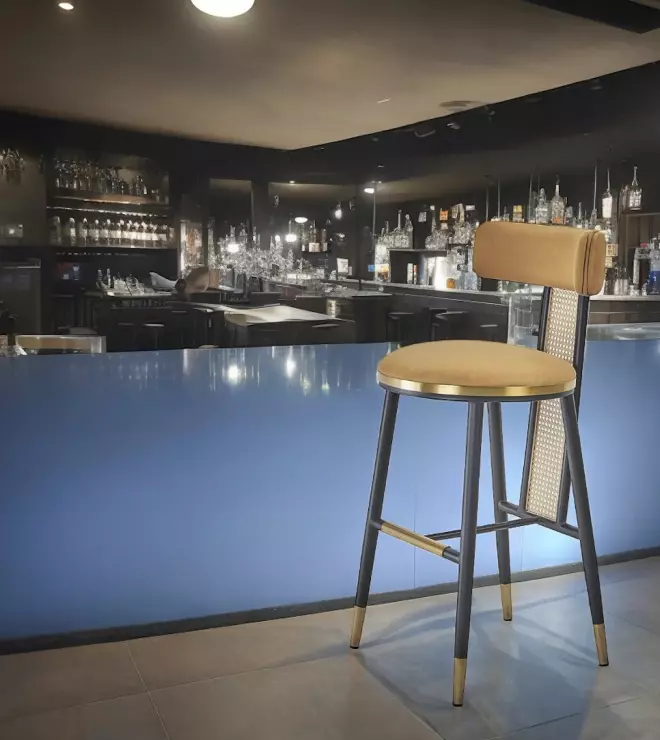
Metal bar stools: View metal bar stools
4) Which chairs handle crowds and spills?
Taproom chairs take more abuse than most restaurant chairs. They are pulled across concrete, tipped back on two legs and stacked at closing. Look for commercial-grade construction with reinforced joints, protective floor glides and finishes that resist alcohol and cleaning products.
Strengths of each material
- Solid wood chairs: warm, classic beer-hall look; can be refinished and repaired. Our wood chairs are made in Europe from selected beech and oak.
- Metal chairs: slim, strong and easy to wipe; suit industrial interiors. See metal chairs.
- Metal frame with wood seat: combines industrial strength with warmth and is a natural fit for breweries.
Watch for
- Upholstered seats near the bar collect spills; if you use them, choose commercial vinyl.
- Lightweight residential chairs loosen quickly under taproom traffic.
- Stacking chairs should stack without scratching each other; check bumpers and glides.

Metal chair with wood seat and back BF-004: View the BF-004 chair
5) What table tops hold up to beer and cleaning?
Beer is acidic and sugary, and taproom tables are wiped constantly. Choose tops with a sealed commercial finish on every face, including the edges and underside, so moisture cannot get into the core. Solid wood and wood veneer tops give the warm look most breweries want; laminate tops are practical for high-volume areas and patios under cover.
| Top material | Look | Maintenance |
|---|---|---|
| Solid wood, sealed | Warm, natural, premium | Wipe daily; refinish when worn |
| Wood veneer | Wood look, lighter weight | Protect edges from impact |
| High-pressure laminate | Many colors and wood looks | Very easy to clean |
| Outdoor-rated tops | Weather-resistant finishes | Rinse and wipe; check fixings each season |
Our guide to restaurant table tops compares materials, sizes and edges in more detail, or browse table tops.
6) Which table bases suit long communal tables?
Long tables need bases that stay stable when guests lean on one end. For tables over about 6 ft (1.8 m), use two or more bases or a dedicated large base with a wide footprint. A cast-iron or heavy steel base with leveling glides prevents wobble on uneven brewery floors. Keep bases at least 12 in (30 cm) from table ends so guests have leg room.
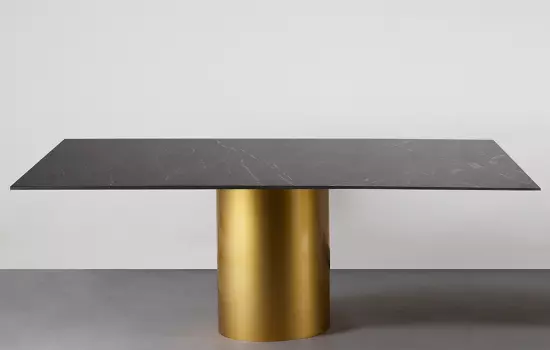
Big size table bases: View table bases
7) What furniture works in a beer garden or patio?
Outdoor areas often bring in the most revenue in summer, and they face sun, rain and temperature swings. Choose furniture rated for outdoor use: aluminum frames, synthetic teak and weather-resistant finishes. Stackable pieces make it easier to store furniture in the off-season or clear the patio for events. See our outdoor patio furniture and the full commercial outdoor restaurant furniture guide.

Outdoor stackable aluminum chair: View the outdoor stackable chair
8) Do booths belong in a taproom?
Booths are not essential, but a few along a wall create a comfortable zone for groups who order food and stay longer. They also give the room acoustic softness, which helps in large, hard-surfaced brewery spaces. Commercial vinyl upholstery is the practical choice. Browse our restaurant booths to compare styles.
9) How many seats can your taproom hold?
A common planning range for casual dining and taproom floors is about 12–15 sq ft (1.1–1.4 m²) per seat, including aisles. Bar areas and communal tables use space more efficiently; lounge corners use more. Your final capacity depends on local codes, exits and fire regulations, so confirm with your architect or local authority before ordering.
- Allow 36–48 in (91–122 cm) for main aisles.
- Allow about 24 in (61 cm) of table length per guest at communal tables.
- Leave standing room near the bar for busy nights.
10) What style fits a brewery?
Most breweries lean toward industrial or rustic styles: raw metal, natural wood, concrete and exposed brewing equipment. Chairs that combine metal frames with wood seats, solid wood bistro chairs and simple backless stools fit naturally. Custom stain colors let you match furniture to bar fronts, doors and signage. Explore restaurant looks for installation ideas.
11) How should you maintain taproom furniture?
- Wipe tables and seats after each group with a mild, non-abrasive cleaner.
- Check chair and stool joints monthly; tighten or repair loose ones early.
- Replace worn floor glides before they damage concrete or wood floors.
- Inspect outdoor furniture at the start and end of each season.
Final recommendation
Build your brewery taproom furniture plan around communal tables, practical bar stools and strong chairs that combine wood and metal, then add a few comfortable booths and outdoor-rated patio seating. Prioritize commercial-grade construction and sealed finishes over cheaper residential pieces, because taproom traffic exposes weak furniture quickly.
Next step: browse restaurant chairs and bar stools, review our quality testing, request samples or contact our team with your floor plan.
FAQ: Brewery taproom furniture
What kind of seating is best for a brewery taproom?
A mix works best: communal tables for groups, bar stools along the bar and drink rails, smaller tables for couples and outdoor-rated seating for the patio. Commercial-grade chairs in wood, metal or a metal frame with a wood seat suit the industrial and rustic style most breweries use.
How wide should a communal taproom table be?
A communal table for seating on both sides is typically 30–36 in (76–91 cm) wide. Wider tables leave more room for shared food and flights but make conversation across the table harder. Plan about 24 in (61 cm) of length per guest, so a 10 ft (3 m) table seats roughly ten people.
Are backless stools good for a taproom?
Yes, especially along drink rails, window counters and high-top tables. Backless stools save space, tuck under counters and are quick to clean. At the main bar, where regulars sit longer, stools with low or full backs add comfort. Many taprooms use both styles with matching finishes and heights.
Can indoor taproom furniture be used outside?
It is not recommended. Indoor finishes and upholstery are not designed for sun, rain and temperature swings, and they wear out quickly outdoors. Choose outdoor-rated furniture, such as aluminum frames and synthetic teak, for beer gardens and patios, and store or cover it in the off-season.
How do you keep taproom tables from wobbling?
Use heavy table bases with leveling glides, size the base to the table top and add a second base under long communal tables. Uneven concrete floors are common in breweries, so adjustable glides are important. Check and readjust glides regularly, especially after floors are deep-cleaned or furniture is moved.



Be Seating 2010 - 2026 All rights reserved ©
Request a quote
CloseName
Phone
Company name
Industry type
Country
Notes
Please enter the result below
I agree with....
Wrong verification code.
All fields are mandatory
Thank you for your message! We will come back to you shortly.