


Coffee Shop Furniture: How to Choose Chairs, Tables and Stools for a Café
11:02 | Tue | 27 October 2026
Coffee Shop Furniture: How to Choose Chairs, Tables and Stools for a Café
Updated October 2026 · By the BESeating team — manufacturing commercial seating since 1993
Quick answer: The best coffee shop furniture mixes compact, durable café chairs with 24–30 in (61–76 cm) tables, a counter or window bar with stools for solo guests, and a small comfortable zone for longer stays. Choose commercial-grade frames, wipeable finishes and seating sized for laptops, cups and quick turnover.
Choosing coffee shop furniture is different from furnishing a full restaurant. Guests stay anywhere from three minutes to three hours, tables hold laptops as often as plates, and the room has to look good in photos. This guide explains what to buy for each zone of a US café and how to avoid the most common mistakes.

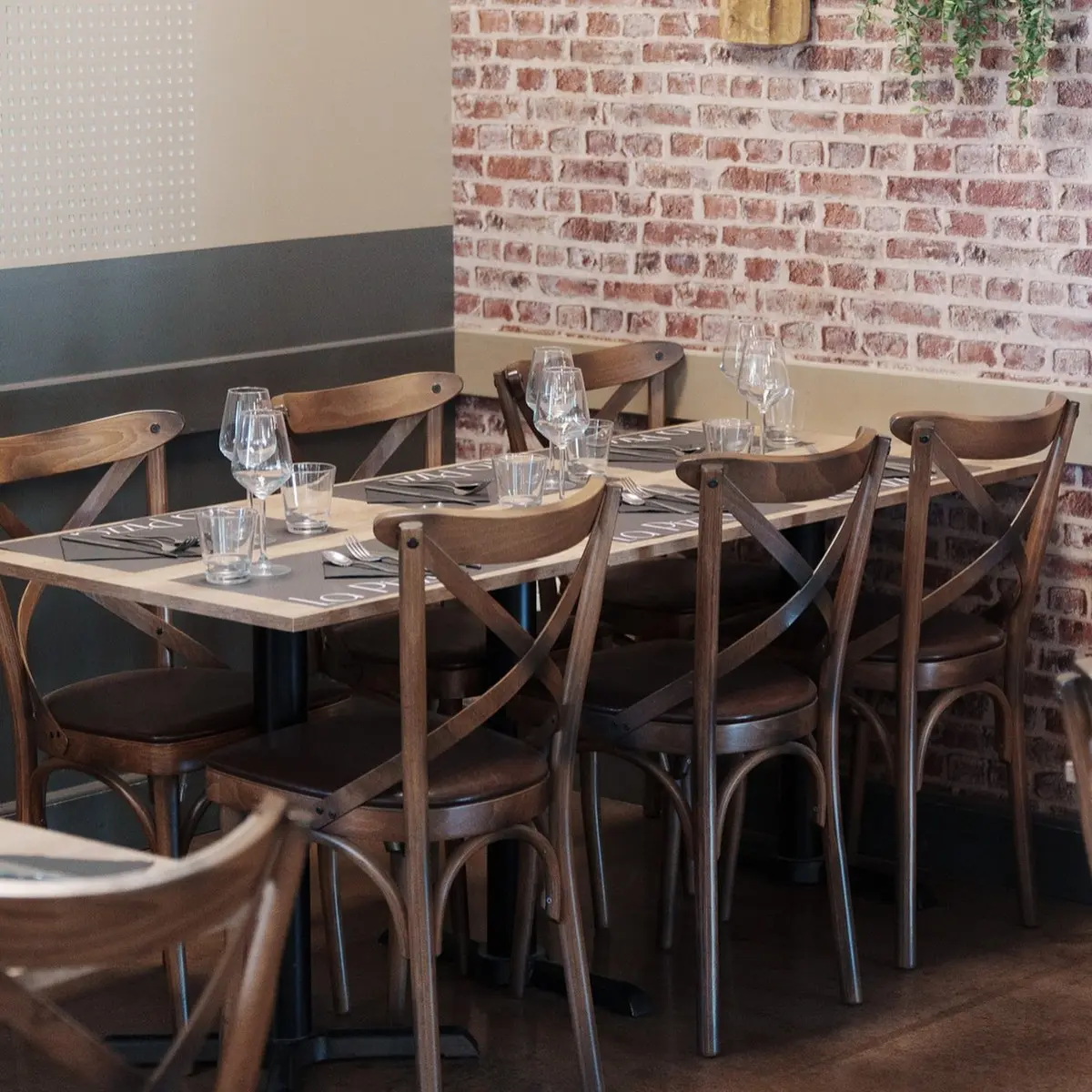
Café chair example: View the CAFFE bentwood fanback chair
Key takeaways
- Plan seating by guest type: grab-and-go, solo laptop users, pairs and small groups.
- Use small 24–30 in (61–76 cm) tables that combine for groups.
- Add a window or wall counter with stools to seat solo guests efficiently.
- Buy commercial-grade frames and wipeable finishes; café chairs are moved hundreds of times a day.
1) What kinds of guests will your coffee shop seat?
Start with how people use the space, not with a catalog. Most cafés serve four groups: grab-and-go customers who need a short wait area, solo guests with laptops, pairs meeting for coffee, and small groups or families on weekends. Each group wants a different seat. A shop near offices may need more counter seats and outlets; a neighborhood café on a weekend needs more 4-tops and a few comfortable chairs.
2) Which café chairs work best in a coffee shop?
Café chairs should be light enough to move, compact, and strong enough for constant use. Popular styles include:
Best for
- Bentwood chairs: classic café look, light and comfortable for short and medium stays
- Cane back chairs: warm, natural texture that photographs well
- Upholstered seat chairs: better comfort for laptop guests who stay longer
Watch for
- Very thin residential chairs that loosen quickly under daily use
- Wide armchairs that eat floor space around small tables
Read why the classic shape still works in our bentwood restaurant chairs guide, and browse wood restaurant chairs.

Cane chair example: View the Cane chair
3) Wood or metal café chairs?
Both work in coffee shops. Wood chairs feel warm and suit neighborhood cafés, bakeries and brunch spots. Metal chairs suit industrial interiors and very high-traffic counters.
| Factor | Wood café chairs | Metal café chairs |
|---|---|---|
| Look | Warm, classic, natural | Industrial, minimal |
| Comfort | Warmer to the touch, often shaped seats | Cooler; often needs a seat pad |
| Noise | Quieter on hard floors | Can scrape without glides |
| Repairs | Can be refinished | Powder coat can be touched up |
| Best for | Neighborhood cafés, bakeries | Industrial cafés, quick counters |
BESeating wood chairs are manufactured in Europe from carefully selected beech and oak. If you are weighing both, see our comparison of beech vs oak restaurant chairs.
4) What table sizes suit a coffee shop?
Café tables are usually smaller than restaurant tables, but they still need room for a laptop and two cups.
| Table type | Typical size | Best use |
|---|---|---|
| Small round | 24 in (61 cm) diameter | Pairs with drinks, tight spaces |
| Small square | 24×24 in (61×61 cm) | Pairs, combines for groups |
| Laptop 2-top | 24×30 in (61×76 cm) | Solo workers and pairs |
| Square 4-top | 30×30 in to 36×36 in (76×76 to 91×91 cm) | Small groups |
| Communal table | 30–36 in (76–91 cm) deep, 6–10 ft (1.8–3 m) long | Groups, shared work space |
Choose durable tops with sealed edges, because coffee and water spills are constant. Our guide to restaurant table tops compares laminate, solid wood and other materials.
5) How do you choose table bases for café tables?
Small tables wobble more easily, so the base matters. A round disc or cast base suits 24 in tops; a cross or four-prong base gives stability to larger squares. Choose bases that let chairs tuck in closely and do not clash with guests' knees. Floor levelers or self-adjusting glides help on uneven café floors.

Table base example: View the gold conical table base
6) Should a coffee shop have counter and bar seating?
Yes, in most cases. A window counter or wall bar seats solo guests in a narrow strip that would otherwise be wasted. Plan about 22–26 in (56–66 cm) of counter per stool and 12–16 in (30–41 cm) of counter depth for cups and laptops. Counter height (about 36 in / 91 cm) needs 24–26 in (61–66 cm) stools; bar height (about 42 in / 107 cm) needs 28–30 in (71–76 cm) stools. Check our bar stool height guide before ordering.

Bar stool example: View the Ellen bar stool
7) How many seats should a coffee shop have?
Cafés with high takeaway sales often devote less floor area to seating, while sit-down cafés plan more seats. For the seating area itself, about 10–12 sq ft (0.9–1.1 m²) per seat is a common range for café layouts, with more space where you add lounge chairs. General restaurant layout principles apply too: keep a clear queue line, a clear path to the pickup counter and at least 36 in (91 cm) aisles.
8) Do you need lounge seating in a café?
A few lounge chairs or an upholstered bench create a "stay a while" corner and make the space feel less like a fast-food line. Keep it small: lounge seats take more floor space per guest and turn slowly. Fully upholstered dining chairs can be a middle ground, with a padded seat and back on a compact footprint.
9) Which upholstery and finishes hold up in a coffee shop?
Coffee, milk and pastries mean frequent spills. Commercial vinyl is the easiest to wipe down; performance fabrics add warmth but need more care. On wood, choose a durable commercial finish and a stain that hides minor scuffs. Compare options in vinyl vs fabric upholstery.
10) What about outdoor café seating?
Sidewalk and patio seats often bring in guests on good-weather days. Use furniture made for outdoor use, such as aluminum frames that resist rust, and plan where it will be stored or covered. Our patio buyer's guide covers materials and care.

Outdoor chair example: View the outdoor stackable aluminum chair
11) What coffee shop furniture mistakes should you avoid?
- Buying residential furniture that cannot handle daily commercial use
- Filling the room with 4-tops when most guests come alone or in pairs
- Tables too small for a laptop and a cup
- No outlets near counter seats and laptop tables
- Ignoring how chairs sound when dragged on concrete or tile
Final recommendation
Plan your coffee shop furniture around guest types: compact café chairs and small combinable tables for pairs, a window counter with stools for solo guests, a small comfortable corner, and outdoor seating if you have the space. Choose commercial-grade frames and wipeable finishes, then test a sample chair before you order the full room.
Next step: Browse restaurant chairs, request samples and swatches, or contact BESeating about your café project.
FAQ: Coffee shop furniture
What is the best chair for a coffee shop?
A compact, commercial-grade café chair, often a bentwood or cane back wood chair, or a simple metal chair in industrial spaces. It should be light enough to move, sturdy enough for constant use and comfortable for 30–90 minutes. Add an upholstered seat if guests regularly stay to work on laptops.
What size tables do coffee shops use?
Most cafés use 24 in (61 cm) rounds or 24×24 in (61×61 cm) squares for pairs, 24×30 in (61×76 cm) tables for laptop guests, and 30–36 in (76–91 cm) squares for small groups. A long communal table can add flexible seating for groups and remote workers.
How high should coffee shop stools be?
Match the stool to the counter. Counter-height surfaces around 36 in (91 cm) need stools with a 24–26 in (61–66 cm) seat height. Bar-height counters around 42 in (107 cm) need 28–30 in (71–76 cm) stools. Leave about 10–12 in (25–30 cm) between seat and counter underside.
Is residential furniture okay for a small café?
It usually is not a good idea. Residential chairs are not built for hundreds of daily sits, being dragged across floors and frequent cleaning. Joints loosen and finishes wear quickly. Commercial-grade furniture costs more up front but usually lasts much longer in a café.
How do I make café furniture easy to clean?
Choose commercial vinyl or treated performance fabric, durable sealed finishes on wood, tops with sealed edges and bases with few dust traps. Wipe seats and tables daily with a mild cleaner, and add felt or nylon glides to protect floors and make chairs easier to move.



Be Seating 2010 - 2026 All rights reserved ©
Request a quote
CloseName
Phone
Company name
Industry type
Country
Notes
Please enter the result below
I agree with....
Wrong verification code.
All fields are mandatory
Thank you for your message! We will come back to you shortly.