


Leather vs Vinyl Restaurant Chairs: Which Upholstery Is Better?
08:59 | Wed | 04 November 2026
Leather vs Vinyl Restaurant Chairs: Which Upholstery Is Better?
Updated November 2026 · By the BESeating team — manufacturing commercial seating since 1993
Quick answer: For most busy restaurants, leather vs vinyl restaurant chairs comes down to traffic and cleaning: commercial vinyl wins on price, stain resistance and daily wipe-downs, while genuine leather wins on feel, aroma and patina in fine dining, lounges and private rooms where guests sit longer and staff can follow a gentle care routine.
Choosing between leather vs vinyl restaurant chairs is one of the first upholstery decisions in any dining room project. Both look polished on day one; the difference shows up after a year of spills, sanitizer and thousands of guests. This guide compares them the way operators actually use them.

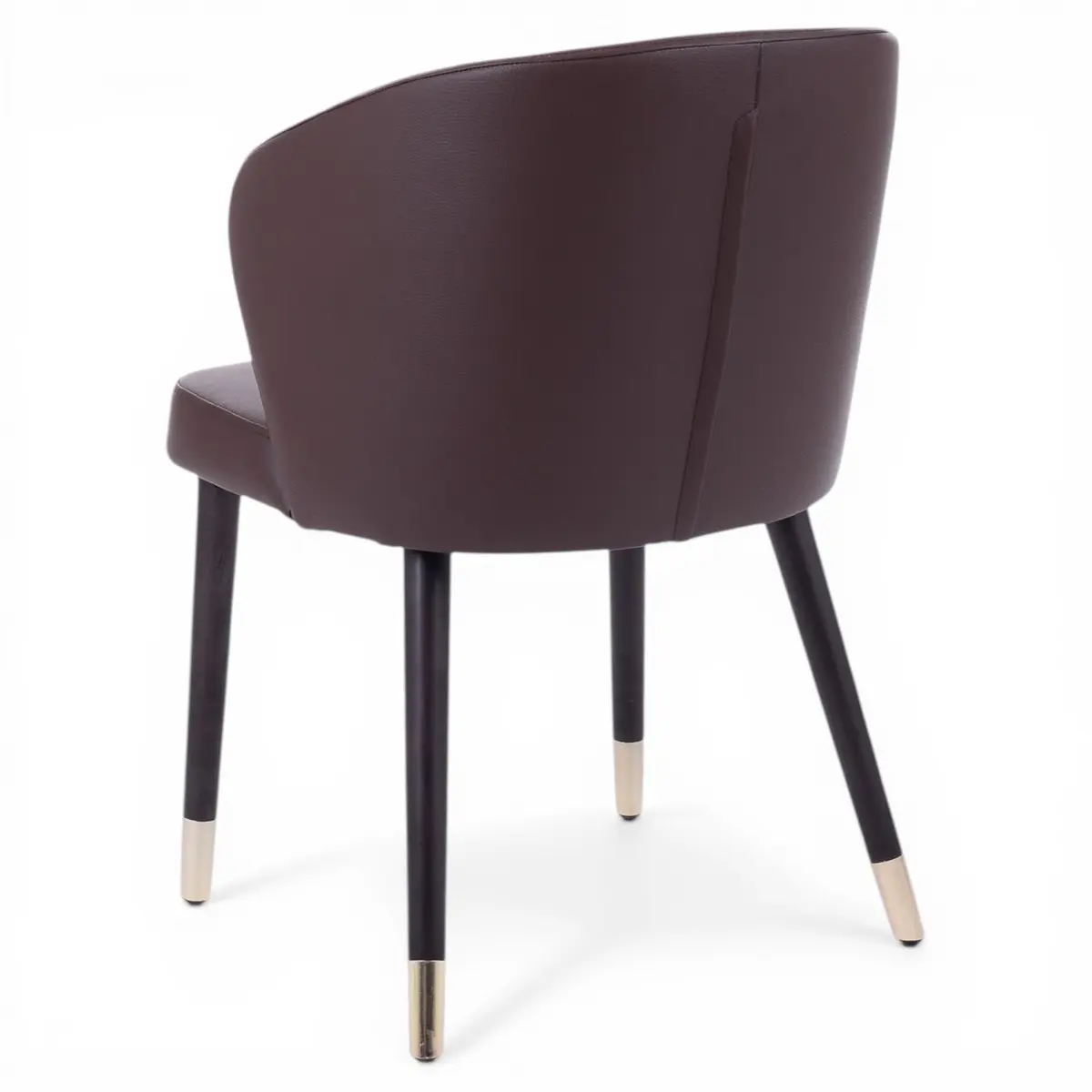
Pandora installation: View the Pandora upholstered chair installation
Key takeaways
- Commercial vinyl is the default for high-turnover dining: wipeable, consistent and budget-friendly.
- Genuine leather feels warmer and ages with character, but needs pH-neutral cleaning and conditioning.
- Check abrasion rating, backing and seam construction, not just the surface look.
- Order swatches of both and test them with your actual cleaning products before you commit.
1) What is the real difference between leather and commercial vinyl?
Genuine leather is a natural hide, tanned and finished. Most leather used in contract seating is "corrected grain" or pigmented leather, which has a protective topcoat that makes it more stain resistant than the soft aniline leather found on luxury sofas. Commercial vinyl (PVC on a knit or woven backing) is a manufactured material engineered for repeatable color, texture and performance. Polyurethane "PU leather" sits in between: softer than vinyl, but usually less durable in heavy commercial use.
| Feature | Genuine leather | Commercial vinyl |
|---|---|---|
| --- | --- | --- |
| Feel | Warm, supple, breathes | Smooth, cooler, less breathable |
| Cleaning | Mild soap, conditioner, no harsh chemicals | Soap and water, many approved disinfectants |
| Stain resistance | Good with protective topcoat | Very good to excellent |
| Color consistency | Natural variation hide to hide | Uniform across large orders |
| Aging | Develops patina, can crack if neglected | Stays the same, can crack if over-cleaned or sun-exposed |
| Typical cost | Highest | Lower, wide range |
2) Which lasts longer in a busy restaurant?
In a high-turnover dining room, a good commercial vinyl usually outlasts leather simply because staff clean it more aggressively and more often. Look for vinyls with a published abrasion rating; heavy-duty contract seating is generally rated at 30,000 double rubs (Wyzenbeek) or more, and many restaurant vinyls are rated far higher. Our guide to double rub counts for restaurant upholstery explains how to read those numbers.
Leather can last a very long time, often longer than vinyl, when it is cleaned gently and conditioned on a schedule. It fails when it is soaked with harsh disinfectants, left in direct sun or allowed to dry out. Its weak points are usually the seat front edge and where guests slide in and out.
Best for longevity with minimal care
- Commercial vinyl with a high abrasion rating and a stain-resistant topcoat
- Seats with a waterfall front edge that spreads wear
Best for longevity with a care routine
- Pigmented, protected leather in lower-turnover rooms
- Back panels and arms, where wear is light
3) How do cleaning and sanitizing compare?
This is where most operators decide. Vinyl tolerates frequent wipe-downs and many diluted disinfectants that hospitals and restaurants use, as long as you follow the vinyl maker's cleaning guide and rinse off residue. Alcohol, bleach at high concentration and solvent cleaners can still dry vinyl out over time, so always check before choosing a chemical program.
Leather needs a pH-neutral cleaner, a damp cloth and periodic conditioner. Disinfectant wipes used between every seating will shorten its life. If your health and safety program calls for sanitizing seats after every guest, vinyl is the practical choice.

Mase upholstered chair: View the Mase upholstered restaurant chair
4) Which is more comfortable for guests?
Leather breathes and warms to body temperature quickly, so it feels pleasant during long meals. Vinyl can feel cool at first and slightly warm on a hot day, especially in sunny window seats. In practice, comfort depends more on the chair's foam, seat depth and back angle than on the cover. Modern contract vinyls with soft hand and a slight texture close much of the gap.
Strengths of leather
- Breathable and supple; softens over time
- Signals a premium experience in steakhouses, hotel bars and private dining
Strengths of vinyl
- Consistent feel from chair to chair
- Huge range of colors and textures, including convincing leather looks
Watch for
- Very glossy vinyl can look cheap and feel sticky
- Thin leather on a hard seat still feels hard
5) How do leather and vinyl compare on cost of ownership?
Leather costs more up front and usually costs more to reupholster. Vinyl is less expensive to buy and to replace, and you can reorder the same color for future locations or repairs with little variation. Over several years, the cheaper option is the one that matches how your staff actually clean. A leather chair ruined by daily disinfectant is far more expensive than a vinyl chair that simply keeps working.
| Situation | Better fit | Why |
|---|---|---|
| --- | --- | --- |
| Fast casual, family dining, cafés | Vinyl | Spills, kids, frequent sanitizing |
| Steakhouse or fine dining room | Leather or premium vinyl | Longer stays, premium feel |
| Hotel lobby bar or lounge | Leather | Lower turnover, ages beautifully |
| Booths in a busy diner | Vinyl | Large panels, easy repair and matching |
| Patio-adjacent or sunny windows | Vinyl with UV resistance | Leather fades and dries in sun |
| Multi-location rollout | Vinyl | Color consistency across orders |
6) Which looks better over time?
Leather develops patina: slight darkening, soft creasing and a lived-in character that many guests read as quality. Vinyl looks the same in year three as in month one, until it fails, usually by cracking or seam splitting. If your concept leans heritage, clubby or classic, leather's aging is an asset. If your brand needs every chair to look identical, vinyl is easier to manage.

Bernie PS chair: View the Bernie PS upholstered seat chair
7) What about faux leather and PU?
"Faux leather" is a marketing term that can mean either vinyl or polyurethane. Ask what the material actually is, what the abrasion rating is, and what cleaners are approved. PU feels closer to real leather but in heavy commercial use it can peel or delaminate sooner than a quality vinyl. For restaurant seating, a contract-grade vinyl with a leather-look grain is usually the safer "faux leather."
8) Which works better on booths vs chairs?
Booths have large panels, seams and tufting, so material consistency and repairability matter. Vinyl is the most common booth upholstery because damaged sections can be replaced and matched easily. Leather booths are beautiful but each hide has natural variation, and large seat panels may need several hides. Browse our restaurant booths to see wood box, wood leg and upholstered styles that work with either cover.
9) How do you choose a color and texture?
Mid tones hide wear better than very light or very dark finishes. Cognac, saddle, chestnut, olive, navy and charcoal work well in both leather and vinyl. Light creams show denim transfer; jet black shows dust and scuffs. For more on palettes, see how to choose restaurant upholstery colors, and browse our colors and upholstery options.

Arizona vinyl collection: View the Arizona commercial vinyls
10) What should you check before ordering?
- Abrasion rating and cleaning code from the material supplier
- Backing type and stretch, especially for curved or tufted seats
- Seam placement and stitching density on seat front edges
- UV resistance for window and patio-adjacent seats
- Whether the same color will be available for reorders and new locations
Every BESeating chair, booth and bar stool goes through a quality testing process before it ships, and you can read more about it on our tested quality page.
11) Can you mix leather and vinyl in one room?
Yes, and many good rooms do. A common approach is leather or premium vinyl on banquettes and armchairs in a lounge zone, with practical vinyl on high-turnover dining chairs. Keep the colors in the same family so the room still reads as one design. Velvet and fabric can add a third texture; our velvet restaurant chairs guide covers where that works.
Final recommendation
Choose commercial vinyl for most dining chairs and booths, especially where seats are sanitized often, guests turn quickly or you need perfect color matching across locations. Choose genuine leather for lounges, hotel bars, private dining and fine dining rooms where guests stay longer and staff can follow a gentle care routine. When in doubt, test both with your real cleaning products.
Next step: order restaurant furniture samples and swatches, explore our restaurant chairs, or contact our team for help choosing upholstery for your project.

Loft P chair: View the Loft P upholstered restaurant chair
FAQ: Leather vs vinyl restaurant chairs
Is vinyl or leather easier to clean in a restaurant?
Vinyl is easier. It tolerates frequent wipe-downs with soap and water and many diluted disinfectants approved by the vinyl maker. Leather needs pH-neutral cleaner and periodic conditioning, and harsh sanitizers dry it out. If seats are sanitized after every guest, vinyl is the practical choice for daily operations.
Does genuine leather last longer than vinyl?
It can, when cared for properly. Protected leather in a lower-turnover room may outlast vinyl and age with an attractive patina. In high-traffic rooms where staff clean aggressively, a high-abrasion commercial vinyl usually lasts longer because it tolerates harsher cleaning without drying, fading or cracking early.
Is faux leather the same as vinyl?
Not always. Faux leather can describe either PVC vinyl or polyurethane (PU). Commercial vinyl is generally more durable in restaurants, while PU feels softer but can peel sooner under heavy use. Always ask for the material type, abrasion rating and approved cleaners before you approve a faux leather sample.
Which upholstery is better for restaurant booths?
Vinyl is the most common choice for booths because large panels need consistent color, sections can be replaced easily and the surface handles constant cleaning. Leather booths suit lounges and premium rooms, but natural hide variation and cost make them harder to manage on long banquettes in busy dining rooms.
Can I get samples of leather and vinyl before ordering?
Yes. BESeating provides samples for all products, including fabric and vinyl swatches, so you can compare color, texture and feel in your own lighting. Test each swatch with the cleaning products your staff actually use, and check how it looks next to your wood finish and table tops.



Be Seating 2010 - 2026 All rights reserved ©
Request a quote
CloseName
Phone
Company name
Industry type
Country
Notes
Please enter the result below
I agree with....
Wrong verification code.
All fields are mandatory
Thank you for your message! We will come back to you shortly.