


Velvet Restaurant Chairs: How to Choose Velvet That Lasts
10:40 | Mon | 02 November 2026
Velvet Restaurant Chairs: How to Choose Velvet That Lasts
Updated November 2026 · By the BESeating team — manufacturing commercial seating since 1993
Quick answer: Velvet restaurant chairs work well in commercial dining when you choose a polyester performance velvet rated for heavy contract use, a stain-resistant finish, a cleaning code that allows water-based cleaning, and a mid-tone color. Use them where guests linger, such as fine dining, lounges and hotel restaurants, and pair them with wood or metal frames that protect the edges.
Velvet is one of the most requested finishes in hospitality right now, and for good reason: it adds depth, softness and a premium feel that vinyl cannot match. The catch is that velvet restaurant chairs only look good for years if the fabric, color and chair design are chosen for commercial use rather than for a living room. This guide walks through the decisions in the order buyers usually face them.

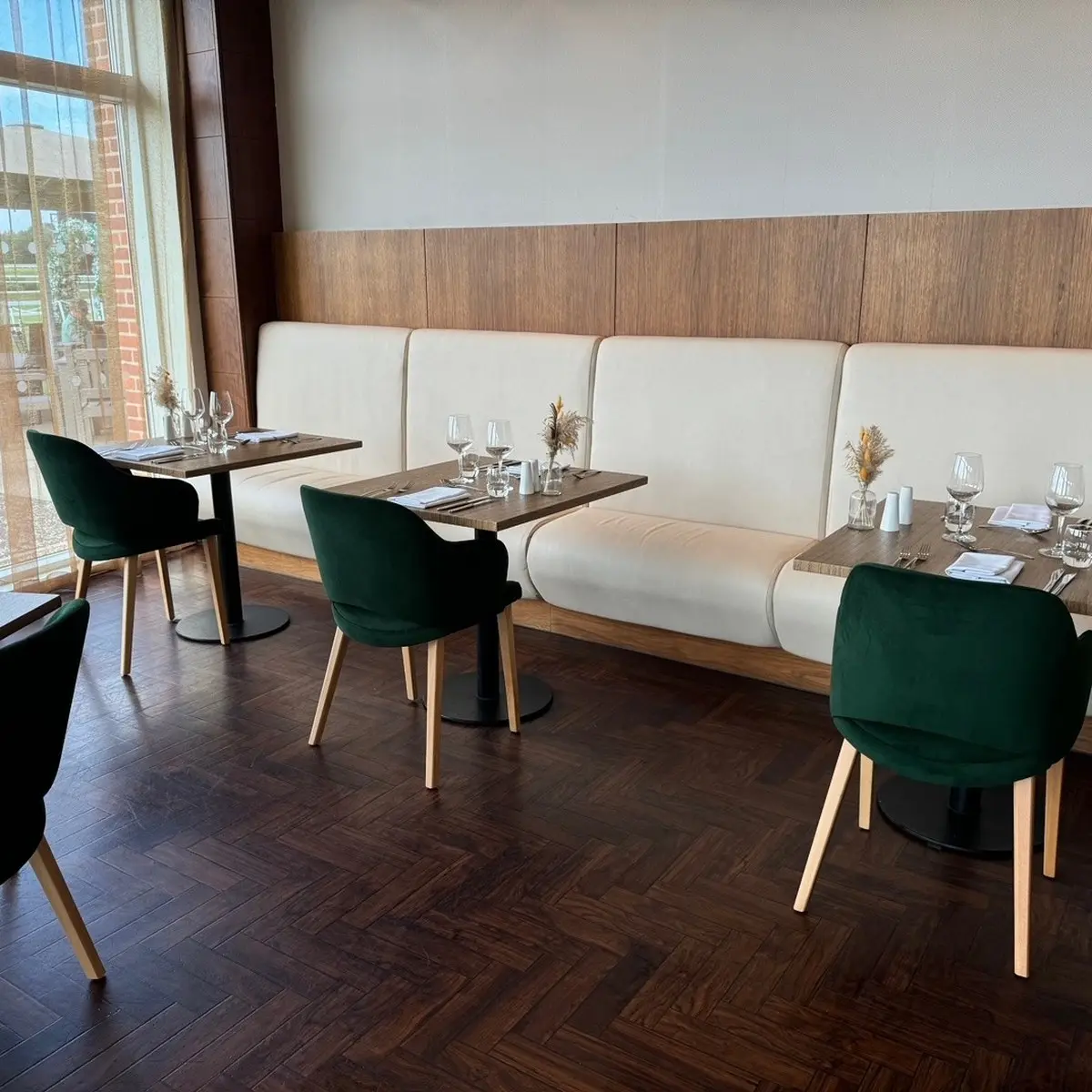
Fully upholstered dining chairs in a restaurant installation: View the Pandora installation
Key takeaways
- Choose polyester performance velvet over cotton velvet for daily restaurant use; it resists crushing, fading and stains far better.
- Look for contract durability ratings of at least 30,000 double rubs (Wyzenbeek) or 40,000 Martindale cycles for dining seats.
- Mid-tone colors such as green, rust, navy and taupe hide wear and pile shading better than very light or very dark shades.
- Ask for fabric samples and test them with water, coffee and a fingernail before you commit to a full order.
1) Is velvet practical for restaurant chairs?
Yes, if you choose the right velvet. Older cotton and rayon velvets crushed easily, faded in sunlight and stained the moment a glass of wine tipped over. Modern performance velvets are typically woven from polyester with a dense, short pile and are often treated with stain-resistant or water-repellent finishes. These fabrics are built for hotels, restaurants and bars and behave very differently from the residential velvet on a sofa at home.
Velvet is still a soft fabric, so it is not the first choice for every room. It shines where guests sit for an hour or more and where the interior is meant to feel warm and upscale. In very high-turnover areas with kids, sauces and constant wiping, vinyl remains the easier option. Our guide to vinyl vs fabric restaurant upholstery choices shows the full range of materials we offer.
2) Which type of velvet should you choose?
Not all velvets are the same. The fiber, the pile height and the finish decide how the fabric behaves after a year of service.
| Velvet type | Typical fiber | Commercial suitability | Main watch-out |
|---|---|---|---|
| Performance velvet | 100% polyester | Very good for daily dining | Choose a dense pile for best crush resistance |
| Cotton velvet | Cotton or cotton blend | Limited; best in low-traffic lounges | Crushes, fades and stains more easily |
| Crushed or panne velvet | Polyester | Decorative, accent pieces | Shiny look can read as dated |
| Mohair-style velvet | Wool blends | Premium, durable | Higher cost and specialist cleaning |
Best for
- Performance velvet: fine dining, hotel restaurants, cocktail bars, private dining rooms.
- Cotton velvet: low-use lounge chairs and decorative accent seating.
Watch for
- Fabrics without a published double rub or Martindale rating.
- Long, loose pile that shows every hand mark and sitting mark.

Upholstered dining chair with a curved shell: View the Mase upholstered restaurant chair
3) How durable does velvet need to be for commercial use?
Durability is measured by abrasion tests. In the US, the most common is the Wyzenbeek method, reported in double rubs. Europe and many manufacturers also use the Martindale method, reported in cycles. Industry guidelines from contract textile organizations generally treat 30,000 double rubs as the threshold for heavy-duty seating, and many hospitality specifiers ask for 50,000 or more for busy dining rooms.
| Use | Wyzenbeek (double rubs) | Martindale (cycles) |
|---|---|---|
| Low-traffic lounge or accent chair | 15,000–30,000 | 20,000–40,000 |
| Restaurant dining chair | 30,000–50,000 | 40,000–60,000 |
| High-traffic bar or hotel breakfast room | 50,000–100,000+ | 60,000–100,000+ |
Abrasion is only part of the story. For velvet, also ask about pile retention, colorfastness to light and crocking (color rubbing off onto clothing). A dark velvet that transfers dye to a guest's light trousers is a problem no rub count will reveal.
4) Which velvet colors work best in restaurants?
Velvet changes color depending on the direction of the pile and the angle of the light. That shading is part of its charm, but it also means that seat marks and brushing show more on extreme shades.
- Forest and emerald green: a hospitality favorite that hides wear and pairs beautifully with oak and walnut stains.
- Rust, terracotta and ochre: warm and inviting, good for bistros and Mediterranean concepts.
- Navy and petrol blue: classic and forgiving, works with brass, black metal and light wood.
- Taupe, mushroom and warm gray: neutral options that disguise lint and crumbs.
Very pale velvets show stains and shading quickly, while black velvet shows lint, dust and pet hair. For more ideas, read our article on how to choose restaurant upholstery colors.
5) What cleaning code should velvet have?
Upholstery fabrics usually carry a cleaning code. For restaurant chairs, the code is as important as the color.
| Code | Meaning | Restaurant suitability |
|---|---|---|
| W | Water-based cleaners | Best for daily spot cleaning |
| W/S or SW | Water-based or solvent cleaners | Good, flexible |
| S | Solvent-based cleaners only | Workable, but harder for staff |
| X | Vacuum or light brushing only | Not suitable for dining chairs |
Train staff to blot spills immediately rather than rubbing, to brush the pile in one direction once it is dry, and to vacuum seats weekly. Many performance velvets also tolerate diluted bleach solutions, but always follow the mill's instructions for the exact fabric.

Upholstery colors and fabrics: View upholstery colors and fabrics
6) Which chair styles suit velvet?
Velvet looks best on shapes that show off its soft sheen: curved backs, channel tufting, rounded shells and fully upholstered tub chairs. On a simple wood chair, a velvet seat pad alone can also add a touch of luxury without upholstering the whole frame.
Strengths of fully upholstered velvet chairs
- Maximum comfort and a premium look for long dinners.
- Sound absorption that helps reduce noise in hard-surfaced rooms.
Strengths of wood chairs with velvet seats
- Exposed wood protects the most vulnerable edges and corners.
- The seat can be reupholstered later without replacing the frame.
Browse our restaurant chairs collection to compare fully upholstered and partially upholstered models.
7) Where do velvet restaurant chairs work best?
- Fine dining and steakhouses: guests stay longer and expect comfort. See our steakhouse furniture guide for pairing ideas.
- Hotel restaurants and lounges: velvet bridges the gap between residential comfort and commercial durability.
- Cocktail bars and wine bars: velvet bar stools and lounge chairs add atmosphere under low lighting.
- Private dining rooms: lower traffic means the fabric ages very slowly.
Velvet is less suitable for outdoor patios, quick-service counters and children's areas, where spills and sun exposure are constant.

Upholstered restaurant chair: View the Loft P upholstered restaurant chair
8) How should the chair frame be built for velvet?
The best velvet in the world will still fail early on a weak frame. Look for solid hardwood frames such as beech or oak, firm high-resilience foam, and seats that are easy to remove for reupholstery. At BESeating, our wood chairs are manufactured in Europe from carefully selected beech and oak, and every chair goes through our quality testing process before it ships.
- Foam: high-resilience foam keeps the pile from creasing permanently at the front edge.
- Welts and seams: contrast piping can protect edges and adds a tailored look.
- Glides: felt or nylon glides protect floors, and the chair should sit level so fabric is not stressed.
9) How do velvet and vinyl compare for restaurant seating?
| Factor | Performance velvet | Commercial vinyl |
|---|---|---|
| Look and feel | Soft, rich, warm | Smooth, practical |
| Comfort in summer | Breathable | Can feel warm |
| Stain resistance | Good with treated fabric | Excellent |
| Daily cleaning | Blot and brush | Wipe with disinfectant |
| Best areas | Fine dining, lounges | High-turnover, family dining |
Many restaurants use both: velvet on dining chairs and banquettes in the main room, and vinyl on bar stools or high-traffic booth seats.
10) How do you test velvet before ordering?
Order fabric swatches and, if possible, a sample chair. Rub the swatch with a damp white cloth to check color transfer, drag a fingernail across the pile to see how quickly it recovers, place a drop of coffee and red wine and test how easily they blot out, and look at it under your actual restaurant lighting. We offer restaurant furniture samples, including fabric and vinyl swatches, so you can make this test before your full order.
11) How long does velvet upholstery last?
In a busy dining room, a good performance velvet usually looks fresh for several years when it is cleaned correctly. The first signs of wear are pile crushing at the front seat edge and shading where guests slide in and out. When that happens, a removable seat lets you reupholster rather than replace the chair. Our guide on when to replace restaurant chairs explains how to decide between repair, reupholstery and replacement.
Final recommendation
Velvet is an excellent choice for restaurants that want warmth and a premium feel, as long as you buy commercial performance velvet with a high rub count, a water-cleanable code and a forgiving mid-tone color. Put it on well-built hardwood or metal frames, protect the edges, train staff on blot-and-brush cleaning, and keep vinyl for the highest-traffic spots.
Next step: request fabric swatches through our samples program, explore our upholstery colors and fabrics, or contact the BESeating team with your floor plan and we will suggest the right velvet chairs for your space.
FAQ: Velvet restaurant chairs
Does velvet stain easily on restaurant chairs?
Cotton velvet stains easily, but polyester performance velvet with a stain-resistant finish handles everyday spills well when they are blotted quickly. Choose a fabric with a W or W/S cleaning code so staff can use water-based cleaners, and avoid very pale shades in busy dining rooms where wine, coffee and sauces are common.
What double rub count is good for velvet dining chairs?
For restaurant dining chairs, aim for at least 30,000 double rubs on the Wyzenbeek test, and 50,000 or more for high-traffic bars and hotel breakfast rooms. If the fabric is rated on the Martindale scale, look for 40,000 cycles or more. Also check pile retention and colorfastness, not just abrasion.
Is velvet hot to sit on?
Velvet is more breathable than vinyl, so most guests find it comfortable year-round. Polyester velvet can feel slightly warm in very hot rooms, but it does not stick to skin the way vinyl can in summer. For patios and sun-exposed window seats, outdoor-rated fabrics or vinyl are better choices than velvet.
Can velvet chairs be reupholstered?
Yes. Chairs with removable seat pads or upholstered backs fastened with screws can be reupholstered relatively easily, which extends the life of the frame. When you buy, ask how the upholstery is attached and order extra fabric from the same dye lot so future repairs match your existing chairs closely.
How do you clean velvet restaurant chairs daily?
Vacuum or brush the seats at closing to remove crumbs, blot any spills immediately with a clean damp cloth, and brush the pile in one direction once it is dry. Follow the cleaning code, avoid soaking the fabric, and schedule periodic deep cleaning with an upholstery extractor approved for the specific fabric.



Be Seating 2010 - 2026 All rights reserved ©
Request a quote
CloseName
Phone
Company name
Industry type
Country
Notes
Please enter the result below
I agree with....
Wrong verification code.
All fields are mandatory
Thank you for your message! We will come back to you shortly.