


Mid-Century Modern Restaurant Chairs: The Bernie Family Explained
11:04 | Tue | 27 October 2026
Mid-Century Modern Restaurant Chairs: The Bernie Family Explained
Updated October 2026 · By the BESeating team — manufacturing commercial seating since 1993
Quick answer: Mid-century modern restaurant chairs combine slim tapered legs, curved or sculpted backs and warm wood tones inspired by 1950s–60s design. They suit cafés, bistros, hotel restaurants and modern casual dining. The BESeating Bernie family offers this look in solid wood, with an upholstered seat, or with an upholstered seat and back, all built for commercial use.
Mid-century modern restaurant chairs remain one of the most requested styles in US hospitality design. They feel warm and familiar, work with many interiors and photograph well. This post explains what defines the style, how the BESeating Bernie family covers it and how to choose the right version for your dining room.

Mid-century chair example: View the Bernie solid wood chair
Key takeaways
- Mid-century style is defined by tapered legs, curved backs, clean lines and warm wood.
- The Bernie family comes in solid wood, upholstered seat and upholstered seat-and-back versions.
- Walnut-tone and natural stains are the classic choice; custom stain matching is available.
- Choose the version by meal length, cleaning routine and the look of your interior.
1) What makes a chair "mid-century modern"?
The style comes from furniture designed roughly between the mid-1940s and late 1960s. Designers used new techniques for bending and shaping wood to create light, comfortable chairs with simple lines. In a restaurant chair, the typical features are:
- Slim, often tapered or splayed legs
- A curved, sculpted or floating backrest
- Visible wood grain in warm tones such as walnut, teak-like and natural oak
- Clean, simple silhouettes without heavy decoration
- Upholstery in solid colors, often mustard, olive, rust, blue or neutral tones
2) Why are mid-century modern chairs popular in restaurants?
They balance comfort and character. Their open frames make rooms feel lighter than heavy upholstered chairs, which helps in smaller dining rooms. The look fits many concepts: coffee shops, brunch spots, modern American bistros, hotel lobbies and restaurants with a Scandinavian or retro theme. They also pair easily with marble, laminate and solid wood tops.
3) What is the BESeating Bernie chair?
Bernie is a BESeating wood restaurant chair with a mid-century design: a curved back, slim legs and a clean silhouette. It is manufactured in Europe from carefully selected wood and built for commercial use, and like other BESeating chairs it goes through a quality testing process. Bernie is available in several versions, so you can keep one look across the whole room while adjusting comfort and maintenance.
4) Which Bernie version should you choose?
| Version | Seat and back | Best for |
|---|---|---|
| Bernie | Solid wood seat and back | Cafés, bakeries, fast turnover, easiest cleaning |
| Bernie P | Upholstered seat, wood back | Casual dining with longer stays |
| Bernie PS | Comfortable upholstered seat | Restaurants where comfort is a priority |
| Bernie 2P | Upholstered seat and back | Upscale dining, hotel restaurants, lounges |
If you are unsure between padded and solid seats, our comparison of upholstered vs wood seat restaurant chairs explains the trade-offs.

Upholstered seat version: View the Bernie P chair
5) Bernie with an upholstered seat and back
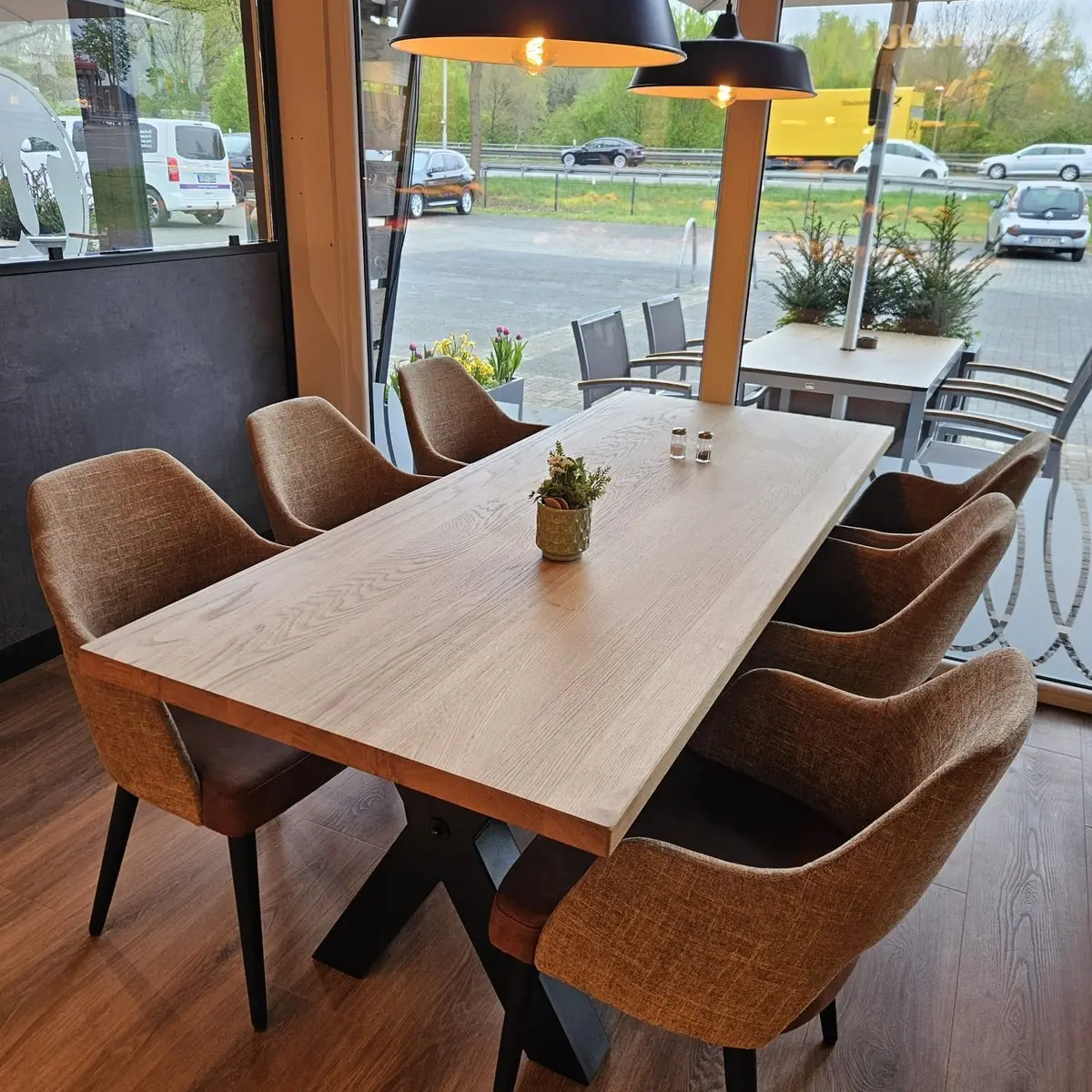
The 2P version adds upholstery to the back, giving a softer, more formal look and better comfort for longer meals. It works well in hotel restaurants and fine casual concepts. Upholstery is available in a wide range of commercial vinyls and fabrics, so you can bring in a classic mid-century accent color.

Upholstered seat and back version: View the Bernie 2P chair
6) Which wood and stain fit the mid-century look?
Walnut-tone stains are the most traditional, but natural oak and light beech also fit lighter Scandinavian-inspired interiors. Darker stains hide scuffs better in busy rooms, while light tones show the grain. BESeating wood chairs are made from carefully selected beech and oak, and we offer custom stain matching to your interior or existing furniture. Learn about the two woods in beech vs oak restaurant chairs and about stain and upholstery options in custom restaurant chairs.

Wood finish options: View the wood stains
7) Which upholstery colors suit mid-century modern chairs?
Mid-century interiors often use saturated but warm colors: mustard, olive, teal, rust and deep blue, as well as cognac and black leather looks. Commercial vinyl is the practical choice for most restaurants because it wipes clean easily; fabric gives a softer, more residential look. See the colors and upholstery range and compare covers in vinyl vs fabric upholstery.
8) What other chairs pair with the mid-century look?
You do not have to use one model throughout. Many designers mix a main mid-century chair with complementary pieces:
- Veneer chairs with molded shapes, such as Brazil, for a similar 1960s feel
- Bentwood chairs for a café corner; see our bentwood chairs guide
- Booths and banquettes with tufted or channel upholstery along the walls
- Bar stools in matching wood and stain for the bar area

Complementary chair: View the Brazil veneer chair
9) Which tables suit mid-century modern chairs?
Choose tops in walnut-tone wood, white or terrazzo-look laminate, or marble-look surfaces, with slim metal or wood bases. Round tops on pedestal bases echo the era's design. Keep table height around 29–30 in (74–76 cm) and leave about 10–12 in (25–30 cm) between seat and table underside for comfortable knee room.
10) What should you check before ordering?
- Seat height and overall dimensions against your table heights
- Version (wood seat, upholstered seat, upholstered seat and back)
- Stain color and finish, ideally from a physical sample
- Upholstery type and color
- Quantities, including spares for future replacements
Most BESeating restaurant chairs arrive fully assembled, which saves time on site. Production supports both independent restaurants and multi-location rollouts.
11) Why order a sample first?
Wood tones and upholstery colors look different on screen than in your room's lighting. A sample chair with stain and vinyl or fabric swatches lets you check comfort, color and the way the chair fits your tables. Samples are available for all BESeating products.
Final recommendation
Mid-century modern restaurant chairs give dining rooms warmth and timeless character. The Bernie family lets you keep that look across the room: the solid wood version for fast-turnover areas, upholstered seat versions for longer meals, and the 2P version for upscale spaces. Choose a walnut-tone or natural stain, a practical commercial vinyl, and confirm everything with a sample.
Next step: Browse wood restaurant chairs, see finished rooms in our installations gallery, request samples and swatches, or contact BESeating.
FAQ: Mid-century modern restaurant chairs
Are mid-century modern chairs comfortable for restaurants?
Yes. Their curved backs support guests well, and versions with upholstered seats or seats and backs add comfort for longer meals. For cafés and quick service, a solid wood version is usually comfortable enough and easier to clean. Testing a sample is the best way to judge comfort for your concept.
What colors work best with mid-century modern restaurant chairs?
Warm wood tones such as walnut or natural oak are classic. For upholstery, mustard, olive, teal, rust, deep blue and cognac-look vinyls are popular. Neutral grays and blacks suit more minimal interiors. Pick colors that work with your floors, tables and lighting, and check them with physical swatches.
Can mid-century modern chairs handle heavy commercial use?
Commercial-grade versions can. Look for chairs built specifically for hospitality, with strong joints, durable finishes and commercial upholstery. Residential mid-century replicas often use lighter construction that loosens quickly in restaurants. BESeating chairs go through a quality testing process before delivery.
Is the Bernie chair available with upholstery?
Yes. Bernie comes as a solid wood chair and in upholstered versions: Bernie P and Bernie PS with upholstered seats, and Bernie 2P with an upholstered seat and back. You can choose from a wide range of commercial vinyls and fabrics and request custom stain matching.
Can I mix mid-century chairs with other styles?
Yes. Many restaurants pair a mid-century main chair with booths along the walls, bentwood chairs in a café corner or matching bar stools. Keep the wood tone and a few colors consistent so the room looks planned, and use one main chair model for most of the seats.



Be Seating 2010 - 2026 All rights reserved ©
Request a quote
CloseName
Phone
Company name
Industry type
Country
Notes
Please enter the result below
I agree with....
Wrong verification code.
All fields are mandatory
Thank you for your message! We will come back to you shortly.