


Pedestal vs Four-Leg Restaurant Tables: Which Is Better?
09:02 | Tue | 03 November 2026
Pedestal vs Four-Leg Restaurant Tables: Which Is Better?
Updated November 2026 · By the BESeating team — manufacturing commercial seating since 1993
Quick answer: In the pedestal vs four leg tables choice, pedestal tables give more legroom, slide easily into booths and suit tables up to about 36–42 in (91–107 cm). Four-leg tables are more stable on large tops, rectangles over 60 in (152 cm) and uneven patios. Many restaurants use pedestals for two- and four-tops and leg tables for long group tables.
Table bases rarely get attention until guests bump their knees or a table starts to wobble. Choosing between pedestal vs four leg tables affects comfort, capacity, cleaning and how flexible your room is. This guide compares both options and gives sizing rules so you can choose the right base for each table in your restaurant.

Black square pedestal base: View the square table base
Key takeaways
- Pedestal bases free up legroom and are the standard choice for booth tables and small dining tables.
- Four-leg tables spread load to the corners, which makes them more stable for large rectangular tops.
- Size pedestal feet to the top: a common rule is a foot spread of roughly two-thirds of the top's width or diameter.
- Choose the base by table size and use: pedestal for two- and four-tops, legs or double pedestals for large group tables.
1) What is the difference between pedestal and four-leg tables?
A pedestal table has one central column on a foot, usually a round disc, square plate or cross-shaped (X) spider. A four-leg table has a leg at or near each corner, joined by an apron or frame under the top. Both can be built from metal, wood or a combination, and both are widely used in commercial dining.
2) Which gives guests more legroom?
Pedestal tables win. With no corner legs, guests can sit at any point around the table and slide chairs in close. That is especially valuable at small two-tops and round tables, where corner legs often land between a guest's knees. Four-leg tables can feel cramped if a guest ends up straddling a leg, although legs set at the very corners leave the sides fairly open.
| Factor | Pedestal table | Four-leg table |
|---|---|---|
| --- | --- | --- |
| Legroom | Excellent, nothing at the corners | Good on sides, limited at corners |
| Stability on large tops | Fair, needs a wide foot | Excellent |
| Booth use | Ideal | Awkward for guests sliding in |
| Pushing tables together | Good with square tops | Very good |
| Cleaning underneath | Easy, one column | Four legs to clean around |
| Uneven floors | One foot to level | Four glides to adjust |
3) Which is more stable?
Four legs place support at the corners, so even a heavy lean on the table edge is well supported. Pedestal tables rely on the size and weight of the foot. A base that is too small for its top will tip when someone leans on the edge. With correctly sized feet, pedestal tables are stable for most two- and four-tops.
Sizing rule for pedestal bases
- 24 in (61 cm) top: about 17 in (43 cm) foot.
- 30 in (76 cm) top: about 22 in (56 cm) foot.
- 36 in (91 cm) top: about 22–30 in (56–76 cm) foot or an X base.
- 42 in (107 cm) top and larger: wide X base, or consider four legs or two pedestals.
For more detail, see cast iron vs stainless steel table bases, which also covers base weight and outdoor use.

Brushed stainless round base: View the stainless round base
4) Which works better with booths?
Pedestal tables are the clear choice for booths. Guests slide in from the side, and corner legs would block their knees and feet. A pedestal also lets you overhang the booth seat slightly, so guests do not have to reach for plates. For long booth tables, two pedestal bases spaced evenly under the top give stability without legs at the corners. See our restaurant booths for layouts that pair with pedestal tables.
5) Which is better for round vs square tops?
Round tops pair naturally with pedestals because a central base gives equal legroom around the table. Square tops work with either, but pedestals are easier when you plan to push tables together. Long rectangular tops, from about 30 x 60 in (76 x 152 cm) upward, often perform better on four legs or two pedestals. For shape decisions, read round vs square restaurant tables.
6) What about bar-height and outdoor tables?
Tall tables at 42 in (107 cm) put more leverage on the base, so they need a wider, heavier foot or a four-leg design. Outdoors, uneven paving makes four-leg tables wobble unless each glide is adjustable; a pedestal with a heavy foot and leveling glides is often easier to stabilize. Choose weather-resistant materials and see our outdoor patio furniture range.

X-style metal table base: View the X-style table base
7) How do the styles compare visually?
Pedestals give a clean, open look under the table that suits modern, café and bistro interiors, and a slim column with a gold or stainless finish can be a design feature. Four-leg tables feel more traditional or rustic, especially in solid wood, and suit farmhouse, steakhouse and family-style concepts. Both can be paired with the same table tops, so you can mix base types without the room looking inconsistent.
8) How do cleaning and maintenance compare?
Pedestal bases are quicker to clean around because there is one column instead of four legs. They also have fewer contact points with the floor, so there are fewer glides to replace. With four-leg tables, check that each glide is in place and adjusted, since one missing glide makes a table rock and can scratch floors.
9) Which base type gives the most flexible layout?
If you regularly push tables together for groups, square pedestal tables join neatly without legs colliding. Four-leg rectangles also combine well into long tables. A practical mix for many restaurants is pedestal two- and four-tops for daily service, plus a few four-leg rectangles that can form a banquet row. Our restaurant table sizes guide helps you plan the mix.
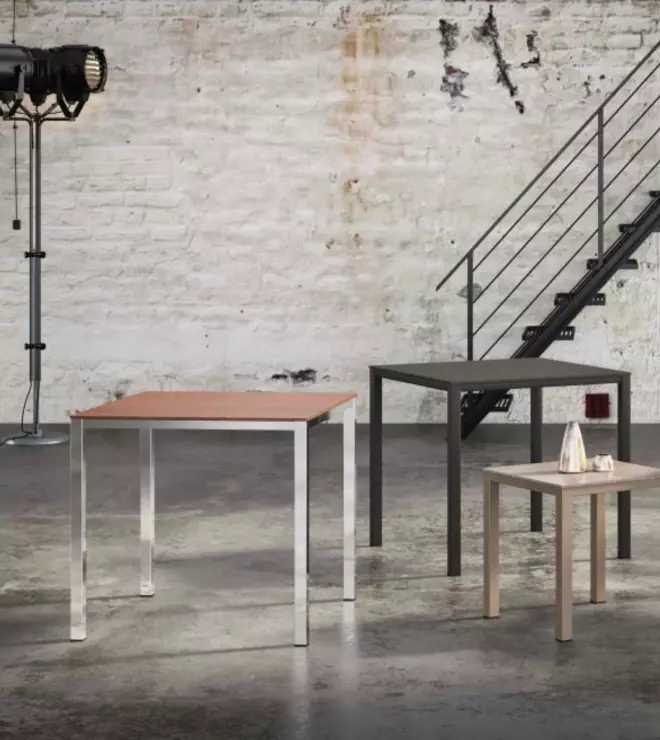
Complete restaurant tables: View complete tables
10) How do you order the right base for each table?
List every table with its top shape, size and height, then choose the base type and foot size for each. Confirm that chair arms and seat heights clear the table frame or apron, especially on four-leg tables. Order a sample base with a sample top if you can, and test it with a full lean on the edge. BESeating can supply table bases and table tops together, and every table goes through a quality testing process.
Final recommendation
Use pedestal bases for booth tables, two-tops, four-tops and round tables up to about 36–42 in (91–107 cm), sized with a foot of roughly two-thirds of the top width. Choose four legs or double pedestals for long rectangles, large group tables and some outdoor or bar-height uses. Mixing both is normal and practical.
Next step: request samples of bases and tops, then contact the BESeating team with your table list for a matched base recommendation.
FAQ: Pedestal vs four leg tables
Are pedestal tables stable enough for restaurants?
Yes, when the foot is sized to the top. A common guideline is a foot spread of about two-thirds of the top's width or diameter, with heavier or X-shaped bases for larger tops. Leveling glides help on uneven floors. Undersized bases are the main cause of tipping.
When should I choose a four-leg table instead of a pedestal?
Choose four legs for long rectangular tables, large group tables over about 60 in (152 cm) and some tall or outdoor tables where extra stability matters. Four-leg tables also suit traditional and rustic interiors. For long booth tables, two pedestals are often a better alternative.
What size pedestal base do I need for a 36 inch table?
For a 36 in (91 cm) round or square top, a foot of about 22–30 in (56–76 cm) or an X-style base is typical. Heavier tops, bar-height tables and outdoor use call for the wider end of that range. Always test a sample with a full lean on the edge.
Do pedestal tables work for bar-height seating?
They can, but tall tables put more leverage on the base. Use a wider, heavier foot designed for bar height, and avoid oversized tops on a single column. For large bar-height tables, a four-leg or double-pedestal design is usually more stable and comfortable.
Can I mix pedestal and four-leg tables in one restaurant?
Yes. Many restaurants use pedestal bases for two-tops, four-tops and booths, and four-leg tables for long group tables. Keep the same table top material and a consistent base finish, such as black or stainless, so the room still looks cohesive.



Be Seating 2010 - 2026 All rights reserved ©
Request a quote
CloseName
Phone
Company name
Industry type
Country
Notes
Please enter the result below
I agree with....
Wrong verification code.
All fields are mandatory
Thank you for your message! We will come back to you shortly.