


Round vs Square Restaurant Tables: Which Is Better?
10:42 | Mon | 02 November 2026
Round vs Square Restaurant Tables: Which Is Better?
Updated November 2026 · By the BESeating team — manufacturing commercial seating since 1993
Quick answer: In the round vs square restaurant tables debate, square tables usually win for capacity and flexibility because they push together and fit tightly along walls and in grids. Round tables win for conversation, comfort and easy circulation, especially for groups of four to eight. Most successful dining rooms use mainly square tables with a few rounds.
Choosing between round vs square restaurant tables affects how many guests you can seat, how easily staff move through the room and how relaxed diners feel. Neither shape is better everywhere. This guide compares them side by side and shows how to combine both for a layout that works every night of the week.
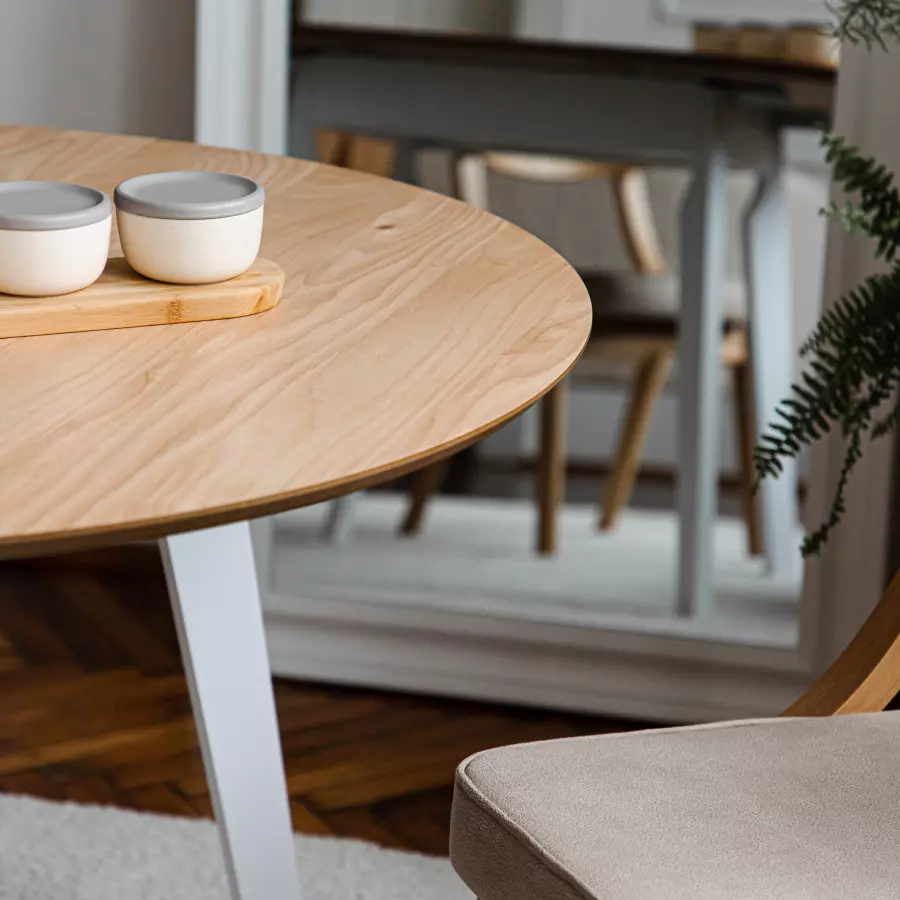
Wood restaurant tables: View restaurant tables
Key takeaways
- Square tables are the most space-efficient choice for two-tops and four-tops and can be combined for larger groups.
- Round tables encourage conversation and avoid sharp corners, which helps in tight aisles.
- A 36 in (91 cm) round seats four comfortably in roughly the same footprint as a 36 in square, but rounds cannot be joined neatly.
- Choose bases that match the top shape and size so the table stays stable and legroom stays clear.
1) Which table shape seats more guests?
In a typical rectangular dining room, square tables seat more guests per square foot. They line up along walls and banquettes with almost no wasted space, and two 30 in (76 cm) squares can be pushed together to make a four-top or a six-top in seconds. Rounds leave small unused gaps between tables and against walls.
That said, a large round table seats more guests than a square of the same width. A 48 in (122 cm) round comfortably seats six, while a 48 in square usually seats four to eight depending on chair size, with corner seats being less comfortable. For big parties in a fixed location, rounds can be very efficient.
2) How do sizes compare for each shape?
| Guests | Square top | Round top | Notes |
|---|---|---|---|
| 2 | 24–30 in (61–76 cm) | 24–30 in (61–76 cm) | 24 in works for cafés; 30 in for full meals |
| 4 | 36–42 in (91–107 cm) | 36–42 in (91–107 cm) | 36 in is tight, 42 in is comfortable |
| 6 | Two squares joined | 48–54 in (122–137 cm) | Round keeps everyone in conversation |
| 8 | Three squares or a 36 x 72 in rectangle | 60 in (152 cm) | Round needs a strong, wide base |
These ranges are typical industry figures. For a deeper look at sizing, read our guide to restaurant table sizes for 2, 4 and 6 guests.
3) Which shape is more flexible?
Square tables are the most flexible shape you can buy. They can be split into two-tops for a quiet Tuesday, joined into long communal tables for a Saturday party and rotated 45 degrees to break up a rigid grid. Rounds are less flexible because they cannot be joined neatly. Some operators use square tables with drop-leaf or flip-up extensions that turn a square into a round when needed, giving them the best of both.
Square tables: strengths
- Combine into larger tables without gaps.
- Align with walls, banquettes and windows.
- Easy to arrange in clean rows and grids.
Square tables: watch for
- Corners can catch hips and trays in tight aisles.
- Corner seats on larger squares feel less social.

Black square metal table base: View the square metal table base
4) Which shape feels better for guests?
Round tables have no head of the table. Everyone sees everyone else, which makes conversation easier and gives the meal a more relaxed, social feel. That is why rounds are the standard for banquets, weddings and family celebrations. Square tables feel more structured and intimate for couples, and they make it easier to place plates, glasses and shared dishes in a tidy way.
Round tables: strengths
- Encourage conversation and a relaxed atmosphere.
- No corners, so guests and staff move around them more easily.
- Soften the look of a room full of straight lines.
Round tables: watch for
- Wasted space in corners and against walls.
- Cannot be joined for larger groups.
5) How does table shape affect aisles and service?
Rounds are kinder to circulation. With no corners, servers can pass close to a round table without catching a tray, and chairs can be angled out slightly when guests stand up. In very tight rooms, swapping a few corner-prone squares for rounds near the kitchen door or bar can reduce bumps and spills. Square tables, on the other hand, keep aisles straight and predictable, which helps staff move quickly in a busy grid layout.
Most planners allow about 18 in (46 cm) between the backs of chairs at neighboring tables as a minimum, and wider main aisles for service and accessibility. Our small restaurant seating ideas article shows how to apply these clearances in compact rooms.
6) Which bases work for round and square tops?
The base must match the shape and size of the top. Round tops pair naturally with round bases or four-prong cross bases, while square tops usually sit on square or cross bases aligned with the corners. As a general rule, the base spread should be large enough that leaning on the edge does not tip the table, but not so large that it hits guests' feet.
| Top | Typical base | Why it works |
|---|---|---|
| 24–30 in round or square | Single column base, 17–22 in spread | Stable for two-tops, generous legroom |
| 36 in round or square | 22 in cross or round base | Good balance of stability and legroom |
| 42–48 in round | 30 in cross base or heavy round base | Prevents tipping on larger tops |
| 60 in round | Large cross base or twin bases | Supports heavier top and more leaning |
Browse our table bases and read our comparison of cast iron vs stainless steel table bases to choose the right finish.

Brushed stainless steel round table base: View the round stainless steel table base
7) Which shape suits each type of restaurant?
| Concept | Best main shape | Why |
|---|---|---|
| Fast casual and cafés | Square two-tops | Fast turnover, easy to combine |
| Casual full-service | Mostly square, a few rounds | Flexibility plus some social tables |
| Fine dining | Round or square with generous space | Comfort and conversation |
| Family and group dining | Large rounds | Everyone included in the conversation |
| Bars and lounges | Small rounds | Easy circulation around high tops |
| Banquet and event spaces | 60 in rounds | Standard for seated events |
8) How do round and square tables work with booths and banquettes?
Along a banquette or inside a booth, square and rectangular tops almost always win. They sit parallel to the seat, leave consistent legroom and make it easy to slide in and out. Round tops in front of a banquette can work for a softer look, but they leave the corner seats farther from the table. Explore our restaurant booths to see the table sizes that pair best with each booth length.
9) What about table tops and edges?
The top material affects durability more than the shape. Solid wood, laminate and compact tops are all available in both shapes. For rounds, a well-sealed edge is especially important because the entire edge is exposed to chair arms and knees. For squares, slightly rounded corners reduce chipping and bruised hips. See our restaurant table tops for materials and edge options.
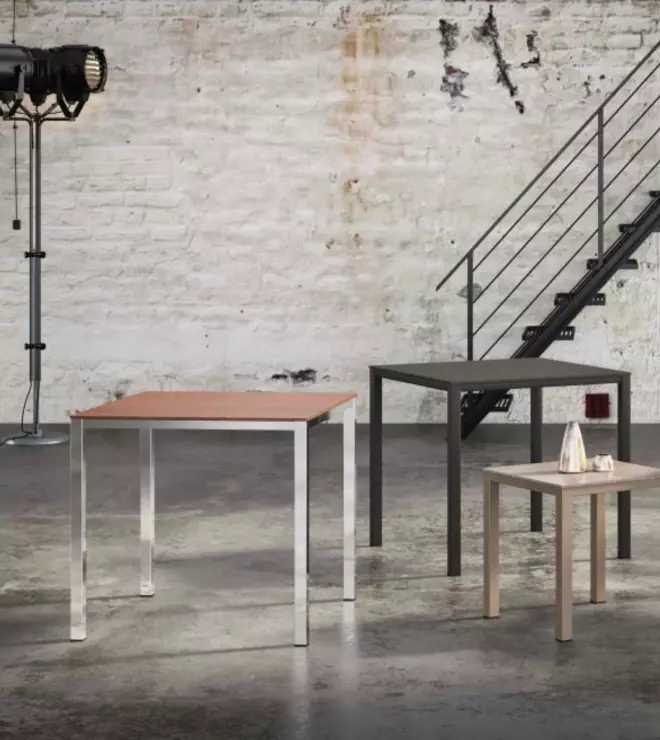
Complete restaurant tables: View complete restaurant tables
10) Do table shapes affect accessibility?
Both shapes can be accessible. The key is knee clearance, height and approach space rather than shape. A column base with a modest spread often gives wheelchair users more room than a four-leg frame. Our guide to ADA restaurant seating explains the typical clearances to plan for.
11) How do you decide the right mix?
Start with your typical party size. If most of your covers are pairs and fours, build the room around square two-tops that can be joined. Add a few rounds in corners, near windows or in the center of the room to soften the layout and give larger groups a social table. Then check that every aisle still works when chairs are pulled out.
Final recommendation
For most restaurants, square tables should form the backbone of the dining room because they maximize capacity and flexibility. Add round tables where conversation matters most, where circulation is tight, or where you regularly seat groups of six or more. Match every top with a correctly sized base, and choose durable top materials and edges for daily service.
Next step: explore our restaurant tables and table bases, or contact the BESeating team with your floor plan and we will help you plan the ideal mix of round and square tables.
FAQ: Round vs square restaurant tables
Are round or square tables better for small restaurants?
Square tables are usually better for small restaurants because they line up against walls and banquettes and can be joined for larger groups. A few small round tables can still help in tight spots near doors or service stations, where the lack of corners makes it easier for staff and guests to pass.
How many people fit at a 36 inch round table?
A 36 in (91 cm) round table seats four guests, but it is a tight fit for a full meal with shared plates. It works well for cafés, bistros and lighter menus. For comfortable four-person dining with larger plates and glassware, consider a 42 in (107 cm) round or square top.
Can round tables be pushed together?
Not neatly. Round tables leave gaps when placed side by side, so they do not form a continuous surface for large groups. If you need that flexibility, choose square tables, or square tops with fold-up leaves that convert them into rounds when you want a softer look and more seats.
What base size does a 48 inch round table need?
A 48 in (122 cm) round top usually needs a 30 in (76 cm) cross base or a heavy round base to stay stable when guests lean on the edge. Exact sizing depends on the top weight and base design, so check the manufacturer's recommended top range for the base you choose.
Do round tables take up more space than square tables?
A round table and a square table of the same width have a similar footprint, but rounds waste more space in corners and along walls. Across a whole dining room, square tables usually fit more seats, while round tables make circulation easier and create a more social, relaxed atmosphere.



Be Seating 2010 - 2026 All rights reserved ©
Request a quote
CloseName
Phone
Company name
Industry type
Country
Notes
Please enter the result below
I agree with....
Wrong verification code.
All fields are mandatory
Thank you for your message! We will come back to you shortly.