


Upholstered Bar Stools: How to Choose Comfortable Commercial Stools
09:17 | Thu | 05 November 2026
Upholstered Bar Stools: How to Choose Comfortable Commercial Stools
Updated November 2026 · By the BESeating team — manufacturing commercial seating since 1993
Quick answer: The best upholstered bar stools for commercial use have a solid wood or metal frame, a padded seat of firm commercial foam, and a cleanable vinyl or durable fabric cover. Match seat height to your counter (24 in or 30 in), add a back if guests stay long, and check the footrest height.
Upholstered bar stools turn a bar or counter from a quick perch into a place where guests are happy to order another round. Padding adds comfort and color, but it also adds things to get right: foam, cover material, seams and cleaning. This guide explains how restaurant and bar owners choose padded stools that look good and survive daily service.

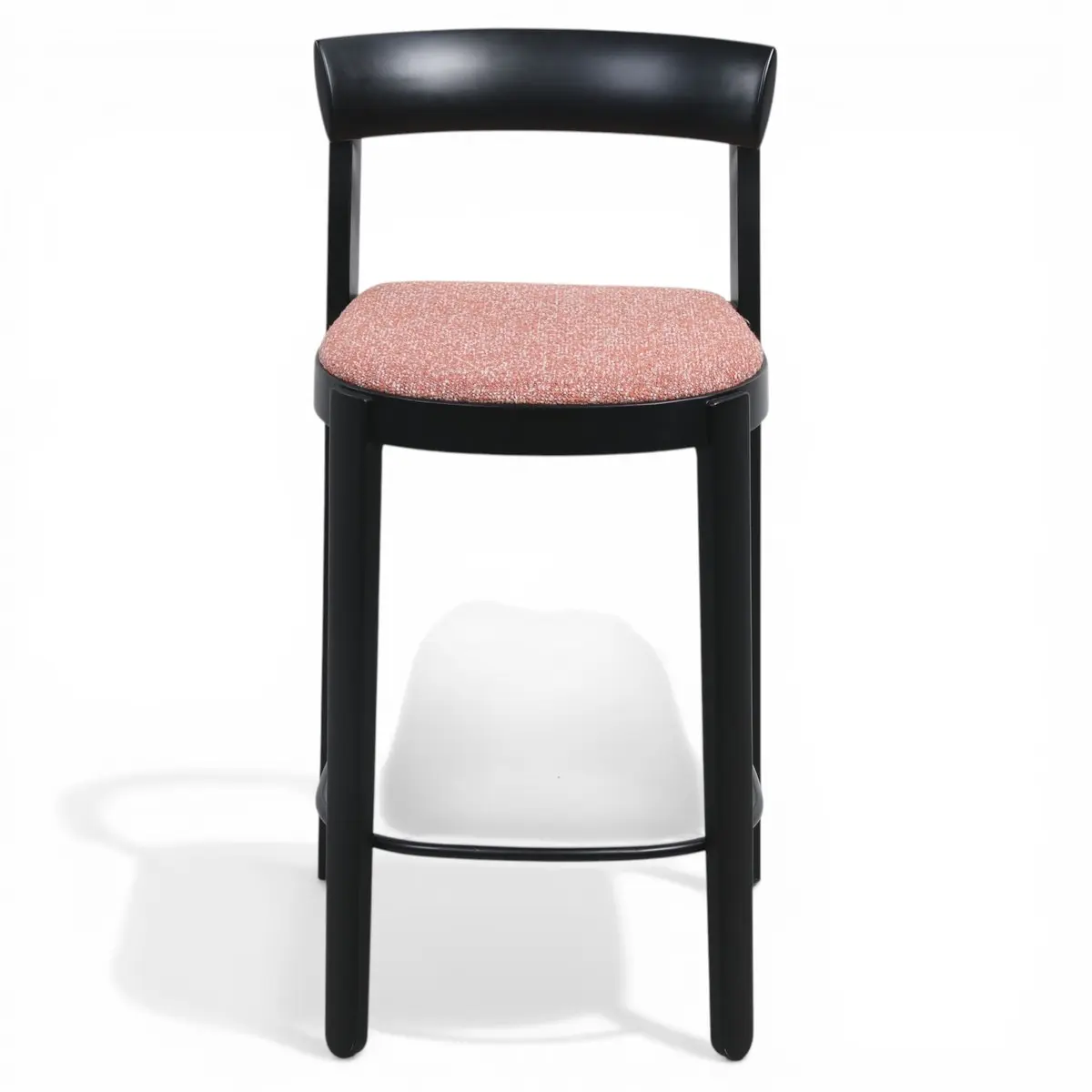
Bernie BP upholstered bar stool: View the Bernie BP bar stool
Key takeaways
- Pick the stool height from the counter: about 24 in (61 cm) for counters, 30 in (76 cm) for bars.
- Upholstered seats increase comfort and dwell time; backs matter when guests stay over 45 minutes.
- Commercial vinyl is the easiest to clean; fabric adds warmth but needs higher durability ratings.
- Frame quality, joints and footrest placement matter as much as the cushion.
1) Why choose upholstered bar stools over hard seats?
A hard wood or metal seat works for a quick coffee or a takeaway wait. Once guests stay for a meal or several drinks, a padded seat makes a noticeable difference. Upholstery spreads pressure, reduces the feeling of a hard edge behind the knees and gives the bar a softer, more finished look.
Best for
- Cocktail bars, wine bars and restaurant bars where guests eat at the counter
- Hotel bars and lounges where comfort is part of the experience
- Counters that double as dining seats during busy periods
Watch for
- Very high-turnover counters where a hard seat is easier to clean between guests
- Outdoor bars, where most upholstered stools are not the right choice
2) What seat height do you need?
Height is the first decision and the most common mistake. Measure from the floor to the underside of the counter, then subtract about 10–12 in (25–30 cm) to find the right seat height. The cushion adds a little height, so measure the finished stool, not just the frame.
| Surface | Typical surface height | Typical stool seat height |
|---|---|---|
| --- | --- | --- |
| Dining table | 29–30 in (74–76 cm) | 17–19 in (43–48 cm) chair |
| Counter | 35–37 in (89–94 cm) | 24–26 in (61–66 cm) |
| Bar | 41–43 in (104–109 cm) | 29–31 in (74–79 cm) |
For more detail, read our guide to high top restaurant tables, which covers the same height rules for bar tables.
3) Should upholstered bar stools have a back?
Backs help guests relax and lean, and they make it easier to stay for a full meal. Backless stools tuck under the counter and suit narrow spaces or quick service. Many restaurants mix both: backed stools at the main bar, backless at a window counter.

Bernie BPS bar stool: View the Bernie BPS bar stool
| Style | Strengths | Watch for |
|---|---|---|
| --- | --- | --- |
| Upholstered seat, no back | Compact, tucks under counters, easy to move | Less support for long stays |
| Upholstered seat, wood back | Support with an easy-clean back | Back height must clear the counter edge |
| Upholstered seat and back | Highest comfort, lounge feel | More surface to clean and re-cover |
4) Vinyl or fabric: which cover is better for bar stools?
Bar stools see spills, belts, jeans with rivets and constant sliding on and off. That makes the cover material critical.
Commercial vinyl
- Wipes clean quickly with mild soap and water
- Resists liquids, which matters at a bar
- Wide range of colors and textures, including leather-look finishes
Fabric
- Warmer, softer feel and a more residential, lounge look
- Needs a high double rub rating and ideally a stain-resistant finish
- Best where spills are less frequent, such as hotel lounges
Our articles on leather vs vinyl restaurant chairs and double rub count explain the trade-offs in more depth. BESeating offers a wide range of commercial vinyls and fabrics, and you can request swatches before you choose.
5) What foam and padding should you look for?
Look for firm, commercial-density foam rather than soft residential cushions. Soft foam feels pleasant in a showroom but compresses quickly under daily use, leaving a dip in the middle of the seat. A seat cushion of roughly 2–3 in (5–8 cm) is common for commercial stools. The seat should feel supportive, with a slight give rather than a deep sink.
Ask how the cushion is attached and whether the seat can be re-upholstered. A replaceable seat pad extends the life of the stool and lets you refresh colors during a remodel without buying new frames.
6) Wood or metal frame for upholstered stools?
Both work. Wood frames bring warmth and pair well with leather-look vinyls. Metal frames suit industrial and modern bars and are often slimmer. What matters most is the joint construction and the stretchers between the legs, because bar stools take strong sideways forces when guests climb on and off.

Brazil B cane-back bar stool: View the Brazil B bar stool
BESeating wood bar stools are manufactured in Europe from carefully selected beech and oak and go through a quality testing process. See the full ranges of wood bar stools and metal bar stools, or read wood vs metal bar stools to compare.
7) Where should the footrest be?
A footrest is what makes a tall stool comfortable. It should sit roughly 17–19 in (43–48 cm) below the seat so guests' knees bend at a natural angle. On high-traffic stools, a metal kick plate or protected footrest prevents the finish from wearing through where shoes rest. If your bar already has a foot rail, check that the stool footrest and the rail are at similar heights so guests can use either.
8) How much space does each upholstered stool need?
Padded stools, especially with backs and arms, are wider than simple backless stools. Allow about 24–26 in (61–66 cm) from the center of one stool to the center of the next, and up to 28–30 in (71–76 cm) for wide or swivel-style stools. Leave around 36 in (91 cm) behind the stools for guests and staff to pass.
| Stool type | Center-to-center spacing |
|---|---|
| --- | --- |
| Backless, compact | 22–24 in (56–61 cm) |
| Upholstered with back | 24–26 in (61–66 cm) |
| Wide upholstered with arms | 28–30 in (71–76 cm) |
9) How do you clean and maintain upholstered bar stools?
Wipe vinyl seats daily with a mild soap solution and a soft cloth, then dry them. Avoid harsh solvents and bleach, which dry out vinyl and cause cracking. For fabric, vacuum regularly and treat spills immediately. Check screws and glides every few months, and tighten anything loose before it becomes a wobble. If you also run a patio or a food hall counter, our guide to food hall furniture covers cleaning routines for shared, high-traffic seating.

Ellen bar stool: View the Ellen bar stool
10) How do you choose colors for upholstered bar stools?
Darker and mid-tone vinyls hide wear and spills best at a busy bar. Lighter colors look fresh but show marks more quickly. A common approach is to match the bar stools to the dining chairs, or to use a stronger accent color at the bar to make it a focal point. Order swatches from the upholstery and colour range and view them under your bar lighting before deciding.
Final recommendation
Choose upholstered bar stools by working from the counter height down: correct seat height, a footrest at a natural angle, a sturdy wood or metal frame and firm commercial foam. Use commercial vinyl where spills are frequent and durable fabric where the bar feels more like a lounge. Add backs wherever guests stay for a full meal.
Next step: browse the bar stools collection, request vinyl and fabric samples, and send us your counter height and length through the contact page so we can suggest stool models and quantities.
FAQ: Upholstered bar stools
Are upholstered bar stools hard to keep clean?
Not if you choose the right cover. Commercial vinyl wipes clean in seconds with mild soap and water and resists liquids. Fabric needs more care, so choose a high double rub rating and a stain-resistant finish. Daily wiping and quick treatment of spills keep either material looking good for years.
What height should upholstered bar stools be?
Measure your counter or bar first. For counters around 36 in (91 cm), choose stools with a 24–26 in (61–66 cm) seat. For bars around 42 in (107 cm), choose 29–31 in (74–79 cm). Leave about 10–12 in (25–30 cm) between the seat and the underside of the counter.
Can upholstered bar stools be re-covered?
Many commercial stools can be re-upholstered, especially when the seat pad is a separate part fixed with screws. Re-covering is a cost-effective way to refresh colors during a remodel or repair damage without replacing sound frames. Ask your supplier how the seat is attached before you buy.
Are swivel stools better than fixed upholstered stools?
Swivel stools make it easier to get on and off and to turn toward companions, but they add moving parts that need maintenance. Fixed stools are simpler and often more durable in very busy bars. Choose based on how long guests stay and how much space you have between stools.
How many upholstered bar stools fit at my bar?
Divide the usable bar length in inches by 24–26 for standard upholstered stools with backs. For example, a 20 ft (6.1 m) bar is 240 in, which fits about nine to ten stools. Use wider spacing for stools with arms or swivels, and keep clearance at bar ends and service stations.



Be Seating 2010 - 2026 All rights reserved ©
Request a quote
CloseName
Phone
Company name
Industry type
Country
Notes
Please enter the result below
I agree with....
Wrong verification code.
All fields are mandatory
Thank you for your message! We will come back to you shortly.